How is JNCASR Collaborating with Industry to Create Advanced Thermal Materials for Aviation Batteries?
Synopsis
Discover how JNCASR is teaming up with Dreamfly Innovations to revolutionize aviation battery technology. This partnership aims to tackle heat management challenges using advanced thermal materials, promising safer and more efficient batteries for the aviation industry.
Key Takeaways
Collaboration between JNCASR and Dreamfly Innovations focuses on advanced thermal materials.
Goal is to improve thermal management in aviation batteries.
Addresses heat generation issues that affect battery efficiency and lifespan.
Combines academic research with industry expertise .
Promotes safety and performance in aviation technology .
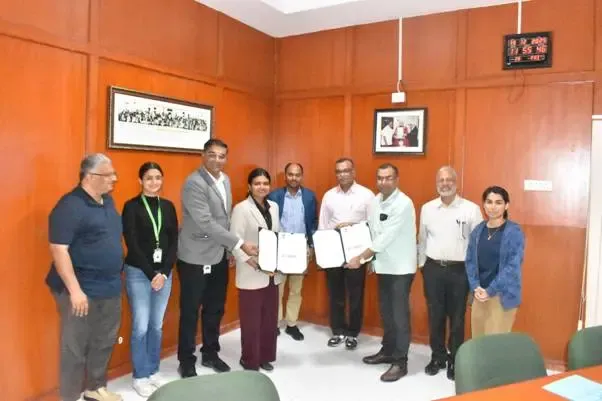
New Delhi, Jan 24 (NationPress) The Jawaharlal Nehru Centre for Advanced Scientific Research (JNCASR), an independent institute under the Department of Science and Technology (DST), has entered into a Memorandum of Understanding (MoU) with Dreamfly Innovations, a company based in Bengaluru, to innovate advanced thermal materials specifically designed for aviation batteries.
Through this collaboration, the two entities aim to create advanced thermal materials and thermoelectric devices that will enhance thermal management (storage and conversion) within aviation batteries.
This partnership is set to tackle existing challenges through innovative materials development, translating foundational materials research into practical, reliable thermal technologies for aviation platforms in the real world.
According to the Ministry of Science and Technology, “This collaborative effort merges JNCASR's expertise in materials design, synthesis, advanced characterization, and thermal transport measurement with Dreamfly Innovations' proficiency in aviation battery engineering and system integration.”
Thermal management is a significant hurdle for high-energy-density lithium-based batteries utilized in the aviation sector.
Excessive heat generation during high-power operations can diminish efficiency, shorten battery lifespan, and create safety hazards.
While passive thermal management techniques, such as Phase Change Materials (PCMs), are appealing due to their lightweight and zero energy consumption, their widespread use has been curtailed by the traditionally poor thermal conductivity of standard PCMs.
This leads to insufficient heat absorption, resulting in temperature increases and hastened degradation of battery components.
A prevalent method to address this challenge is the incorporation of high-thermal-conductivity additives to create composite PCMs.
However, these composites often face long-term stability issues, including the agglomeration of additives during repeated thermal cycles, which eventually hampers performance and reliability.
The Ministry stated, “The advanced thermal materials will be designed to achieve high thermal conductivity, enabling rapid heat absorption during high-load operations, maintaining battery temperatures within ideal operating ranges, and facilitating lightweight thermal regulation without sacrificing long-term stability.”
This collaboration unites academic research from Prof. Kanishka Biswas’ lab at JNCASR and industrial innovation from Dreamfly to confront vital challenges in drone performance, safety, and operational endurance.
Point of View
This partnership between JNCASR and Dreamfly Innovations is a significant step towards addressing pressing challenges in aviation technology. By focusing on advanced thermal materials, they are not only enhancing the efficiency of aviation batteries but also ensuring safety in an industry that demands high performance. This collaboration serves as a model for how academic research can meet industry needs, ultimately benefiting society.
NationPress
10 Oct 2026
Frequently Asked Questions
What is the purpose of the MoU between JNCASR and Dreamfly Innovations?
The MoU aims to develop advanced thermal materials for aviation batteries to improve thermal management and address safety and efficiency challenges.
What challenges do aviation batteries face?
Aviation batteries face issues like excessive heat generation, which can reduce efficiency, shorten lifespan, and create safety risks.
How will the collaboration benefit the aviation industry?
The collaboration will lead to innovative thermal technologies that enhance safety and performance in aviation batteries, crucial for the industry's operational efficiency.