How Does the Trade Pact with Australia Anchor India’s Economic Engagement in the Indo-Pacific?
Synopsis
Commerce Minister Piyush Goyal emphasizes the significance of the India-Australia trade pact, which is pivotal for India's economic strategy in the Indo-Pacific region. This partnership not only fosters growth but also aligns with the ambitious vision of 'Viksit Bharat 2047'. Explore how this agreement is shaping India's export landscape.
Key Takeaways
India-Australia trade pact plays a crucial role in India's economic strategy.
Zero-duty exports from Australia will start in 2026.
Partnership strengthens trade resilience and market access.
Significant growth in Indian exports across various sectors.
Mutual Recognition Arrangement (MRA) for organic products signed.
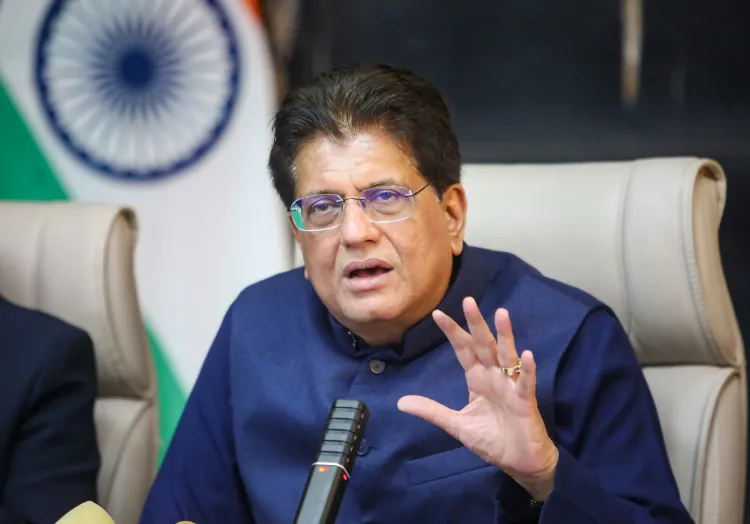
New Delhi, Dec 29 (NationPress) Commerce and Industry Minister Piyush Goyal stated on Monday that as negotiations for the Comprehensive Economic Cooperation Agreement (CECA) progress with various nations, the India-Australia trade agreement remains a cornerstone of India’s economic engagement in the Indo-Pacific. This initiative aligns with the ‘Make in India’ campaign and the vision for 'Viksit Bharat 2047'.
Starting January 1, 2026, all Australian tariff lines will be duty-free for Indian exports, presenting new avenues for growth in labour-intensive sectors, as informed by Goyal.
On the occasion of the third anniversary of the India-Australia Economic Cooperation and Trade Agreement (Ind-Aus ECTA), the minister highlighted a partnership that has effectively transformed intent into tangible outcomes.
“India and Australia are collaboratively crafting a future characterized by shared prosperity and reliable trade,” Goyal expressed on the X social media platform.
Over the past three years, this agreement has facilitated sustained export growth, enhanced market access, and bolstered supply-chain resilience, reaping benefits for Indian exporters, MSMEs, farmers, and workers, according to Goyal.
India's exports to Australia saw an 8% growth in FY 2024-25, positively impacting India's trade balance, with notable progress across manufacturing, chemicals, textiles, plastics, pharmaceuticals, petroleum products, and gems and jewellery.
“Agricultural exports demonstrated widespread growth, particularly in fruits and vegetables, marine products, spices, and an impressive rise in coffee. Exports of gems & jewellery increased by 16% during April-November 2025,” the minister added.
A major milestone was achieved with the signing of a Mutual Recognition Arrangement (MRA) for organic products, facilitating seamless trade and reducing compliance costs for exporters.
Meanwhile, India and New Zealand have finalized a comprehensive and long-awaited Free Trade Agreement (FTA), marking a significant economic and strategic achievement. This FTA eliminates duties on 100% of Indian exports and includes a $20 billion investment commitment over 15 years to enhance long-term economic and strategic collaboration.
India’s total exports of goods and services reached a record high of $418.91 billion during April-September 2025, reflecting a 5.86% annual increase as the strong momentum from the previous financial year, ending March 31, continued into the new fiscal year.
Point of View
It's imperative to recognize the strategic importance of the India-Australia trade pact. This agreement not only strengthens India's position in the Indo-Pacific but also aligns with national goals of economic self-reliance and development. The collaboration with Australia is a testament to India's proactive approach in enhancing trade relations while promoting domestic manufacturing.
NationPress
6 Oct 2026
Frequently Asked Questions
What is the Comprehensive Economic Cooperation Agreement (CECA)?
The CECA is a trade agreement aimed at enhancing economic cooperation between India and Australia, facilitating easier trade, investment, and market access for both countries.
When will Australian tariff lines become zero-duty for Indian exports?
Starting January 1, 2026, 100% of Australian tariff lines will be zero-duty for Indian exports.
What benefits does the India-Australia trade pact offer?
The pact provides sustained export growth, deeper market access, and stronger supply-chain resilience, benefiting Indian exporters, MSMEs, farmers, and workers.
How much did India's exports to Australia grow?
India's exports to Australia grew by 8% in FY 2024-25, improving India's trade balance.
What milestones have been achieved in India-New Zealand trade relations?
India and New Zealand have concluded a comprehensive FTA, eliminating duties on 100% of Indian exports and committing $20 billion in investments over 15 years.