India-Germany deepen quantum, photonics ties via Thuringia dialogue
Synopsis
India-Germany scientific ties are shifting from polite exchange to operational deep-tech. With Thuringia's photonics muscle plugging into ISRO-DLR quantum satellite work and EuroOGS alignment, New Delhi is quietly building the optical and secure-communication backbone its National Quantum Mission will need — a Europe pivot with strategic weight.
Key Takeaways
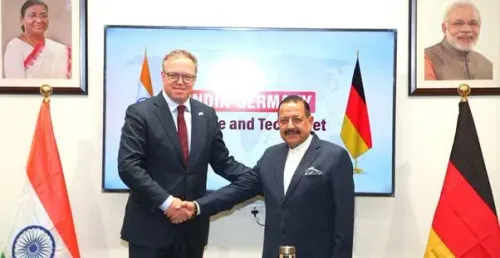
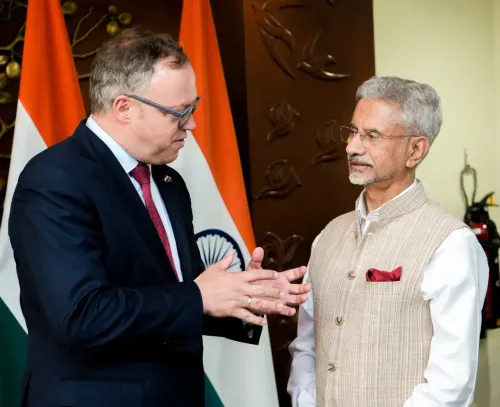
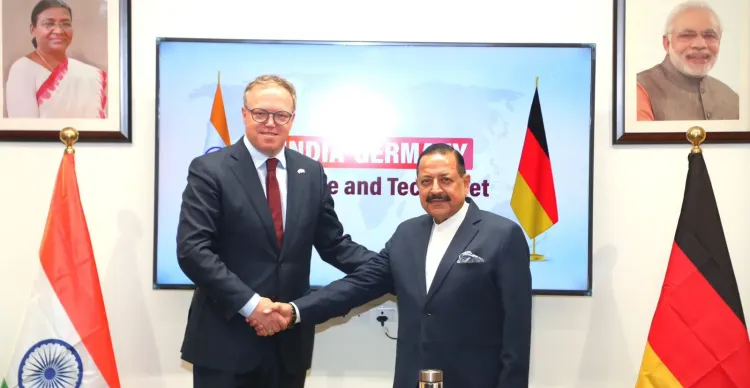
Thuringia Minister-President Mario Voigt met Union MoS Dr.
Jitendra Singh in New Delhi on 2 June .
Both sides agreed to expand ISRO-DLR cooperation on quantum satellite communication and secure networking.
India to align with Europe's EuroOGS network of optical ground stations.
Thuringia's photonics and laser expertise to plug into the National Quantum Mission , IndiaAI Mission , and National Green Hydrogen Mission .
Collaboration to be routed via ANRF and IGSTC , with doctoral exchanges and dual-degree programmes proposed.
India and Germany have stepped up bilateral cooperation in frontier technologies, with both sides agreeing on 2 June to deepen collaboration in quantum communications, photonics, secure networking, and commercial space technologies during the New Delhi visit of Thuringia Minister-President Mario Voigt. The talks, held with Union Minister of State Dr. Jitendra Singh, signal a pivot from broad scientific exchange to an operational deep-tech partnership.
Key Developments
The dialogue convened senior leadership from the Department of Science and Technology (DST), the Department of Space, and major research institutions. According to a report by The Policy Edge, the discussions reframed the long-standing India-Germany scientific relationship around deep-tech sectors — quantum communications, advanced manufacturing, aerospace technologies, and secure digital infrastructure.
A central focus area was quantum communication and photonics infrastructure, the report noted.
ISRO-DLR alignment on quantum satellites
India and Germany agreed to expand cooperation between the Indian Space Research Organisation (ISRO) and the German Aerospace Centre (DLR) on quantum satellite communication systems and secure networking technologies. Both sides also discussed closer alignment with Europe's EuroOGS (European Optical Ground Station) network, which seeks to standardise and interconnect optical ground station infrastructure across regions.
Officials said the objective is to build interoperable communication systems capable of supporting future secure space and quantum communication networks, according to the report.
Linking Thuringia's optics to India's missions
The partnership is expected to pair Thuringia's expertise in precision optics, lasers, and photonics manufacturing with three of India's flagship strategic programmes — the National Quantum Mission, the IndiaAI Mission, and the National Green Hydrogen Mission. Thuringia, in eastern Germany, hosts a dense cluster of photonics firms and Fraunhofer institutes, a base New Delhi has reportedly been keen to plug into.
Commercialisation and talent mobility
Beyond research collaboration, both countries explored pathways to strengthen commercialisation and researcher mobility. Through frameworks such as the Anusandhan National Research Foundation (ANRF) and the Indo-German Science and Technology Centre (IGSTC), the two sides discussed industry-linked research partnerships and startup tie-ups aimed at moving laboratory research into commercial technologies.
Germany also proposed expanding doctoral researcher exchanges, dual-degree academic programmes, and institutional collaborations between Indian and German universities to build a long-term pipeline of skilled researchers in quantum science, aerospace engineering, photonics, and related sectors.
What's next
Follow-through will hinge on concrete project pipelines under ANRF and IGSTC, and on whether ISRO-DLR working groups translate the EuroOGS alignment into testbed deployments. With the National Quantum Mission already operational, the Thuringia engagement could become an early proving ground for India's secure-communications ambitions.
Point of View
And which the National Quantum Mission needs to be credible. The real test is whether ANRF and IGSTC can convert MoUs into deployed testbeds, because past Indo-German S&T frameworks have produced strong papers and weak commercialisation. Strategically, aligning ISRO with DLR and EuroOGS also hedges India's secure-communications future against over-reliance on any single bloc.
NationPress
21 Oct 2026
Frequently Asked Questions
What did India and Germany agree on during the Thuringia dialogue?
India and Germany agreed to deepen cooperation in quantum communications, photonics, secure networking, and commercial space technologies. The agreement was reached during Thuringia Minister-President Mario Voigt's meeting with Union MoS Dr. Jitendra Singh in New Delhi on 2 June.
How will ISRO and DLR cooperate under the new partnership?
ISRO and the German Aerospace Centre (DLR) will expand cooperation on quantum satellite communication systems and secure networking technologies. The two agencies will also work toward alignment with Europe's EuroOGS optical ground station network to enable interoperable secure space communications.
Which Indian missions will benefit from Thuringia's photonics expertise?
The partnership is expected to support India's National Quantum Mission, IndiaAI Mission, and National Green Hydrogen Mission. Thuringia brings precision optics, laser, and photonics manufacturing strengths that map directly onto these programmes.
What role will ANRF and IGSTC play in the collaboration?
The Anusandhan National Research Foundation (ANRF) and the Indo-German Science and Technology Centre (IGSTC) will host industry-linked research partnerships and startup collaborations. They are intended to convert laboratory research into commercial technologies and channel doctoral and dual-degree exchanges.
Why does the India-Germany quantum partnership matter strategically?
Secure quantum communications are emerging as critical national infrastructure, and Germany — particularly Thuringia — is a global hub for the optics and photonics underpinning them. The partnership gives India faster access to capabilities its domestic ecosystem is still building, while diversifying its strategic technology dependencies.