Will India Attract $3.5 Billion in Retail Investments Over the Next Three Years?

Synopsis
India is on the brink of a retail boom, poised to attract $3.5 billion in investments over the next three years. This growth comes as Western malls face a significant downturn. Discover the dynamics of India's retail landscape and what makes it a haven for global investors.
Key Takeaways
India is set to attract over $3.5 billion in retail investments.
Over 88 foreign brands are entering the Indian market.
Grade-A malls are experiencing high occupancy rates.
India's per capita retail space is significantly lower than in Western countries.
Physical retail remains relevant in India's digital age.
Mumbai, Dec 17 (NationPress) With a trajectory pointing towards becoming a $6 trillion consumption economy by 2030, India is expected to receive more than $3.5 billion in retail investments over the next three years, amidst a crisis hitting malls in western nations, according to a report released on Wednesday.
In stark contrast to the United States, which has seen nearly 1,200 mall closures since 2020—with around 40 percent of vacant malls undergoing rezoning or repurposing—India is enjoying a retail revival fueled by robust consumer demand and increasing confidence from institutional investors, as outlined by a report from Anarock.
“Recent findings indicate that Indian malls are on course to attract over $3.5 billion in capital over the next three years. Additionally, more than 88 foreign brands have entered the Indian retail landscape and are eager to expand. Numerous global brands are also in the pipeline, vying for space in the limited Grade-A assets available,” stated Anuj Kejriwal, CEO-Retail Leasing and Industrial and Logistics at Anarock Group.
Currently, India boasts over 600 functional malls, but less than 100 meet the institutional criteria that appeal to global funds—leading to fierce competition for high-quality assets.
Furthermore, India’s per capita retail space remains among the lowest globally—tier 1 cities offer merely 4 to 6 square feet per person, while tier 2 and tier 3 cities have 2 to 3 sq ft per individual, and Grade A mall space barely amounts to 0.6 sq. ft. per capita.
In comparison, the United States averages close to 23 sq ft, while China exceeds 6 sq ft.
This disparity, coupled with India’s per capita income nearly doubling over the last decade, has resulted in a demand-supply mismatch that is virtually unprecedented in the global retail arena, according to Kejriwal.
Grade-A malls are operating at near-full occupancy, with 95-100 percent occupancy rates and extensive waiting lists for prime areas. Rental growth is consistently outpacing pre-pandemic levels, with developers discovering that leasing cycles are surpassing construction cycles—a rare phenomenon anywhere globally, he noted.
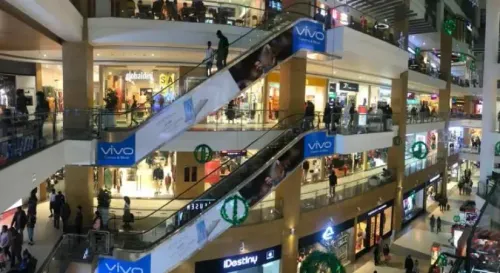
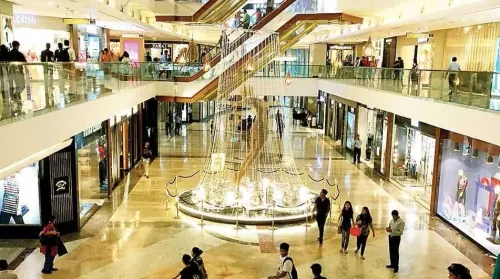
Unlike their Western counterparts, Indian malls serve as lifestyle hubs, centered on entertainment, dining, and social experiences. Daily foot traffic in major malls frequently exceeds 20,000 on weekdays and skyrockets to over 40,000 on weekends.
Food and beverage (F&B) and entertainment now account for 30-35 percent of footfalls, creating a resilient retail mix that is largely resistant to the online retail disruptions affecting Western malls, the report highlighted.
One of the most appealing aspects for global investors is that Indian malls have not succumbed to e-commerce; rather, they are reaping its benefits.
India’s e-commerce penetration stands at approximately 8 percent, significantly lower than the 20 percent+ levels observed in China and the US.
Many leading D2C brands report that offline conversions are 2-3 times higher than online sales. In India, physical retail maintains its significance even in a digital era, the report concluded.
“This makes India unique among the world’s top retail markets,” Kejriwal remarked.
Point of View
I recognize the pivotal role India’s retail sector plays in our economy. The influx of investments amidst a global retail crisis showcases India’s resilience and potential. We must encourage further developments in this sector to sustain growth and attract foreign investment.
NationPress
10 Oct 2026
Frequently Asked Questions
What is the projected retail investment for India?
India is projected to attract over $3.5 billion in retail investments over the next three years.
How does India's per capita retail space compare to other countries?
India's per capita retail space is among the lowest globally, with only about 4 to 6 square feet per person in tier 1 cities.
What percentage of footfalls do F&B and entertainment account for in Indian malls?
Food and beverage and entertainment make up about 30-35% of footfalls in Indian malls.
How does the demand for retail space in India compare to the US and China?
India's demand for retail space is significantly increasing, while the US and China have higher per capita retail space.
What is unique about Indian malls compared to western malls?
Indian malls are lifestyle destinations that focus on entertainment and dining, making them resilient to online retail disruptions.