RUSH3D-HR microscope reveals how electroacupuncture halts immune cell surge
Synopsis
For the first time, China's RUSH3D-HR microscope has captured live footage of electroacupuncture visibly halting an immune cell stampede inside a mouse spleen — turning a millennia-old therapy into a quantifiable cellular event, published in Nature Biotechnology on July 15, 2026.
Key Takeaways
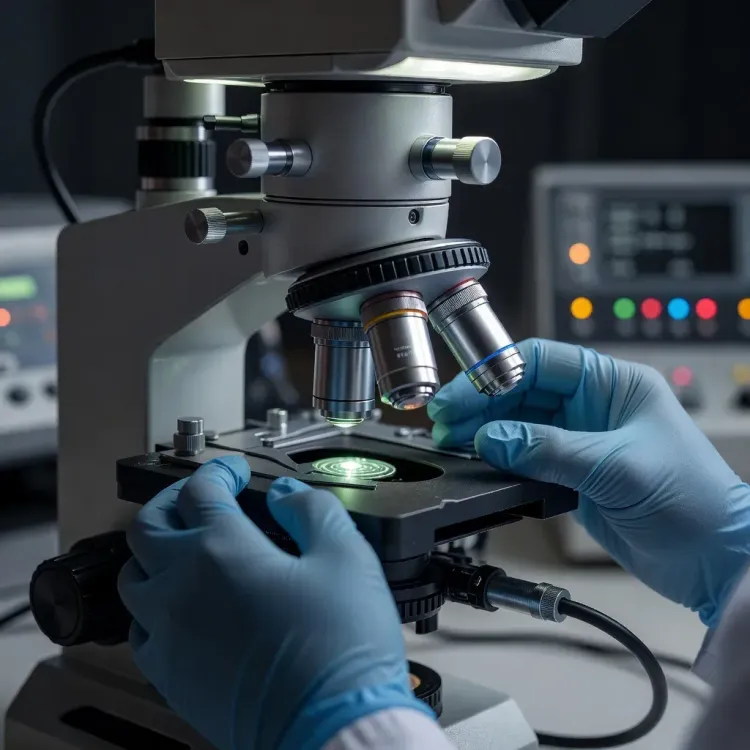
RUSH3D-HR , a high-resolution mesoscale microscope, was used to image immune cell movement in real time inside living mice.
Applying electroacupuncture to the Zusanli (ST36) acupoint below the knee visibly suppressed a surge of immune cells toward inflamed tissue in the mouse spleen .
The research was a collaboration between Tsinghua University , Tongji Hospital , and Zhejiang Hehu Technology .
Findings were published in peer-reviewed journal Nature Biotechnology on July 15, 2026 .
The system offers longer observation periods and less tissue damage than previous imaging methods, with applications beyond acupuncture to immune response and disease research.
A Chinese research team has used a next-generation RUSH3D-HR mesoscale microscope to capture, for the first time in real time, how electroacupuncture suppresses the movement of immune cells inside living mice — delivering direct visual evidence of the ancient therapy's anti-inflammatory mechanism. The findings were published in the peer-reviewed journal Nature Biotechnology on July 15, 2026.
What the microscope revealed
Scientists used RUSH3D-HR to observe thousands of immune cells swarming toward sites of induced inflammation in the mouse spleen. When electroacupuncture was applied to a specific acupoint below the knee — known as Zusanli (ST36) — the cellular surge was visibly and measurably suppressed. The imagery provided what researchers described as vivid, real-time evidence of acupuncture's biological anti-inflammatory action.
The team and the technology
The study was conducted by a collaborative team from Tsinghua University, Tongji Hospital, and Zhejiang Hehu Technology. According to the research team, 'millions of cells and organelles in mammals continuously migrate, interact and orchestrate to form sophisticated populational dynamics that drive diverse functionalities in different physiological or pathological states.' The RUSH3D-HR system was designed to address the longstanding challenge of imaging large volumes of living tissue at high resolution without causing significant damage.
Why it matters
Previous imaging methods required trade-offs between resolution, field of view, and tissue damage over extended observation periods. The new system reportedly allows scientists to study complex biological processes in live animals over long durations with reduced tissue disruption — potentially accelerating understanding of immune response, disease progression, and therapeutic targets. The direct visualisation of acupuncture's cellular effects marks a significant methodological leap for a field that has historically struggled to produce mechanistic evidence acceptable to Western biomedical standards.
The competitive backdrop
China has been systematically investing in advanced bioimaging and life-sciences instrumentation as part of its push for self-sufficiency in core scientific tools. Institutions such as Tsinghua University and industry partners like Zhejiang Hehu Technology are central to that effort. The publication in Nature Biotechnology — one of the most selective journals in the field — signals that the instrumentation and the underlying science have cleared rigorous international peer review.
What's next
The RUSH3D-HR platform is expected to be applied beyond acupuncture research to broader studies of immune dynamics, cancer progression, and drug response in living organisms. The team's work opens the door to a new class of longitudinal in-vivo studies that were previously impractical. Researchers and pharmaceutical developers studying inflammation pathways are likely to be among the earliest adopters of the technology.
Point of View
But the deeper story is that Beijing is cultivating a domestic bioimaging supply chain that could reduce dependence on foreign microscopy platforms. If RUSH3D-HR scales commercially, it could reshape how pharmaceutical and academic labs worldwide conduct longitudinal live-animal studies.
NationPress
20 Oct 2026
Frequently Asked Questions
What did the RUSH3D-HR microscope discover about acupuncture?
The RUSH3D-HR mesoscale microscope captured, in real time, how applying electroacupuncture to the Zusanli (ST36) acupoint suppressed a surge of immune cells toward inflamed tissue in the spleens of living mice. This provided direct visual evidence of acupuncture's anti-inflammatory biological mechanism for the first time.
Who conducted the acupuncture microscope research?
The study was carried out by a joint team from Tsinghua University , Tongji Hospital , and Zhejiang Hehu Technology . Their findings were published in the peer-reviewed journal Nature Biotechnology on July 15, 2026 .
Why is the RUSH3D-HR microscope significant for science?
RUSH3D-HR enables high-resolution imaging of large volumes of living tissue over extended periods with less damage than conventional methods. This makes it possible to study immune response, disease progression, and drug effects in live animals in ways that were previously impractical.
What is the Zusanli (ST36) acupoint?
Zusanli (ST36) is a traditional acupuncture point located below the knee, widely studied for its reported anti-inflammatory effects. In this research, applying electroacupuncture to ST36 visibly reduced the migration of immune cells to sites of induced inflammation in mice.
What are the broader applications of this imaging technology?
Beyond acupuncture research, the RUSH3D-HR platform is expected to be used for studying immune dynamics, cancer progression, and pharmaceutical drug responses in living organisms. Researchers in immunology and drug development are likely to be early adopters of the technology.