China scientists grow self-exercising muscle grafts that mimic workouts
Synopsis
Scientists at China's Institute of Zoology have grown self-exercising muscle grafts that — in mice — replicate the systemic benefits of physical exercise, including improved bone density, liver function, and cognition, and can also produce GLP-1 inside the body. Human trials are the next frontier.
Key Takeaways
Chinese Academy of Sciences researchers published myograft findings in Nature Ageing on 26 August 2026 .
A single subcutaneous injection of muscle cells caused self-assembly into functional skeletal muscle grafts in mice.
Myografts improved whole-body muscle mass , bone density , endurance , liver function , and cognitive health in preclinical mouse models.
The grafts can act as an in-body biofactory, producing therapeutic proteins including GLP-1 , relevant to diabetes and obesity treatment.
Study author Professor Ng Shyh-Chang said the technology 'distils the best part of exercise' while avoiding cardiovascular and joint stress.
Human clinical trials are required before safety and pharmacological profiles can be confirmed, the research team cautioned.
Chinese Academy of Sciences researchers have engineered self-exercising muscle grafts — dubbed 'myografts' — that deliver the physiological benefits of physical exercise without any bodily movement, according to a study published in the peer-reviewed journal Nature Ageing on Wednesday, 26 August 2026. The breakthrough, developed at the Institute of Zoology in China, could transform care for bedridden patients and those with age-related conditions.
What the Research Found
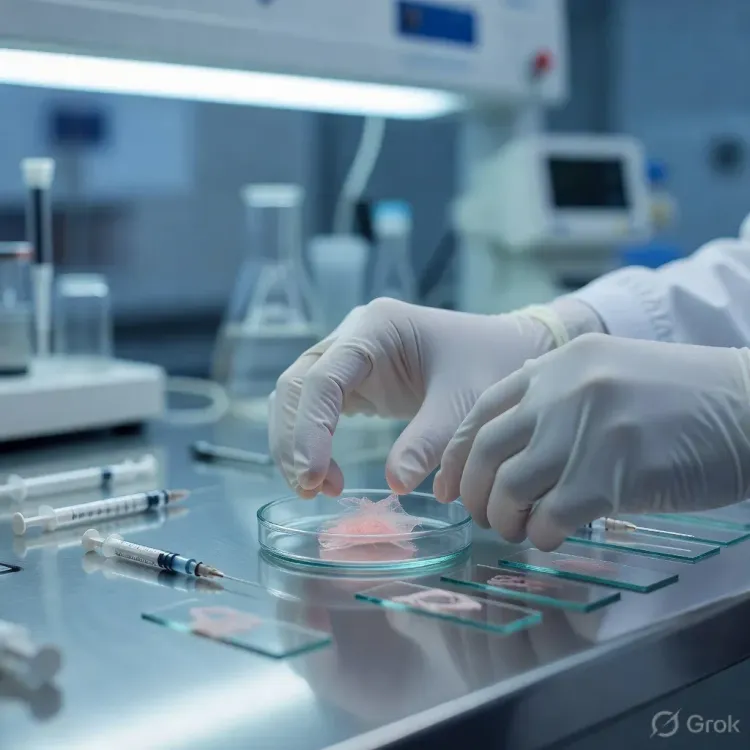
In preclinical mouse studies, a subcutaneous injection of muscle cells caused the cells to self-assemble into functional muscle grafts beneath the skin. The grafts not only boosted whole-body muscle mass but also produced measurable improvements in bone density, endurance, liver function, and cognitive health — a remarkably broad systemic effect from a localised implant.Why It Matters
The myografts are designed to address conditions where conventional exercise is impossible or dangerous — including Alzheimer's disease, osteoporosis, and severe age-related muscle loss (sarcopenia). Professor Ng Shyh-Chang, a principal investigator at the Chinese Academy of Sciences' Institute of Zoology and a study author, framed the advance in stark terms: 'In a sense, we're distilling the best part of exercise out … and avoiding all the negative effects of exercise, whether it's the stress on the heart or the stress on your joints,' he said.Living Biofactory Potential
Beyond mimicking exercise, the research team found that myografts could function as an in-body biofactory, producing targeted therapeutic proteins on demand. The team specifically identified the ability to synthesise GLP-1 — the compound class underlying blockbuster diabetes and weight-loss drugs — directly within the patient's body, pointing to a potential delivery mechanism that bypasses conventional injections.Current Limitations and the Road Ahead
The researchers were careful to flag the preliminary nature of their findings. 'While the complete safety and [pharmacological] profile of autologous myografts remains to be established in human trials, our mouse preclinical studies constitute a noteworthy first step in this direction,' the team stated in the published paper. Human trials are the critical next milestone before any clinical or commercial application can be considered. If the safety profile holds in human studies, myograft technology could eventually extend well beyond therapeutic use — with the researchers noting future applications could reach people who simply want to build muscle without conventional exercise. Investors, pharmaceutical companies, and regulators tracking the GLP-1 and regenerative medicine spaces should watch this programme closely.Point of View
GLP-1 drug delivery, Alzheimer's care, and osteoporosis treatment — which explains the journal-level attention it has attracted. What mainstream coverage tends to underplay is the GLP-1 biofactory angle: if myografts can produce sustained endogenous GLP-1, they could challenge the dominance of injectable semaglutide and tirzepatide in ways that no small-molecule pill has managed. China's positioning of this research within the Chinese Academy of Sciences also signals state-level strategic interest in longevity biotech, a domain where Beijing has been quietly accelerating investment. The preclinical-to-human translation gap remains the decisive risk, but the breadth of systemic effects observed in mice is unusual enough to warrant serious scientific and commercial attention.
NationPress
11 Oct 2026
Frequently Asked Questions
What is a self-exercising muscle graft?
A self-exercising muscle graft, or 'myograft', is a lab-engineered implant made from a patient's own muscle cells that, once injected under the skin, self-assembles and contracts autonomously to replicate the physiological effects of physical exercise. In mouse studies, a single subcutaneous injection produced improvements in muscle mass, bone density, endurance, liver function, and cognitive health without any physical activity by the subject.
Who developed the myograft and where was it published?
The myograft was developed by a research team led by Professor Ng Shyh-Chang , a principal investigator at the Chinese Academy of Sciences' Institute of Zoology in China . The findings were published in the peer-reviewed journal Nature Ageing on 26 August 2026 .
Can myografts produce GLP-1 inside the body?
Yes, according to the research team, myografts can function as a living biofactory to produce targeted therapeutic proteins within the body, including GLP-1 — a compound used to manage diabetes and as a weight-loss treatment. This suggests a potential new delivery mechanism for GLP-1 therapies that does not require repeated injections.
Are myografts safe for humans?
Human safety has not yet been established. The research team stated that 'the complete safety and [pharmacological] profile of autologous myografts remains to be established in human trials,' describing the mouse preclinical results as 'a noteworthy first step.' Clinical trials will be required before any therapeutic use in people is possible.
Who could benefit most from this technology?
The primary intended beneficiaries are patients who cannot exercise — including bedridden individuals and those with age-related conditions such as Alzheimer's disease and osteoporosis . The researchers also noted that future applications could extend to healthy individuals who want to build muscle without conventional gym-based exercise.