PM Modi remembers JP Narayan on birth anniversary
Synopsis
Prime Minister Narendra Modi remembered Loknayak Jayaprakash Narayan on his birth anniversary, honouring JP's fearless stand during the Emergency, his commitment to marginalised communities, and linking his ideals to the government's Viksit Bharat mission.
Key Takeaways
Prime Minister Narendra Modi paid tribute to Jayaprakash Narayan on his birth anniversary, 11 October 2026 .
JP Narayan, born 11 October 1902 in Sitab Diara, Bihar , led the nationwide resistance against the 1975–1977 Emergency .
Modi specifically cited JP's 'fearless voice during the Emergency' and his drive to reach 'those at the margins of society.' The tribute explicitly connects JP's ideals to the government's Viksit Bharat vision — a developed India by 2047 .
JP Narayan was awarded the Bharat Ratna posthumously in 1999 ; he passed away in 1979 .
JP's cross-partisan legacy — claimed by movements across the political spectrum — makes his anniversary a recurring touchstone in Indian public life.
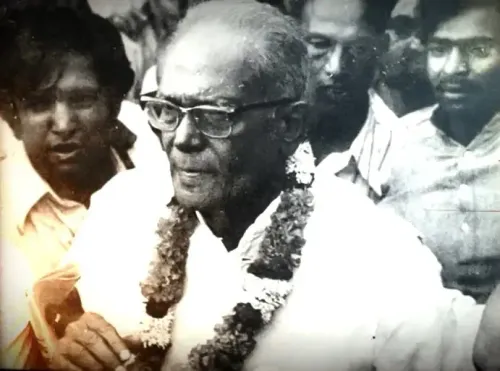
A freedom fighter who became the conscience of a nation, Jayaprakash Narayan — revered across India as Loknayak (the People's Leader) — is being remembered on his birth anniversary, 11 October 2026. Prime Minister Narendra Modi paid tribute on X, invoking JP's legacy of fearless dissent, inclusive governance, and national renewal.
The voice that challenged Emergency-era India
Prime Minister Modi specifically highlighted JP Narayan's 'fearless voice during the Emergency' — a reference to the 1975–1977 period when Prime Minister Indira Gandhi suspended civil liberties and constitutional rights. JP became the most prominent face of resistance, galvanising a nationwide movement that ultimately ended Emergency rule and reshaped Indian democracy. His call for 'Total Revolution' (Sampoorna Kranti) remains one of the most consequential episodes in post-independence Indian political history.
From freedom struggle to people's movement
Born on 11 October 1902 in Sitab Diara, Bihar, Jayaprakash Narayan gave up a promising academic career in the United States to join India's independence movement alongside Mahatma Gandhi and Jawaharlal Nehru. After independence, he stepped away from electoral politics entirely — a rare act of voluntary self-restraint — to work with Vinoba Bhave's Bhoodan movement and champion the cause of marginalised communities. That combination of moral authority and grassroots commitment is what Prime Minister Modi described as JP's passion for 'reaching those who are at the margins of society.'
JP's ideals and the Viksit Bharat framework
Prime Minister Modi closed his tribute with a direct policy link, stating that his government remains 'committed to fulfilling his ideals as we work to build a Viksit Bharat' — the administration's vision of a developed India by 2047, the centenary of independence. The invocation of JP alongside this framework is deliberate: JP's emphasis on decentralised governance, grassroots participation, and reaching the last mile aligns rhetorically with flagship programmes targeting rural welfare, financial inclusion, and anti-corruption measures. JP Narayan was awarded the Bharat Ratna, India's highest civilian honour, in 1999 — posthumously, as he passed away in 1979.
JP Narayan's legacy belongs to no single party — he was claimed and contested by movements across the political spectrum. That cross-partisan resonance is precisely what makes his birth anniversary a moment every government seeks to own. The question he always posed was not which party was in power, but whether power was actually reaching the people.
Point of View
Prime Minister Modi frames the BJP government as the inheritor of JP's moral and reformist tradition — a tradition that historically cut across party lines. The explicit link to Viksit Bharat is a studied rhetorical move: it positions a long-term economic vision within a lineage of grassroots, people-first governance rather than mere technocratic ambition. JP's legacy is, however, genuinely contested — the Janata Party coalition he inspired in 1977 was pluralist and non-BJP in character, meaning the tribute carries an implicit competition for historical ownership. That tension, unspoken but present, is what gives anniversary tributes to JP their particular political texture.
NationPress
11 Oct 2026
Frequently Asked Questions
Who was Jayaprakash Narayan and why is he called Loknayak?
Jayaprakash Narayan was a freedom fighter, socialist leader, and social activist born on 11 October 1902. He earned the title 'Loknayak' (People's Leader) for his role in leading the Total Revolution movement against the Emergency imposed by Prime Minister Indira Gandhi in 1975, making him a symbol of democratic resistance.
What did PM Modi say about JP Narayan on his birth anniversary in 2026?
Prime Minister Modi said JP Narayan's appeal 'transcended generations,' praised his fearless voice during the Emergency, and noted his passion for good governance and reaching marginalised communities. Modi also linked JP's ideals to the government's Viksit Bharat mission.
What was JP Narayan's role during the Emergency?
During the 1975–1977 Emergency, Jayaprakash Narayan became the most prominent leader of the opposition movement against Indira Gandhi's suspension of civil liberties. His call for 'Total Revolution' united disparate political groups and ultimately contributed to the Emergency's end and the Congress party's electoral defeat in 1977.
Did Jayaprakash Narayan receive the Bharat Ratna?
Yes. Jayaprakash Narayan was awarded the Bharat Ratna, India's highest civilian honour, posthumously in 1999. He had passed away on 8 October 1979.
What is Viksit Bharat and how does it connect to JP Narayan's ideals?
Viksit Bharat is the Modi government's vision of transforming India into a fully developed nation by 2047, the centenary of independence. The government draws a rhetorical link between JP's emphasis on decentralised governance and reaching the last mile of society and its own programmes targeting rural welfare and inclusion.