CM Himanta Links Navratri's Shailaputri to Orunodoi Women's Scheme
Synopsis
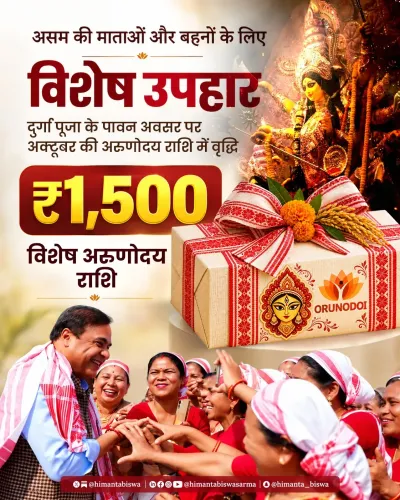
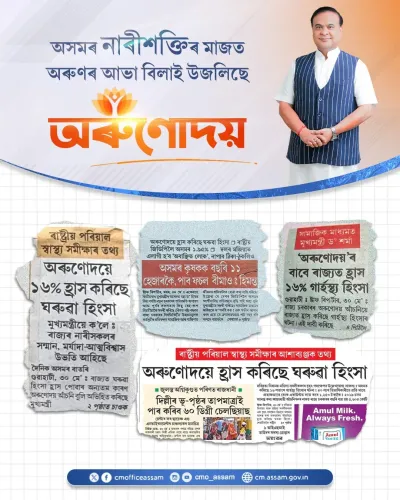
On Navratri's first day, Assam CM Himanta Biswa Sarma linked the symbolism of Maa Shailaputri to the Orunodoi scheme, which delivers ₹1,250 monthly to over 37 lakh women across Assam with no intermediaries.
Key Takeaways
Assam CM Himanta Biswa Sarma posted a Navratri message on 11 October 2026 connecting Maa Shailaputri's symbolism to women's economic stability.
The Orunodoi scheme currently benefits more than 37 lakh women in Assam with a monthly direct transfer of ₹1,250 .
Transfers go directly into beneficiaries' bank accounts with no middlemen , giving women autonomous spending power.
Sarma framed the scheme's design — routing money to women specifically — as a deliberate policy choice rooted in trust in women's household judgment.
The post blends devotional Navratri messaging with a governance communication strategy around women's welfare.
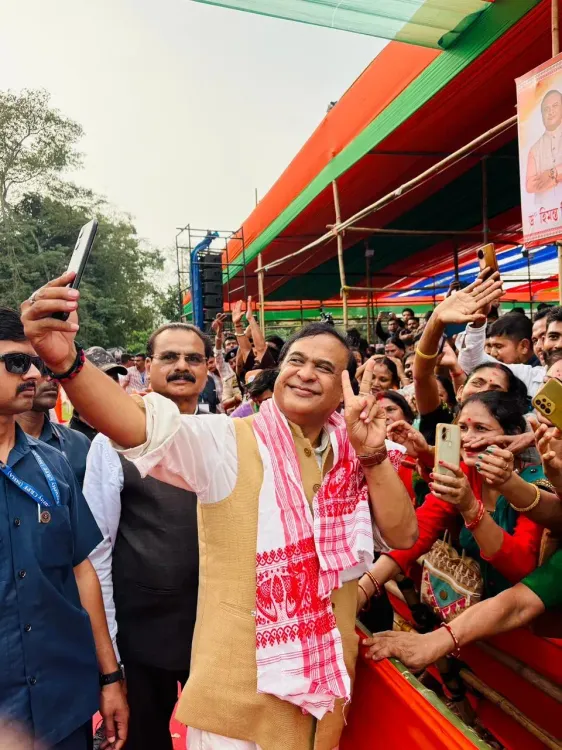
On the first day of Navratri, Assam Chief Minister Himanta Biswa Sarma drew a direct line between the goddess Maa Shailaputri — symbol of steadiness and strength — and the 37 lakh women who receive monthly cash transfers under Assam's Orunodoi scheme, framing the welfare programme as the state's own act of devotion to the spirit of the festival.
Orunodoi's ₹1,250 a month — and the women behind it
The Chief Minister's post, shared on Sunday, 11 October 2026, invoked the Sanskrit salutation ॐ देवी शैलपुत्र्यै नमः ('We bow to Goddess Shailaputri') before turning to hard numbers. More than 37 lakh women in Assam receive ₹1,250 directly in their bank accounts every month through Orunodoi, with no intermediary in the chain. Sarma described the money as covering 'medicines, pulses, vegetables and the small needs that keep a household running with dignity.'
The deliberate choice to route the transfer to women — rather than a generic household account — was central to his message. 'The mother of the house knows best where every rupee must go,' he wrote, tying the programme's design philosophy to the Navratri theme of feminine strength and wisdom.
The Shailaputri parallel: stability as a political prayer
Maa Shailaputri, worshipped on the first of the nine nights of Navratri, is the daughter of the Himalayas and represents the unshakeable foundation on which all journeys begin. Sarma used that imagery with precision: 'When she is secure, the whole family stands on stable ground, just as all of creation rests on the strength of the Mother.' The closing prayer — 'may no mother in Assam have to worry about her family's next meal' — compressed both the religious sentiment and the policy ambition into a single line.
The framing is notable because it positions a direct-benefit-transfer scheme not as a government entitlement but as an expression of cultural and spiritual values around women's agency — a communication choice that blends welfare messaging with the devotional calendar.
What Orunodoi means at scale
At over 37 lakh beneficiaries, Orunodoi is one of the largest women-targeted direct-cash-transfer programmes in northeastern India. The monthly ₹1,250 payout, credited without middlemen, is designed to give women autonomous spending power over household essentials. Sarma's post underscores the scheme's positioning as a dignity-first intervention — not a subsidy for goods, but cash that respects the recipient's judgment on how to use it.
As Assam enters the nine days of Navratri, the Chief Minister's message is as much a governance statement as a religious one: that the state's version of 'Shakti' is measured in bank-account credits, not just temple offerings.
Point of View
The messaging insulates the programme from purely transactional political readings. At 37 lakh beneficiaries, the scheme is also a formidable voter-outreach instrument ahead of any electoral cycle. The broader pattern — BJP chief ministers using festival calendars to amplify welfare narratives — reflects a national playbook that fuses cultural identity with social-sector delivery.
NationPress
11 Oct 2026
Frequently Asked Questions
What is the Orunodoi scheme in Assam?
Orunodoi is a direct-cash-transfer programme run by the Assam government that deposits ₹1,250 every month into the bank accounts of women beneficiaries, with no intermediaries involved. It is designed to cover essential household expenses such as medicines, pulses, and vegetables.
How many women benefit from Orunodoi in Assam?
According to CM Himanta Biswa Sarma's post on 11 October 2026, more than 37 lakh women in Assam receive monthly payments under the Orunodoi scheme.
Why is the Orunodoi money given to women and not the household?
CM Sarma has stated the transfer is routed to women by design, on the principle that 'the mother of the house knows best where every rupee must go,' giving women direct financial agency over household decisions.
What is the significance of Maa Shailaputri on the first day of Navratri?
Maa Shailaputri, the daughter of the Himalayas, is worshipped on the first night of Navratri and symbolises steadiness, strength, and the firm foundation on which all journeys begin.
What did Assam CM Himanta Biswa Sarma say on Navratri 2026?
On the first day of Navratri 2026, CM Sarma invoked Maa Shailaputri's symbolism and connected it to the Orunodoi scheme, praying that no mother in Assam should worry about her family's next meal and that every woman receives stability and strength.