CM Bhupendra Patel Greets Gujarat on Navratri's First Day
Synopsis
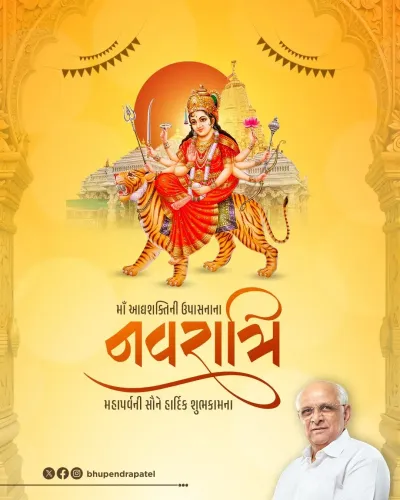
Gujarat Chief Minister Bhupendra Patel marked the first day of Navratri 2026 by offering reverence to Maa Shailputri, invoking her symbols of unwavering resolve and steadfast faith, and praying for strength for all devotees on their path of duty.
Key Takeaways
CM Bhupendra Patel greeted Gujarat on the first day of Navratri 2026 , beginning October 11, 2026 .
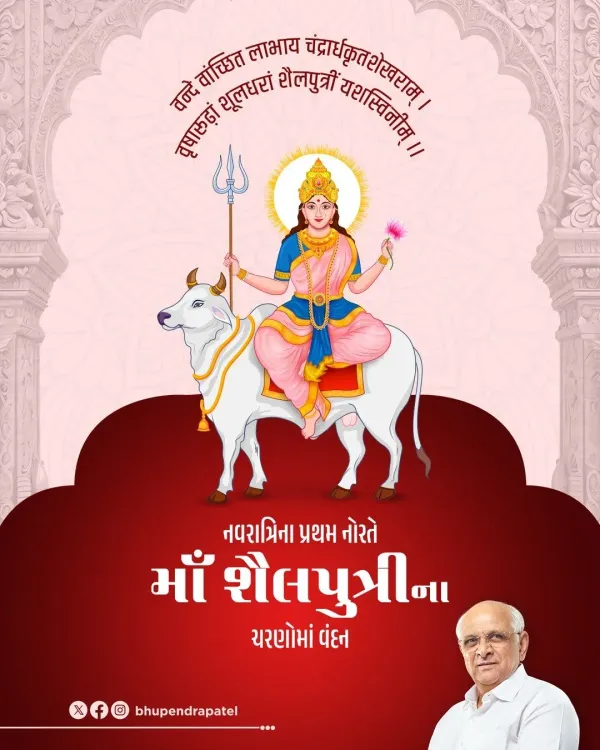
The post was in Gujarati and offered prayers to Maa Shailputri , the presiding goddess of the first night.
Patel described Shailputri as the symbol of 'unwavering resolve, boundless faith, and steadiness.' He prayed for Himalayan-strength resolve for all devotees to fulfil their duties.
Gujarat is nationally renowned for its elaborate Garba traditions during Navratri's nine nights.
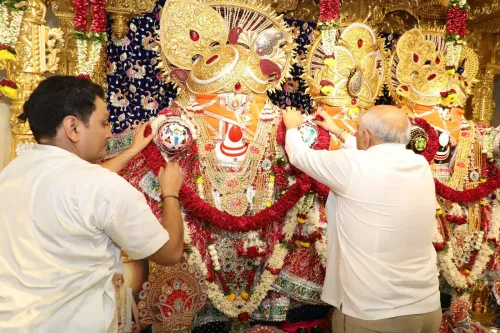
As the first sunrise of Navratri 2026 broke across Gujarat, Chief Minister Bhupendra Patel turned to the divine — offering his reverence at the feet of Maa Shailputri, the first of the nine forms of Goddess Durga, on Sunday, October 11.
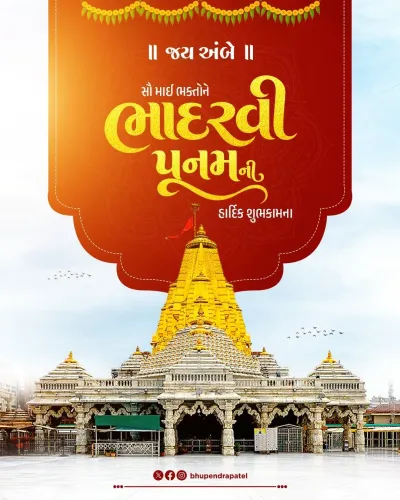
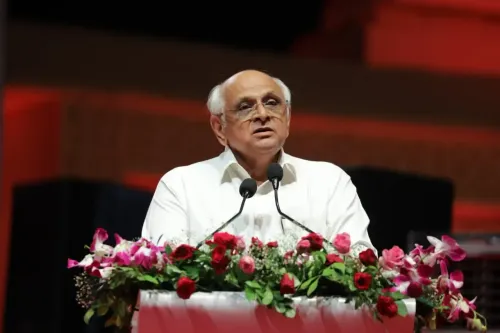
Writing in Gujarati, CM Patel invoked Shailputri — the daughter of the Himalayas — as a symbol of 'unwavering resolve, boundless faith, and steadiness.' He prayed that Maa Bhagwati grant every devotee the mountain-firm resolve and unyielding strength needed to fulfil their duties and remain steadfast on the path of purpose, closing with the invocation 'Jay Ambe!'
Shailputri: The First Night's Presiding Goddess
In the Hindu tradition, each of the nine nights of Navratri is dedicated to a distinct form of the Goddess. The first night belongs to Maa Shailputri — 'Shail' meaning mountain, 'putri' meaning daughter — born to the king of mountains, Himavat. She is depicted riding a bull, bearing a trident and a lotus, and is revered as the source of primordial energy and steadfastness.
The qualities CM Patel highlighted — firm conviction, faith, and stability — are classically associated with Shailputri's mountain lineage: immovable, ancient, enduring.
Navratri's Significance in Gujarat
Gujarat holds Navratri among its most celebrated festivals, famously known for its elaborate Garba traditions that draw participants across the state and far beyond. The nine-night festival, which in 2026 begins on October 11, is both a spiritual and cultural cornerstone of Gujarati life — a moment when public figures, households, and communities align in collective devotion.
For a sitting Chief Minister of Gujarat, marking each day of Navratri is as much a civic gesture as a personal one — a public affirmation of shared identity during the state's most festive season.
Point of View
Navratri carries both spiritual and electoral weight, given the state's deep Garba tradition and the festival's mass participation. The invocation of Shailputri's qualities — steadfastness, duty, mountain-firm resolve — also carries a subtle governance register, framing public service as devotion. It is routine ceremonial communication, but in Gujarat's political culture, no Navratri goes unmarked by its chief minister.
NationPress
11 Oct 2026
Frequently Asked Questions
Who is Maa Shailputri and why is she worshipped on the first day of Navratri?
Maa Shailputri is the first of the nine forms of Goddess Durga, worshipped on the opening night of Navratri. She is the daughter of Himavat, the king of mountains, and symbolises steadfastness, primordial energy, and unwavering faith.
What did Gujarat CM Bhupendra Patel post on Navratri 2026?
CM Bhupendra Patel posted a Gujarati message on October 11, 2026, offering reverence to Maa Shailputri and praying that Maa Bhagwati grant all devotees the strength and resolve of the Himalayas to fulfil their duties.
When does Navratri 2026 begin and end?
Navratri 2026 begins on October 11 and spans nine nights of worship dedicated to different forms of Goddess Durga, concluding on Navami.
Why is Navratri especially significant in Gujarat?
Gujarat is renowned for its Garba dance tradition during Navratri, which is celebrated with exceptional scale and cultural pride across the state, making it one of the most important festivals in Gujarati public and social life.
What qualities is Maa Shailputri associated with?
Maa Shailputri is associated with firm resolve, boundless faith, steadiness, and primordial energy — qualities linked to her mountain heritage as the daughter of Himavat, the Himalayan king.