Chinese researchers use microbubbles to shrink aggressive liver tumours
Synopsis
Scientists at two Chinese hospitals have shown that combining standard liver cancer therapy with ultrasound-activated microbubbles caused tumours to shrink more than standard care alone — a peer-reviewed finding that could reshape minimally invasive oncology.
Key Takeaways
Researchers from the Affiliated Hospital of Guangdong Medical University and Huzhou Central Hospital published findings in Scientific Reports on July 19 showing microbubble-assisted ultrasound therapy reduced tumour size in liver cancer patients.
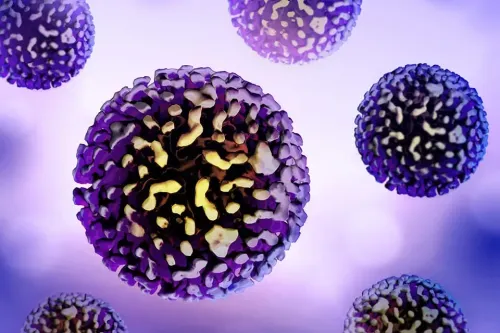
Microbubbles — gas-filled spheres a few micrometres in diameter — were originally developed as ultrasound contrast agents and are now being explored for therapeutic use.
Patients who received the experimental treatment alongside standard therapy showed greater tumour shrinkage than those on standard therapy alone.
The manuscript was described by the journal as reviewed but unedited, released under legal disclaimers for early access.
The researchers stated the technology 'shows [promise] for enhancing localised treatment approaches in cancer patients.' Broader clinical trials with larger patient groups will be needed to confirm safety and efficacy at scale.
Chinese researchers have identified a potentially safe method to shrink tumours associated with an aggressive form of liver cancer, using a combination of ultrasound and microbubbles that could augment existing treatment protocols. The findings, published in the peer-reviewed journal Scientific Reports on July 19, offer an early but significant signal that microbubble-assisted therapy may improve outcomes beyond standard care alone.
What the study found
The research, conducted by scientists at the Affiliated Hospital of Guangdong Medical University and Huzhou Central Hospital, compared two groups of liver cancer patients — one receiving only the standard treatment and another receiving the standard treatment alongside experimental ultrasound and microbubble therapy. Tumours in the second group shrank more than in those who received standard care alone, according to the paper.
The manuscript, described by the journal as reviewed but unedited and provided with legal disclaimers for early access, noted: 'This technology shows [promise] for enhancing localised treatment approaches in cancer patients.'
What are microbubbles?
Microbubbles are tiny gas-filled spheres, typically just a few micrometres in diameter, that were originally developed as contrast agents for ultrasound imaging. When injected into the bloodstream and exposed to ultrasound waves, these bubbles can expand or contract, a mechanical action researchers believe can be harnessed to target tumour tissue more precisely.
Beyond medicine, microbubbles are also deployed in engineering and environmental clean-up applications, reflecting the breadth of their utility across scientific disciplines.
Why it matters
Liver cancer — particularly its more aggressive variants — remains one of the leading causes of cancer-related mortality globally, with limited effective treatment options at advanced stages. A non-invasive, ultrasound-guided approach that amplifies the effect of existing therapies could reduce the burden on patients who are poor candidates for surgery or intensive chemotherapy.
The involvement of two established Chinese hospital research affiliates underscores the growing role of China's clinical research ecosystem in advancing oncology innovation, particularly in areas of image-guided and minimally invasive interventions.
The competitive backdrop
Microbubble-assisted drug delivery and sonoporation — the use of ultrasound to temporarily increase cell membrane permeability — have been subjects of increasing global research interest. Several academic and biotech groups in Europe, the United States, and Asia are exploring similar platforms, though clinical validation at scale remains limited. This study adds a peer-reviewed data point to a field still largely in experimental phases.
What's next
The researchers' early findings are expected to prompt follow-up studies with larger patient cohorts to establish statistical robustness and long-term safety profiles. If validated through broader clinical trials, microbubble-enhanced ultrasound therapy could eventually be integrated into standardised oncology care pathways, particularly for patients with advanced liver tumours where treatment options are currently constrained.
Point of View
Meaning its commercialisation pathway involves both regulatory tracks simultaneously, complicating and potentially delaying scale-up. China's accelerating investment in clinical research infrastructure — evidenced by the dual-hospital collaboration here — positions its institutions to generate early-phase data faster than many Western counterparts, though international validation will remain essential for global adoption. The real test will be whether larger, randomised controlled trials can replicate these results and whether regulators in major markets are prepared to fast-track a platform technology with applications well beyond liver cancer.
NationPress
25 Sept 2026
Frequently Asked Questions
What did the Chinese microbubble liver cancer study find?
Researchers found that liver cancer patients who received ultrasound-activated microbubble therapy alongside standard treatment experienced greater tumour shrinkage than those who received standard treatment alone. The study was published in Scientific Reports on July 19 by scientists from the Affiliated Hospital of Guangdong Medical University and Huzhou Central Hospital .
What are microbubbles and how do they work in cancer treatment?
Microbubbles are tiny gas-filled spheres, typically a few micrometres in diameter, originally used as contrast agents in ultrasound imaging. When injected into the bloodstream and exposed to ultrasound waves, they expand or contract, a mechanical action that researchers believe can enhance drug delivery or directly disrupt tumour tissue.
Why does this liver cancer research matter?
Liver cancer, especially in its aggressive forms, has limited effective treatment options at advanced stages. A non-invasive, ultrasound-guided approach that boosts the effectiveness of existing therapies could benefit patients who are not suitable candidates for surgery or intensive chemotherapy.
Is microbubble cancer therapy approved or still experimental?
Microbubble-assisted therapy remains experimental and has not yet received broad regulatory approval for cancer treatment. The July 19 paper itself was released as a reviewed but unedited manuscript with legal disclaimers, indicating the research is at an early clinical stage requiring further validation through larger trials.
Which hospitals conducted the microbubble liver cancer study?
The study was conducted by researchers from the Affiliated Hospital of Guangdong Medical University and Huzhou Central Hospital , both based in China . Their findings were published in the peer-reviewed journal Scientific Reports .