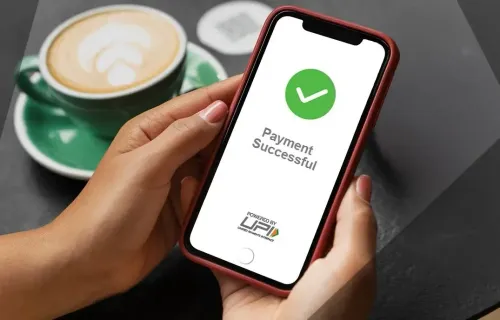
UPI is India's fintech crown jewel, says PM Modi at Global Fintech Fest 2026
Synopsis
At the Global Fintech Fest 2026 in Mumbai, PM Modi revealed that UPI processed over 24 billion transactions in August alone — roughly 50 lakh in the first ten minutes of the event itself. With UPI now live in 11 countries and Modi pushing for indigenous payment standards, India is no longer just exporting a payments app; it is bidding to set the rules of global digital finance.
Key Takeaways
PM Modi inaugurated the Global Fintech Fest 2026 in Mumbai on 8 September , calling UPI the ‘undisputed champion’ of India’s fintech success.
UPI recorded over 24 billion transactions in August 2026 alone, with roughly 50 lakh transactions processed in the first ten minutes of the event.
UPI is now live in 11 countries , with Modi pushing for deeper integration with partner nations’ domestic payment systems.
French President Emmanuel Macron was quoted as calling UPI ‘not just a tech story, but a civilizational story.’ Modi called for indigenous payment rules and standards to replace reliance on foreign-designed card protocols.
The Prime Minister urged the fintech sector to rapidly expand into credit, insurance, savings, investments, and pensions beyond payments.
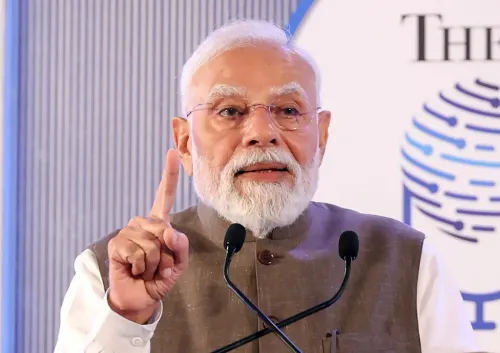
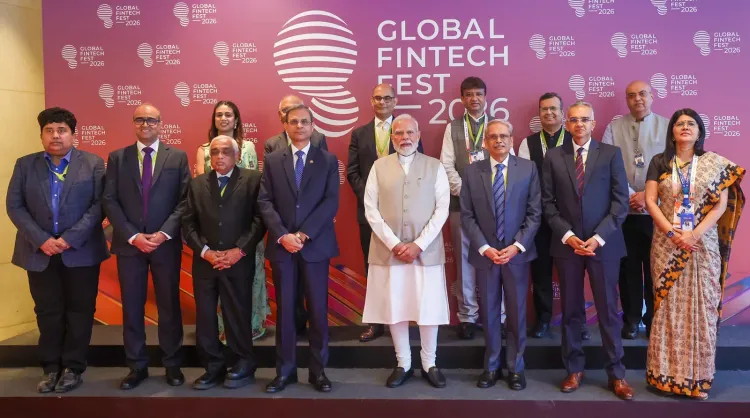
Prime Minister Narendra Modi on Tuesday, 8 September declared India's Unified Payments Interface (UPI) the “undisputed champion” of the country’s fintech success story, speaking at the inauguration of the Global Fintech Fest 2026 in Mumbai. Addressing an audience of global financial leaders, Modi underscored that any discussion of fintech innovation worldwide would remain incomplete without UPI at its centre.
A Decade of Digital Transformation
Reflecting on UPI’s tenth anniversary, marked on 25 August, Modi drew a sharp contrast between the early scepticism expressed by financial elites and today’s ground reality — where millions of previously unbanked citizens are now active participants in India’s digital economy. “This is such a massive transformation that whenever fintech is discussed, it will remain incomplete without UPI,” he said.
Modi cited a striking metric to illustrate UPI’s scale: over 24 billion transactions were processed in August alone, with roughly 50 lakh transactions completed in just the first ten minutes of the Fest itself. “These are astonishing figures that tell us how long a journey we have covered,” he remarked.
A Civilisational Story, Not Just a Tech Story
To underscore UPI’s broader global significance, Modi invoked French President Emmanuel Macron, who had reportedly described UPI as far more than a technological achievement. “It is because of this impact that French President Emmanuel Macron said that UPI is not just a tech story, it is a civilizational story,” Modi quoted.
This framing positions UPI not merely as a payments infrastructure but as a model of socioeconomic empowerment — one that has reached communities where traditional bank branches never could. “Where traditional banks could not reach, where bank branches could not reach, UPI has taken the banking system to that place, to that person,” the Prime Minister said.
Global Expansion and the Remittance Opportunity
Modi highlighted that UPI is now operational in 11 countries, turning cross-border digital payments into an everyday reality. He set out an ambitious next phase: integrating UPI with the domestic payment systems of partner nations, mirroring the seamless cross-border connectivity already established with Singapore.
“Wherever Indians live in large numbers, wherever India trades on a large scale, whichever country in the world is ready to walk with us, we have to work to connect them all,” he said. For India’s diaspora — the world’s largest remittance-sending population — Modi stressed that reducing transaction costs and accelerating fund transfers to families back home is a critical priority. “UPI can bring savings to Indians in this as well, and the money can reach Indian families faster,” he added.
Indigenous Standards and the Road Ahead
Calling for a paradigm shift in financial infrastructure, Modi criticised the historical dependence on foreign-designed card payment standards and urged the industry to develop its own rules and protocols. He expressed confidence that India’s domestic sector has the capability to set global benchmarks. “Now we can make our own rules and standards and connect them with the world,” he said.
Looking beyond payments, Modi challenged the fintech industry to rapidly expand into credit, insurance, savings, investments, and pension products. “Now in the fintech market, along with payments, the share of credit transactions must also increase,” he said, framing current achievements as a starting point rather than a destination. The Global Fintech Fest 2026 is widely seen as a bellwether for where India’s digital finance ambitions are headed next.
Point of View
It is positioning UPI as an exportable governance model. The push to develop indigenous payment standards is the more consequential announcement, quietly challenging the Visa-Mastercard duopoly that still underpins most global commerce. Yet the real stress test lies ahead — scaling UPI’s cross-border rails to 11 countries is one thing; getting sovereign payment systems to interoperate at volume, with divergent regulatory regimes, is another entirely. The pivot to credit, insurance, and pensions is also overdue: payments penetration is near saturation in urban India, and the next growth frontier — and the next financial-inclusion dividend — lies in products that actually build household wealth.
NationPress
24 Oct 2026
Frequently Asked Questions
What did PM Modi say about UPI at the Global Fintech Fest 2026?
PM Modi called UPI the ‘undisputed champion’ of India’s fintech success story at the Global Fintech Fest 2026 in Mumbai on 8 September. He said any global discussion of fintech would remain incomplete without UPI, citing over 24 billion transactions processed in August 2026 alone.
How many countries is UPI currently live in?
UPI is currently operational in 11 countries, according to PM Modi’s address at the Global Fintech Fest 2026. Modi called for deeper integration with partner nations’ domestic payment systems, using India’s cross-border connectivity with Singapore as the benchmark model.
Why did PM Modi reference French President Macron in his speech?
Modi cited French President Emmanuel Macron to illustrate UPI’s global significance beyond technology. Macron had reportedly described UPI as ‘not just a tech story, it is a civilizational story,’ a framing Modi used to position India’s payments infrastructure as a model of socioeconomic transformation.
What is PM Modi’s vision for UPI’s next phase?
Modi outlined two priorities: expanding UPI’s integration with domestic payment systems of partner countries — particularly where large Indian diaspora communities live or significant trade occurs — and developing indigenous payment rules and standards to reduce dependence on foreign-designed card protocols.
What sectors did Modi urge India’s fintech industry to expand into?
Beyond payments, Modi called on the fintech sector to rapidly grow its footprint in credit, insurance, savings, investments, and pension products. He said the share of credit transactions in the fintech market must increase, framing current payment achievements as a starting point rather than the final goal.