Has MP Approved the State Space Technology Policy 2026?
Synopsis
Madhya Pradesh's cabinet meeting led by CM Dr Mohan Yadav approved significant policies impacting agriculture, education, renewable energy, and space technology. Notably, the Madhya Pradesh Space Act 2026 was established to boost innovation and job creation in the space sector, while irrigation and educational initiatives were also prioritized.
Key Takeaways
Madhya Pradesh Space Act 2026 approved.
Investment of Rs 1,000 crore expected.
Creation of around 8,000 jobs in the space sector.
Major irrigation projects to benefit over 20,000 farmers .
Expansion of educational facilities with 200 new schools .
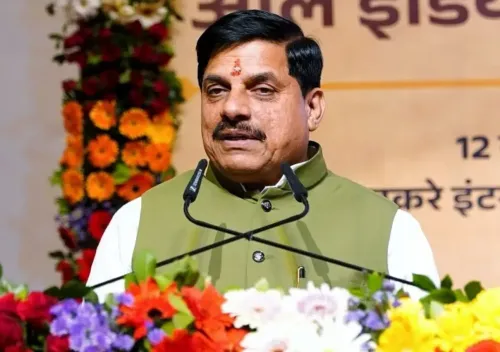
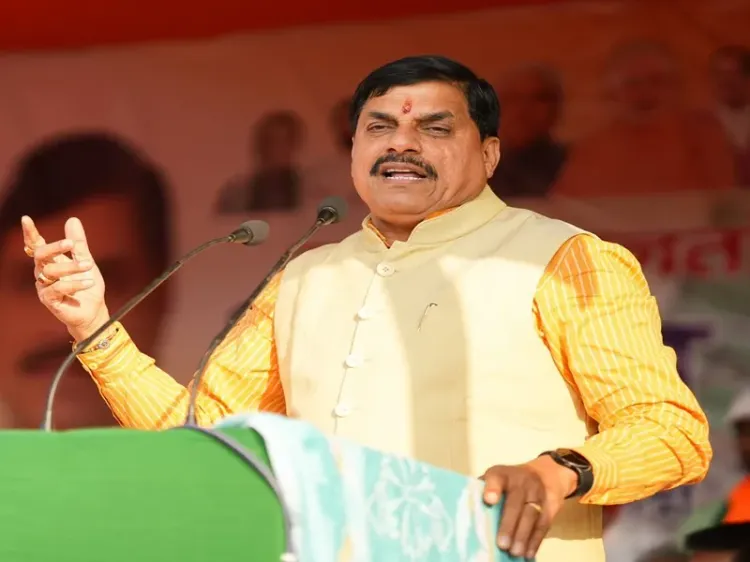
Bhopal, Jan 13 (NationPress) The Chief Minister of Madhya Pradesh, Dr Mohan Yadav, presided over a cabinet meeting in Bhopal on Tuesday, where critical initiatives were endorsed that emphasize growth in agriculture, education, renewable energy, and space technology.
A significant point of discussion was the endorsement of the Madhya Pradesh Space Act 2026, accompanied by the newly introduced Madhya Pradesh Space Tech Policy 2026.
This groundbreaking policy is designed to stimulate innovation in satellite manufacturing, geospatial analysis, and various downstream applications. It is anticipated to draw in Rs 1,000 crore in investments and create approximately 8,000 jobs within the next five years, establishing the state as a pivotal player in India’s expanding space industry.
In terms of renewable energy, the cabinet also approved ambitious solar-to-storage initiatives to guarantee continuous power supply. These projects include a 300 MW solar-to-storage project with four-hour storage, a 300 MW storage project for six hours, and a 200 MW solar-based project capable of supplying energy for 24 hours.
Expressions of interest will be sought, with projects awarded based on the lowest tariff bidder, echoing previous successes that achieved tariffs as low as Rs 2.25 per unit. This strategy aligns with national endeavors to optimize solar energy storage, incorporating solutions like batteries or pumped storage systems, thus enabling supply during peak hours, even at night.
Agriculture, too, received substantial enhancements through approved irrigation projects.
The Mohanpura Expansion Irrigation Project in the Rajgarh district's Sarangpur tehsil secured Rs 396.21 crore to irrigate 1,140 hectares across 26 villages in Khilchipur tehsil, benefiting 10,465 families.
In Raisen district, the Sultanpur Lift Irrigation Project received Rs 115.99 crore for 5,700 hectares across 20 villages for 3,100 farmers, while the Bana Uhan Irrigation Project was approved at Rs 386.22 crore to assist 15,000 hectares in 36 villages and 6,800 farmer families.
Collectively, these projects will directly aid over 20,000 farmers in increasing their productivity. Major educational advancements were also made with the second phase of the Sandipani School Scheme, which greenlit 200 fully equipped schools at an estimated expense of Rs 3,660 crore (around Rs 17-18 crore per school). This builds on the first phase's 75 schools.
Moreover, a four-tier time-bound pay scale scheme for teachers in the educational cadre, encompassing assistant teachers and new recruits, was sanctioned at Rs 322 crore, providing essential financial relief.
Other approvals included an ex-gratia compensation of Rs 1 crore (beyond the initial Rs 1 lakh) for the family of late Assistant Sub-Inspector Ramcharan Gautam, who passed away on duty; a 50 percent motor vehicle tax exemption for sales at the Gwalior Trade Fair 2026 and Ujjain Vikram Mahotsav Trade Fair 2026; and an extensive Rs 11,337 crore water augmentation scheme for the Ujjain division, scheduled for completion by 2028.
A ministerial committee has also been established to evaluate the excise policy. These decisions illustrate the government’s commitment to farmer welfare, declared as the priority for 2026, alongside education, innovation, and sustainable development.
Point of View
The Madhya Pradesh government's recent initiatives reflect a strategic approach to fostering economic growth through technology and agriculture. With a focus on innovation in space technology and education, the state seems to be investing wisely in its future, aligning with national priorities for development and sustainability.
NationPress
19 Sept 2026
Frequently Asked Questions
What is the Madhya Pradesh Space Tech Policy 2026?
The Madhya Pradesh Space Tech Policy 2026 aims to enhance innovation in satellite manufacturing and geospatial analysis, expected to attract significant investments and create thousands of jobs.
How much investment is projected from the new policy?
The policy is projected to attract approximately Rs 1,000 crore in investments over the next five years.
What irrigation projects were approved?
The cabinet approved several irrigation projects, including the Mohanpura Expansion Irrigation Project and the Sultanpur Lift Irrigation Project, benefiting thousands of farmers.
What are the educational initiatives included?
The second phase of the Sandipani School Scheme was approved, which will establish 200 new schools across the state.
What is the expected impact on farmers?
The irrigation projects are expected to directly assist over 20,000 farmers in enhancing their productivity.