Why is World Stroke Day Important? Nithin Kamath Highlights the Critical 4.5 Hours

Synopsis
On World Stroke Day, Nithin Kamath emphasizes the urgency of the first 4.5 hours after a stroke. His personal experience highlights the need for immediate medical assistance to prevent permanent damage. Learn the critical signs of stroke and how you can protect yourself.
Key Takeaways
Every minute counts during a stroke.
Seek medical help within the golden 4.5 hours .
Recognize the symptoms using 'BE FAST' .
80 percent of strokes can be prevented.
Time is brain; act immediately .
New Delhi, Oct 29 (NationPress) Every minute is crucial when it comes to a stroke, emphasized Nithin Kamath, Co-founder and CEO of Zerodha, on Wednesday. He underscored the importance of seeking immediate medical attention within the critical 4.5 hours after experiencing this life-threatening condition.
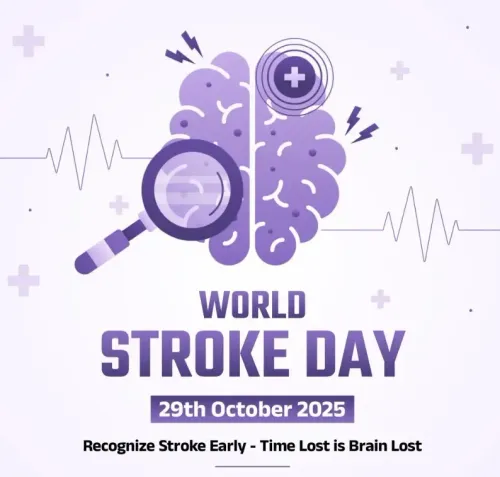
World Stroke Day, celebrated annually on October 29, aims to raise awareness about strokes, which occur when blood flow to the brain is disrupted. Every second counts, as brain cells begin to perish rapidly; hence, timely treatment is essential for improving survival chances.
In a post on the social media platform X, Kamath, who overcame a stroke last year, shared insights on how better outcomes can be achieved if medical aid is sought within this Golden Hour. Failure to act promptly can result in irreversible brain damage and long-term disability.
He noted that many individuals often dismiss symptoms, thinking their good health protects them.
"If I could change one thing from my experience with a stroke last January, it would be to rush to the hospital immediately, within the Golden Hour (under 4.5 hours), rather than assuming I could simply sleep it off," Kamath recounted in a social media post.
“This ‘it won't happen to me’ mindset is prevalent, particularly among those under 50,” he added, highlighting a troubling trend of increasing stroke cases among younger adults.
"The reality is, strokes have surged sharply, with nearly 30 percent of all strokes in recent years occurring in individuals aged 30 to 50," Kamath revealed.
“When dealing with strokes, time is brain; every moment is vital,” he stressed.
Approximately 80 percent of strokes can be averted through simple yet consistent practices: managing blood pressure and diabetes, avoiding tobacco and alcohol, consuming a balanced diet, exercising regularly, and controlling cholesterol levels.
Dr. Deep Das, a neurologist based in Kolkata, mentioned that recognizing stroke symptoms is the initial step, which can be easily recalled using the acronym 'BE FAST'.
"B stands for Balance, E for Eye or vision, F for Face—check for any distortion, A for Arm—assess for weakness or loss of grip, S for Speech—watch for slurred or unclear speech, and T for Time—act promptly and reach a hospital without hesitation,” explained Das.
Point of View
I emphasize the urgency of understanding strokes, particularly among younger demographics. Nithin Kamath's insights are a vital reminder that strokes do not discriminate by age. Awareness and timely action are crucial in combating this health crisis.
NationPress
30 Sept 2026
Frequently Asked Questions
What is the golden hour for stroke treatment?
The golden hour for stroke treatment is the first 4.5 hours following the onset of symptoms, during which immediate medical intervention can significantly improve outcomes.
What are the common symptoms of a stroke?
Common symptoms of a stroke can be remembered using the acronym BE FAST : Balance, Eye vision, Face distortion, Arm weakness, Speech difficulties, and Time to seek help.
Can strokes be prevented?
Yes, nearly 80 percent of strokes can be prevented through lifestyle changes such as managing blood pressure, maintaining a healthy diet, and exercising regularly.
Why are strokes increasing among younger people?
Strokes are rising among younger individuals, particularly those aged 30 to 50, due to factors like poor lifestyle choices, stress, and health conditions that were previously less common in this age group.
What should I do if I suspect someone is having a stroke?
If you suspect someone is having a stroke, act immediately by calling emergency services and following the BE FAST protocol to assess their symptoms.