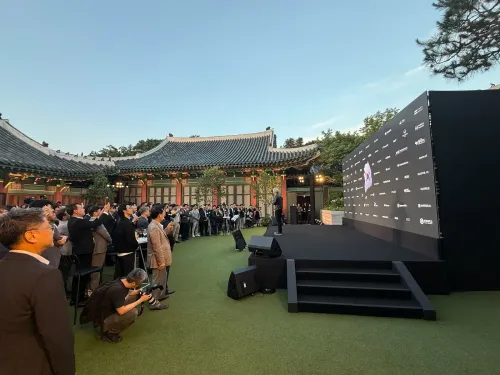
Nvidia Spotlights Korea AI and Chip Announcements

Synopsis
Nvidia's corporate account on 27 July 2026 spotlighted announcements shaping South Korea's AI and semiconductor future, tagging CEO Jensen Huang. The move underscores Nvidia's strategic engagement with Korea's chip ecosystem, where memory giants supply critical components for its AI accelerators.
Key Takeaways
Nvidia's official account on 27 July 2026 flagged Korea-focused announcements, tagging CEO Jensen Huang by handle.
South Korea is a critical supplier of high-bandwidth memory essential to Nvidia's AI accelerator products.
South Korea's K-Semiconductor Belt initiative, launched in 2022 , committed major public and private funds to expand chip fabrication capacity.
Nvidia has been deepening partnerships across US-allied Asian economies as global chip supply chains diversify.
The development has indirect relevance for India , which is competing for AI-infrastructure investment under its own semiconductor mission.
Further joint AI infrastructure projects between Nvidia and Korean conglomerates are the key developments to watch.
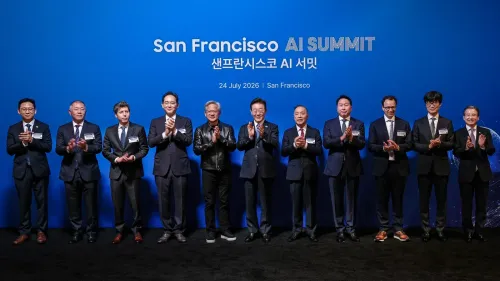
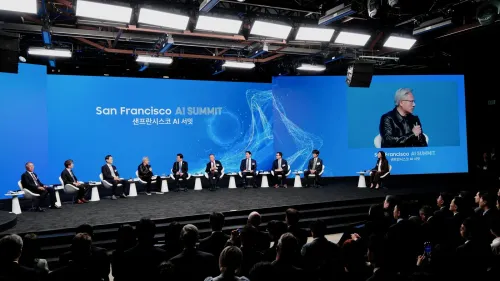
Chip giant Nvidia on Monday, 27 July 2026 directed its audience — including chief executive Jensen Huang — to a roundup of announcements it described as 'shaping Korea's future,' signalling the company's deepening public engagement with South Korea's semiconductor and artificial-intelligence ambitions.
Context
The post, published from Nvidia's official corporate account, pointed followers to a dedicated page covering Korea-related developments. While the specific announcements linked in the post could not be independently verified at the time of publication, the message underscores Nvidia's sustained interest in positioning itself at the centre of South Korea's technology agenda. South Korea is home to some of the world's largest memory-chip producers, whose high-bandwidth memory components are integral to Nvidia's AI accelerator hardware.
The public call-out to Jensen Huang by handle — rather than a formal address — reflects the conversational, executive-facing tone Nvidia has adopted on social media to amplify strategic messaging across key markets.
Policy Backdrop
South Korea launched its K-Semiconductor Belt initiative in 2022, committing substantial public and private investment to expand domestic chip fabrication capacity and anchor the country's position in global supply chains. That policy framework has since drawn interest from major US technology firms seeking to diversify production partnerships beyond any single geography.
Nvidia's outreach aligns with a broader pattern across Washington's allied economies in Asia, where governments and corporations are jointly working to secure advanced semiconductor capacity. For Nvidia, Korean memory suppliers are not peripheral partners — they are critical links in the supply chain that feeds its data-centre AI systems.
Stakeholders and Impact
The primary stakeholders in this dynamic include South Korea's leading semiconductor conglomerates, domestic AI developers, and the Korean government's technology ministry. Any deepening of the Nvidia–Korea relationship carries implications for chip pricing, supply security, and the pace at which Korean firms can co-develop next-generation AI infrastructure.
For Indian observers, the development is relevant because India is simultaneously pursuing its own semiconductor mission and competing — alongside Korea, Japan, and Taiwan — for a larger share of global AI-infrastructure investment. Nvidia's selective public engagement with specific national ecosystems signals which markets it views as strategically significant.
What's Next
Analysts and industry watchers will monitor whether the Korea announcements referenced in Nvidia's post translate into formal partnership agreements, joint investment commitments, or updates to Seoul's national semiconductor roadmap. Further collaboration between Nvidia and Korean conglomerates on AI infrastructure projects — particularly around high-bandwidth memory integration — remains the most closely watched near-term development in this space.
Point of View
And this kind of executive-directed social engagement is how corporations now conduct soft diplomacy alongside formal deals. For India, which is racing to build its own chip ecosystem, Nvidia's selective country-by-country engagement is a reminder that AI-infrastructure partnerships are being allocated — not simply offered. The broader pattern suggests that nations with existing semiconductor capacity will attract Nvidia's attention faster than those still building foundational infrastructure.
NationPress
27 Jul 2026
Frequently Asked Questions
Why did Nvidia tag Jensen Huang in a post about South Korea?
Nvidia's official account tagged CEO Jensen Huang to amplify Korea-related announcements to a broader audience, a social-media strategy the company uses to signal executive-level priority around key markets.
What is South Korea's K-Semiconductor Belt?
The K-Semiconductor Belt is a South Korean government initiative launched in 2022 that committed large-scale public and private investment to expand the country's chip fabrication capacity and strengthen its position in global semiconductor supply chains.
How is South Korea important to Nvidia's AI business?
South Korean memory-chip manufacturers produce high-bandwidth memory, a component critical to the performance of Nvidia's AI accelerators used in data centres worldwide.
What announcements did Nvidia make about Korea in July 2026?
The specific announcements referenced in Nvidia's 27 July 2026 post could not be independently verified at the time of publication; the post directed followers to a dedicated Korea-focused page for details.
How does Nvidia's Korea engagement affect India?
India is pursuing its own semiconductor mission and competing for AI-infrastructure investment; Nvidia's deepening ties with Korea signal that countries with established chip ecosystems are being prioritised, raising the stakes for India's own outreach to global chip leaders.