Rajiv Gandhi foresaw machine intelligence benefits in 1984, Sonia Gandhi writes in memoir
Synopsis
Sonia Gandhi's memoir reveals that Rajiv Gandhi spoke of 'machine intelligence' benefits to his own children in the 1980s, laughing off critics who mocked him as a 'computer boy'. Four decades later, with AI reshaping economies globally, the recollection lands with unexpected contemporary force.
Key Takeaways
Sonia Gandhi released her memoir 'Belonging: A Journey of Love' on 10 November 2026 in New Delhi .
She recalls Rajiv Gandhi recognised the potential of 'machine intelligence' shortly after taking office in 1984 , despite being ridiculed as a 'computer boy' .
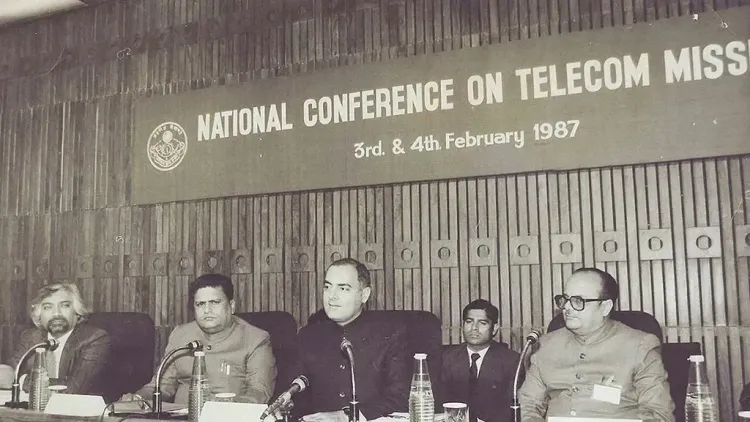
Rajiv Gandhi engaged Sam Pitroda , an Indian American telecom engineer , as his advisor to expand India's telecommunication networks.
His technology missions — covering drinking water, literacy, immunisation, oil seeds, and dairy — contributed to India becoming polio-free and the world's largest milk producer , and raised literacy to 74 per cent .
Sonia Gandhi writes that Rajiv Gandhi told their children his critics 'would then have to change their minds' about the benefits of machine intelligence.
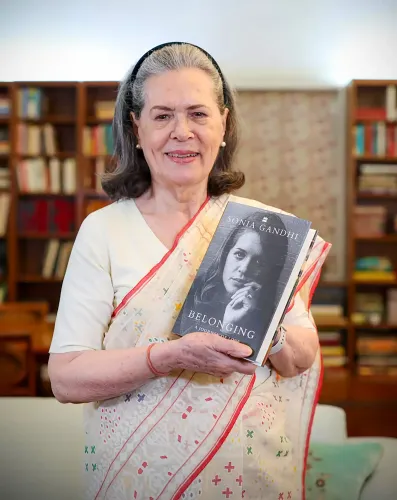
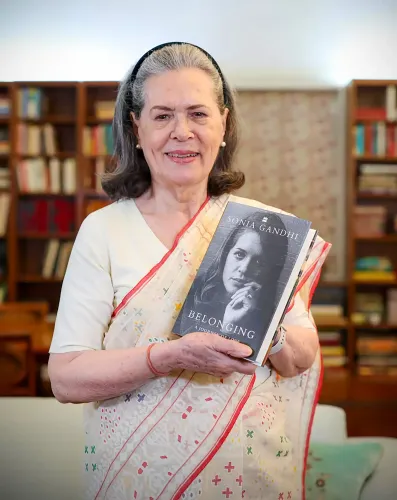
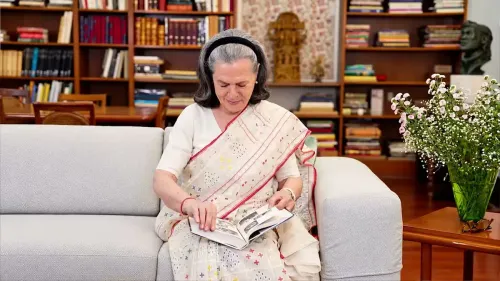
Veteran Congress leader and former Prime Minister Rajiv Gandhi's wife, Sonia Gandhi, has recalled in her newly released memoir that her husband was among the earliest Indian leaders to recognise the transformative potential of what he called 'machine intelligence' — shortly after assuming office in 1984. The memoir, titled 'Belonging: A Journey of Love', was released on Tuesday, 10 November 2026, in New Delhi.
The Vision Behind the 'Computer Boy' Taunt
Sonia Gandhi writes that when Rajiv Gandhi took charge as Prime Minister, a phrase that Indians began hearing with increasing frequency was 'the India of the twenty-first century'. His push for telecommunications and technology was met with open ridicule: she recalls he was mocked as a 'computer boy' and his enthusiasm was dismissed with the jibe that he was promoting 'rich men's toys'.
'When he spoke of it, a future of telecommunications, he was mocked as a 'computer boy' and the subject of his enthusiasm dismissed as 'rich men's toys',' she wrote.
Despite such resistance, Sonia Gandhi says Rajiv Gandhi — described in the memoir as 'always a doer' and firmly 'convinced of the benefits of science and technology' — pressed ahead, pushing new systems into what she characterised as 'archaic and inefficient' government practices. He reportedly made sudden, unannounced visits to government departments to verify that newly installed computers were actually being used.
The Mechanic's Mindset Applied to Telecom
Sonia Gandhi draws an evocative parallel between her husband's pre-political career as a trained commercial pilot and his approach to nation-building. 'Just as he'd roll up his sleeves and get down to fixing a part of an engine, he dedicated time and effort to building up and expanding telecommunication networks throughout the country,' she wrote.
Central to that effort, she notes, was Sam Pitroda, described in the memoir as a 'talented and eager Indian American telecom engineer' whom Rajiv Gandhi engaged as his advisor. Pitroda's role in India's telecom expansion of the 1980s is widely regarded by analysts as foundational to the country's subsequent IT growth.
At Home, a Laugh and a Prophecy
Sonia Gandhi offers an intimate glimpse of how Rajiv Gandhi processed the criticism he faced. She recalls that when the two discussed press reactions at home, he would 'laugh and tell our children that the benefits of machine intelligence would be understood one day; his critics would then have to change their minds.' The reference to 'machine intelligence' — a term now synonymous with artificial intelligence — is striking in its prescience, given the era in which it was used.
Technology Missions and Their Legacy
Beyond telecommunications, Sonia Gandhi credits her husband's technology missions — covering drinking water, literacy, immunisation, oil seeds, and dairy — with outcomes that have shaped modern India. She writes that these missions resulted in India becoming polio-free, raising the country's literacy level to 74 per cent, and making India the world's largest producer of milk.
The memoir arrives at a moment when artificial intelligence has re-entered national and global discourse with fresh urgency, lending an added layer of relevance to Sonia Gandhi's recollections of a Prime Minister who spoke of machine intelligence's benefits four decades ago. With the book now in public circulation, it is expected to reignite debate over Rajiv Gandhi's technological legacy and its long-term impact on India's digital economy.
Point of View
Framing Rajiv Gandhi as a visionary on 'machine intelligence' is a carefully calibrated act of legacy-building by the Congress. That said, the substance of the claim holds: India's 1980s telecom push, the C-DOT experiment, and the Sam Pitroda chapter are well-documented inflection points that laid the groundwork for the IT sector's later rise. What the memoir does not engage with are the structural critiques — that the technology revolution of the 1980s disproportionately benefited urban, educated India, and that some of the literacy and immunisation figures cited have been contested by independent researchers. The more interesting question is whether invoking Rajiv Gandhi's AI foresight can help the Congress articulate a credible technology platform for the present, rather than simply reclaiming the past.
NationPress
11 Nov 2026
Frequently Asked Questions
What is Sonia Gandhi's memoir 'Belonging: A Journey of Love' about?
'Belonging: A Journey of Love' is Sonia Gandhi's personal memoir, released on 10 November 2026, that recounts her life alongside former Prime Minister Rajiv Gandhi. It covers his political vision, his push for technology and telecommunications in the 1980s, and her own journey in India.
What did Rajiv Gandhi mean by 'machine intelligence'?
According to Sonia Gandhi's memoir, Rajiv Gandhi used the phrase 'machine intelligence' in the 1980s to describe the potential of computers and emerging technologies — a term that maps closely onto what is today called artificial intelligence. He reportedly told his children that critics would eventually come to understand its benefits.
Who was Sam Pitroda and what was his role under Rajiv Gandhi?
Sam Pitroda is an Indian American telecom engineer whom Rajiv Gandhi engaged as his advisor to build and expand India's telecommunication networks in the 1980s. His work is widely credited as foundational to India's subsequent information technology growth.
What were the outcomes of Rajiv Gandhi's technology missions, according to the memoir?
Sonia Gandhi writes that the technology missions Rajiv Gandhi initiated — covering drinking water, literacy, immunisation, oil seeds, and dairy — resulted in India becoming polio-free, raising the country's literacy rate to 74 per cent, and making India the world's largest producer of milk.
Why was Rajiv Gandhi mocked as a 'computer boy'?
Rajiv Gandhi was called a 'computer boy' by critics who dismissed his enthusiasm for telecommunications and computers as impractical and elitist, calling them 'rich men's toys'. Sonia Gandhi's memoir says he faced 'obstinate resistance and criticism' but remained committed to modernising government systems.