Patient safety must be embedded in NCD care, says Health Ministry official
Synopsis
With NCDs accounting for 63% of all deaths in India, the Health Ministry marked World Patient Safety Day 2026 by calling for system-wide integration of safety standards — and set a hard March 2027 deadline for full NQAS certification of sub-health centres. It is a signal that quality, not just access, is now at the centre of India's public health agenda.
Key Takeaways
Aradhana Patnaik , Additional Secretary and Mission Director (NHM), addressed India's World Patient Safety Day 2026 observance on 18 September 2026 .
63 per cent of all deaths in India are attributed to noncommunicable diseases (NCDs) .
NFHS-6 data shows 96 per cent of immunisations and 90.6 per cent of institutional deliveries are conducted at public health facilities.
The government has set a target of 100 per cent NQAS certification of Ayushman Aarogya Mandir–Sub Health Centres by March 2027 .
India's patient safety framework is backed by the National Quality Assurance Standards (NQAS) and the National Patient Safety Implementation Framework .
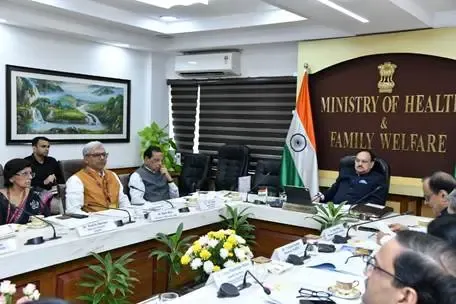
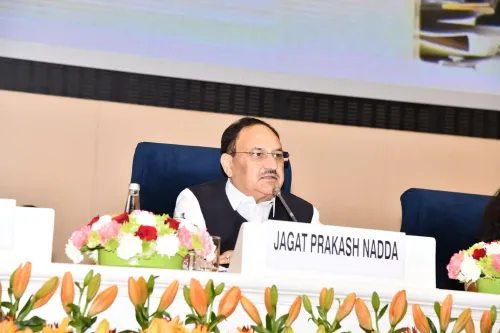
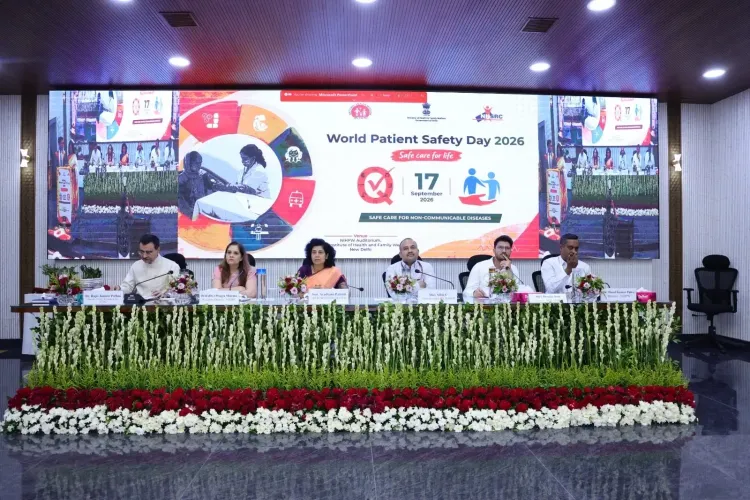
Aradhana Patnaik, Additional Secretary and Mission Director of the National Health Mission (NHM), Ministry of Health and Family Welfare, on 18 September 2026 emphasised that patient safety cannot rest with a single programme or department but must be integrated across the entire health system — especially in the prevention, diagnosis, treatment and long-term management of noncommunicable diseases (NCDs). Her remarks came at the government's observance of World Patient Safety Day 2026, held under the theme 'Safe Care for Noncommunicable Diseases.'
Scale of the NCD Challenge
Patnaik underscored the urgency behind the focus, noting that nearly 63 per cent of all deaths in India are attributed to NCDs. This makes patient safety not an administrative afterthought but a core element of healthcare delivery. She argued that quality and safety protocols need to reach every tier of the system — from sub-health centres to tertiary hospitals — if India is to meaningfully reduce this mortality burden.
Public Health Gains Cited
Pointing to recent gains in public healthcare, Patnaik highlighted data from NFHS-6 showing that 96 per cent of immunisations and 90.6 per cent of institutional deliveries are now conducted through public health facilities. She stressed, however, that these gains must be matched by stronger quality and safety practices — particularly in patient referrals and continuity of care — to ensure timely access and improved outcomes.
NQAS Certification Roadmap
A key institutional target outlined by Patnaik was achieving 100 per cent National Quality Assurance Standards (NQAS) certification of Ayushman Aarogya Mandir–Sub Health Centres (AAM-SHCs) by March 2027, followed by certification of Ayushman Aarogya Mandir–Primary Health Centres (AAM-PHCs). She emphasised that a structured, time-bound approach to quality assurance would be critical to institutionalising a culture of patient safety across all levels of care.
Institutional Frameworks in Place
India has been building the institutional backbone for patient safety through initiatives including the National Quality Assurance Standards (NQAS) and the National Patient Safety Implementation Framework. The World Patient Safety Day 2026 observance served as a platform to bring together stakeholders, share best practices, and reinforce a safety culture across healthcare delivery at every level. This comes amid a broader global push by the World Health Organization (WHO) to prioritise NCD-linked patient safety, making India's institutional focus timely and aligned with international health priorities.
Point of View
But rhetoric alone does not reduce the 63% NCD mortality share. The March 2027 NQAS certification deadline for sub-health centres is specific and trackable, which is more than most health targets offer. The harder challenge is continuity of care between tiers, an area where India's fragmented referral system has historically failed patients with chronic conditions. Whether these frameworks translate into measurable safety outcomes will depend on how rigorously the Centre monitors certification quality, not just certification numbers.
NationPress
18 Sept 2026
Frequently Asked Questions
What was the theme of World Patient Safety Day 2026 in India?
The theme was 'Safe Care for Noncommunicable Diseases (NCDs).' The Ministry of Health and Family Welfare marked the day with an event where officials stressed the need to embed patient safety across all levels of the health system.
What share of deaths in India are caused by NCDs?
According to the Health Ministry, nearly 63 per cent of all deaths in India are attributed to noncommunicable diseases such as cardiovascular conditions, diabetes, cancer, and chronic respiratory illnesses.
What is the government's NQAS certification target?
The government has set a target of achieving 100 per cent NQAS (National Quality Assurance Standards) certification of Ayushman Aarogya Mandir–Sub Health Centres (AAM-SHCs) by March 2027, to be followed by certification of Primary Health Centres (AAM-PHCs).
What does NFHS-6 data show about India's public health facilities?
NFHS-6 data cited by the Health Ministry shows that 96 per cent of immunisations and 90.6 per cent of institutional deliveries in India are now conducted through public health facilities.
What frameworks support patient safety in India?
India's institutional framework for patient safety includes the National Quality Assurance Standards (NQAS) and the National Patient Safety Implementation Framework, both of which aim to standardise care quality across public health facilities.