Arctic researcher Li Xueke quits UPenn for Hong Kong amid US climate cuts
Synopsis
Arctic climate scientist Li Xueke has quit the University of Pennsylvania for Hong Kong, citing a deteriorating US research environment under Trump — joining a growing wave of researchers relocating to Asia as federal climate funding is dismantled.
Key Takeaways
Li Xueke joined City University of Hong Kong (CityU) last month as an assistant professor in the school of energy and environment after a decade in the United States .
She previously worked and studied at the University of Pennsylvania , Brown University , the University of Connecticut , the University of Chinese Academy of Sciences , and Taiyuan University of Technology .
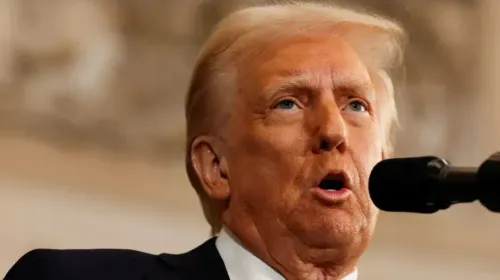
US President Donald Trump has terminated grants for climate-related research and is reportedly moving to dismantle the National Centre for Atmospheric Research .
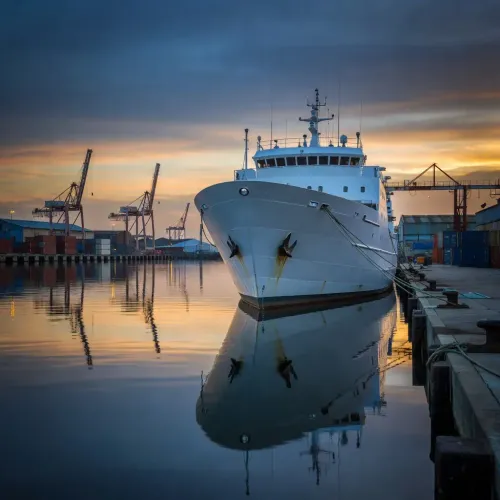
Li 's research centres on Arctic shipping corridors — including the Northern Sea Route , the Central Arctic Route , and Suez Canal alternatives — opened up by a warming planet.
Li is part of a growing cohort of researchers leaving the US for Asia amid rising political and financial pressure on climate science.
Climate scientist Li Xueke has left the University of Pennsylvania for City University of Hong Kong (CityU), joining its school of energy and environment as an assistant professor — part of a broader exodus of researchers departing the United States as federal support for climate science erodes under the Trump administration.
Why it matters
Li, who spent a decade studying and working in the US, focuses on emerging Arctic shipping corridors — including the Northern Sea Route, the Central Arctic Route, and alternatives to the Suez Canal — that are becoming seasonally navigable as global temperatures rise. Her work carries direct economic implications, mapping how a warming planet is redrawing the arteries of global trade.
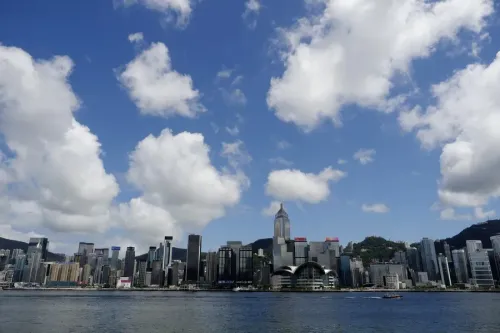
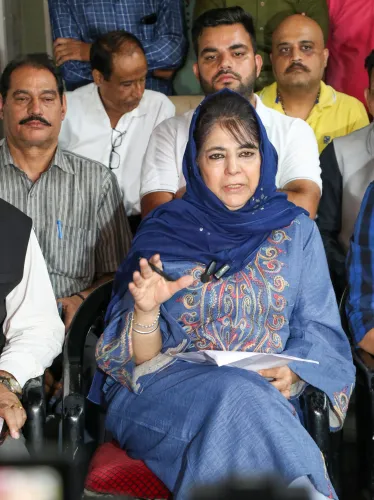
Li joined CityU last month, describing Hong Kong's position as uniquely suited to her ambitions. 'For me, the most important thing for Hong Kong and what attracts me most is its strategic position at the intersection of climate science, innovation and global connectivity,' she said. 'As a climate scientist trying to address this global climate challenge, it is hard for me to imagine a more exciting place to be right now.'
The US research environment
Li's move comes as US President Donald Trump has terminated grants for climate-related research projects and is reportedly attempting to dismantle the National Centre for Atmospheric Research, a top federally funded climate institution. The cumulative effect has created what researchers describe as a hostile operating environment for climate scientists in the US.
According to reports, Li characterised the current American research climate as 'an unhealthy environment' — a sentiment echoed by a growing cohort of academics relocating to Asia. Her academic background spans institutions including Brown University, the University of Connecticut, the University of Chinese Academy of Sciences, and Taiyuan University of Technology, and her work has been recognised by bodies such as the American Geophysical Union.
The competitive backdrop
Hong Kong has been actively positioning itself as a destination for international scientific talent, leveraging its proximity to mainland China's research infrastructure and its role as a global financial hub. For Arctic researchers specifically, the city's connectivity to both Asian shipping interests and international climate bodies makes it a strategically credible base.
The shift also reflects a wider geopolitical realignment in science funding: as Washington retreats from climate commitments, universities and research institutions across East Asia are absorbing displaced talent and the intellectual capital that comes with it.
What's next
Li's research at CityU is expected to deepen understanding of how Arctic route viability affects global shipping economics — a question with immediate relevance to Asian trade powers. As the Trump administration's science funding cuts continue to take effect, the pipeline of researchers considering similar moves is unlikely to thin out anytime soon.
Point of View
The talent migrates, and so does the geopolitical leverage that comes with it. What mainstream coverage underplays is the compounding effect: Hong Kong and broader East Asia are not merely absorbing displaced scientists but inheriting research agendas — on Arctic navigation, on climate modelling — that will shape trade and security policy for decades. The Trump administration's retreat from climate science may be the single most consequential self-inflicted wound in the ongoing contest for scientific primacy.
NationPress
27 Jun 2026
Frequently Asked Questions
Why did Li Xueke leave the University of Pennsylvania for Hong Kong?
Li Xueke left the University of Pennsylvania for City University of Hong Kong citing Hong Kong 's strategic position at the intersection of climate science, innovation, and global connectivity. She also described the current US research environment as 'unhealthy,' pointing to the Trump administration's termination of climate research grants.
What does Li Xueke research?
Li Xueke is a climate scientist specialising in Arctic shipping routes, including the Northern Sea Route , the Central Arctic Route , and alternatives to the Suez Canal . Her work examines the economic impacts of a warming planet as the Arctic becomes seasonally navigable.
How is the Trump administration affecting US climate research?
US President Donald Trump has terminated grants for climate-related research projects and is reportedly attempting to dismantle the National Centre for Atmospheric Research , a leading federally funded institution. The moves have prompted a wave of climate scientists to seek positions abroad, particularly in Asia .
Is Hong Kong attracting more international researchers?
Hong Kong is emerging as a destination for researchers departing the United States , leveraging its proximity to mainland China 's research ecosystem and its role as a global connectivity hub. Li Xueke 's move to CityU is cited as part of a broader trend of academics relocating from the US to Asia .
Which institutions has Li Xueke been affiliated with?
Li Xueke 's academic career spans the University of Pennsylvania , Brown University , the University of Connecticut , the University of Chinese Academy of Sciences , and Taiyuan University of Technology . Her work has also been recognised by the American Geophysical Union .