WHO Chief Warns of Escalating Conflict in Iran, Urges Peace
Synopsis
As the Middle East conflict intensifies, WHO Director-General Tedros Ghebreyesus warns of escalating dangers at nuclear sites and emphasizes the urgent need for peace over war, highlighting the risks to public health and safety.
Key Takeaways
WHO warns of critical risks due to strikes on nuclear sites.
The IAEA is investigating incidents in both Iran and Israel.
WHO emphasizes the need for military restraint and prioritizing peace.
Trump threatens military action if Iran does not comply with demands regarding the Strait of Hormuz.
Conflict could have far-reaching implications for public health and safety.
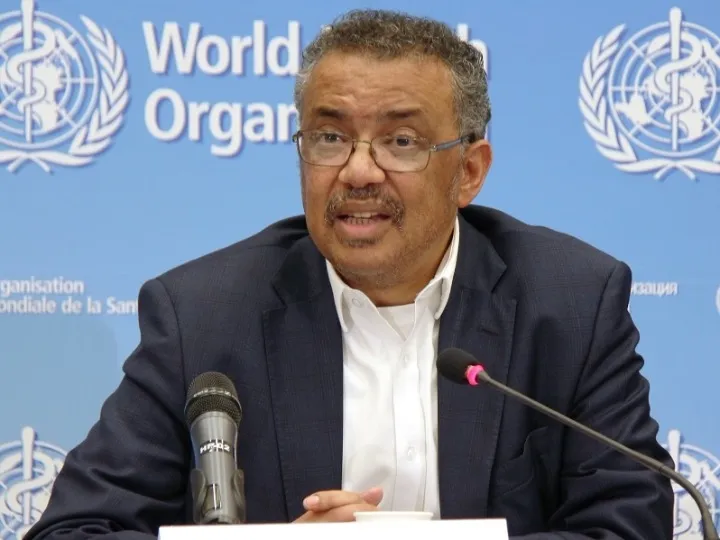
New Delhi, March 22 (NationPress) Tedros Adhanom Ghebreyesus, the Director-General of the World Health Organization (WHO), warned on Sunday that the ongoing conflict in the Middle East has escalated to a critical level, with reports of strikes affecting the Natanz Enrichment Complex in Iran, as well as the Israeli city of Dimona, home to a nuclear facility.
The International Atomic Energy Agency (IAEA) is currently investigating the incidents reported in southeastern Iran and in Dimona, Israel.
“Currently, there are no signs of abnormal or heightened off-site radiation levels. However, attacks on nuclear facilities pose an increasing risk to both public health and environmental safety,” Ghebreyesus shared on X.
In response to the outbreak of violence, the WHO has been equipping its personnel and UN staff across 13 nations with essential training to effectively deal with public health emergencies in case of a nuclear event.
“I strongly urge all involved parties to exercise utmost military restraint and refrain from any actions that could lead to nuclear incidents. It is imperative for leaders to focus on de-escalation and the protection of civilians. Peace is the best medicine,” emphasized the WHO chief.
He further remarked that warfare does not yield peace.
“It merely instills new reasons for animosity in future generations,” he noted.
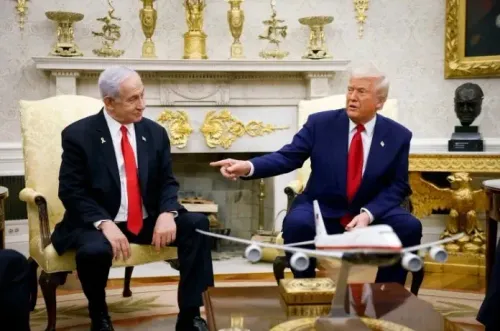
Simultaneously, US President Donald Trump has issued threats to “strike and destroy” Iran’s power facilities within 48 hours unless the nation reopens the strategic Strait of Hormuz, asserting that Washington is nearing its military goals in the conflict.
In a series of messages, Trump presented a direct ultimatum regarding the crucial waterway, stating: “If Iran does not FULLY OPEN, WITHOUT THREAT, the Strait of Hormuz, within 48 HOURS… the United States of America will hit and obliterate their various POWER PLANTS, STARTING WITH THE BIGGEST ONE FIRST!”
This warning signifies a significant escalation focused on the Strait of Hormuz, a vital route for global energy, even as Trump indicated that US military actions could soon be winding down.
He also mentioned that the US has taken steps to diminish Iran’s military capabilities, which includes “eliminating their Navy and Air Force, along with Anti-Aircraft Weaponry.”
Point of View
It is crucial to assess the situation with a nation-first perspective. The emphasis on peace and military restraint is vital for the safety of civilians and the prevention of further nuclear incidents. As international tensions rise, the call for dialogue and diplomacy becomes more urgent.
NationPress
23 Sept 2026
Frequently Asked Questions
What recent events prompted WHO's warning?
The WHO's warning was prompted by reported strikes on the Natanz Enrichment Complex in Iran and the Israeli city of Dimona, raising concerns over public health and safety.
What actions has the WHO taken in response to the conflict?
The WHO has provided critical training to its staff and UN personnel in 13 countries to enhance their ability to respond to public health threats related to potential nuclear incidents.
What did WHO's Director-General say about the nature of war?
Tedros Ghebreyesus asserted that war does not bring peace; instead, it fosters new reasons for hatred in future generations.
What threat did President Trump make regarding Iran?
President Trump threatened to strike and obliterate Iran's power plants within 48 hours if the nation does not reopen the Strait of Hormuz.
What is the significance of the Strait of Hormuz?
The Strait of Hormuz is a crucial global energy route, and any conflict in this area can significantly impact international oil supplies.