UN chief warns of West Asia escalation, urges restraint after Iran-Israel strikes
Synopsis
After Israel struck Iran's Mahshahr petrochemical complex and the IRGC retaliated by targeting two Israeli air bases, UN Secretary-General Antonio Guterres issued an urgent call for restraint on 9 June — warning that the region has no military solution. Netanyahu put the attack 'on hold,' but both sides are armed and watching. The Gaza crossing closure adds a humanitarian flashpoint to an already combustible picture.
Key Takeaways
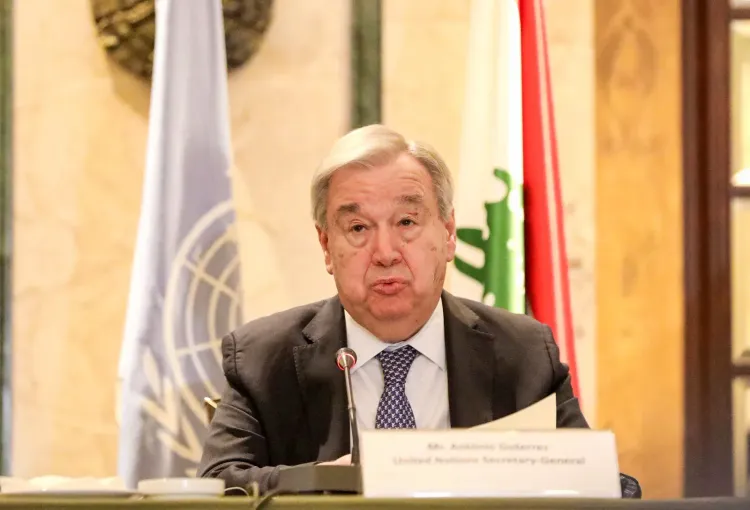
UN Secretary-General Antonio Guterres on 9 June called for immediate halt to attacks and maximum restraint in West Asia .
The IDF struck 'several targets' at Iran's Mahshahr petrochemical complex on Monday .
The IRGC retaliated by targeting Israeli air bases Nevatim and Tel Nof in response to Israeli missile strikes on Iranian radar sites.
Israeli PM Benjamin Netanyahu declared the attack 'on hold' but warned of a forceful response if Iran strikes again.
Iran's Khatam al-Anbiya Central Headquarters announced cessation of operations but threatened a 'severe and crushing' response to any further Israeli aggression.
Guterres separately condemned Israel's closure of Gaza crossings , calling for their immediate reopening to allow humanitarian aid.
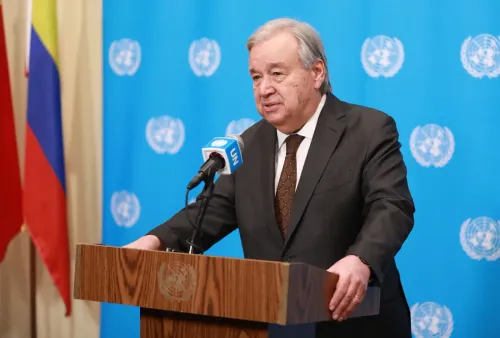
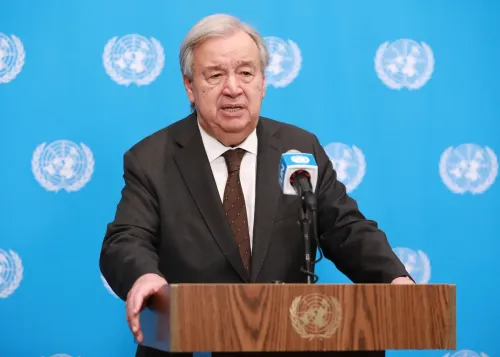
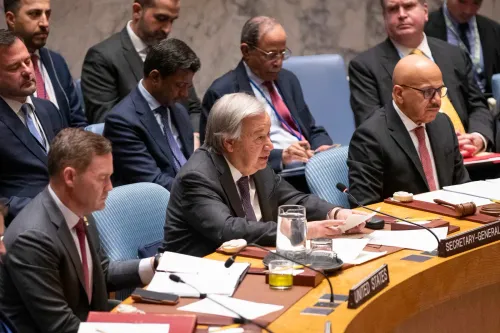
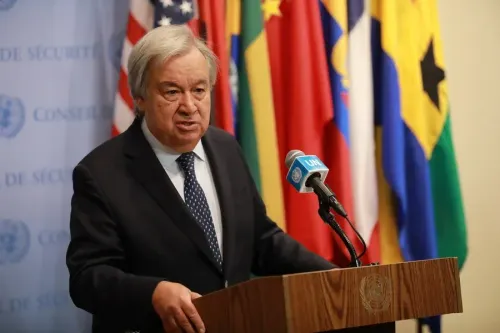
United Nations Secretary-General Antonio Guterres on 9 June expressed deep alarm over the renewed escalation in West Asia, calling on all parties to immediately halt attacks, exercise maximum restraint, and avoid any action that could further destabilise an already volatile region. The appeal came in the wake of a fresh exchange of strikes between Israel and Iran on Monday, marking one of the most serious flare-ups between the two countries in recent months.
What the UN Said
Deputy Spokesperson for the Secretary-General, Farhan Haq, conveyed Guterres's position in an official statement, urging all parties to fully honour the existing ceasefires in Lebanon, Iran, and Gaza. Guterres also pressed for the protection of navigational rights and freedoms in accordance with international law, and called on all sides to take every feasible precaution to safeguard civilian lives.
'The Secretary General reiterates that there is no military solution to the conflicts in the Middle East. The only way forward is through dialogue and negotiations. He therefore urges all concerned parties to work towards diplomatic solutions that advance regional and international peace and security,' Haq said in the statement.
Gaza Crossings Closure Draws UN Rebuke
Guterres separately expressed concern over Israel's decision to close crossings into Gaza, calling for their immediate reopening. 'He reiterates his call for the immediate reopening of all crossings to ensure the rapid, safe and unhindered passage of humanitarian assistance at scale throughout Gaza,' Haq said. The closure has raised fears of a worsening humanitarian crisis in the territory, where aid access has already been severely constrained.
The Iran-Israel Exchange
The UN chief's appeal followed a sharp military exchange on Monday. The Israel Defence Forces (IDF) said it had struck 'several targets' at the petrochemical complex in Iran's Mahshahr area. In response, Iran's Islamic Revolutionary Guard Corps (IRGC) said its aerospace forces targeted two 'important and strategic' Israeli air bases — Nevatim and Tel Nof — in retaliation for Israeli missile strikes on radar sites across three Iranian locations.
The IRGC, in a statement on its official outlet Sepah News, said all its combat and operational units remained ready to carry out operations on all fronts. Explosions were reportedly heard in Tehran and two other provinces early Monday, according to reports citing the semi-official Fars news agency. One explosion was reported west of Tehran, two in the central province of Isfahan, and one near Tabriz, the capital of the northwestern East Azarbaijan province.
Netanyahu Puts Attack 'On Hold'
Later on Monday, Israeli Prime Minister Benjamin Netanyahu announced that the attack against Iran was 'on hold,' but issued a stern warning. 'At the moment, the fire is on hold because after ... it (Iran) stopped attacking us,' Netanyahu said in his first televised statement, delivered more than 20 hours after Iran first launched missiles at Israel on Sunday night. He added that if Iran 'makes the mistake of attacking us again, we will respond with force.' Netanyahu reportedly ordered the military to strike military and economic targets across Iran on Monday.
Shortly after, Iran's Khatam al-Anbiya Central Headquarters — the country's main military command — announced the cessation of Iranian armed forces' operations against Israel, according to the semi-official Fars news agency. The headquarters warned, however, that any further Israeli 'aggression and malicious acts,' including in southern Lebanon, would trigger a 'severe and crushing' response.
What Comes Next
With both sides claiming a pause rather than a resolution, the situation in West Asia remains on a knife's edge. Diplomatic channels are under intense pressure, and the UN's call for restraint reflects a broader international anxiety that any miscalculation could rapidly escalate into a wider regional conflict. All eyes are now on whether the fragile halt holds — and whether the humanitarian corridors into Gaza can be restored before the next crisis point.
Point of View
However sincere, arrives at a moment when both Israel and Iran have already crossed significant military thresholds — striking petrochemical infrastructure and active air bases respectively. What is notable is what the statement does not say: there is no mechanism, no mediator named, and no timeline for the diplomatic process Guterres invokes. The Gaza crossing closure, layered on top of active military exchanges, signals that the humanitarian and security crises are now feeding each other. The real question is whether the 'pause' Netanyahu announced reflects strategic calculation or tactical repositioning — and whether international actors have the leverage to make it stick.
NationPress
24 Sept 2026
Frequently Asked Questions
Why did the UN Secretary-General issue a statement on West Asia on 9 June?
UN Secretary-General Antonio Guterres issued the statement following a serious exchange of strikes between Israel and Iran on Monday, 9 June, in which Israel hit Iran's Mahshahr petrochemical complex and the IRGC retaliated by targeting two Israeli air bases. Guterres called for maximum restraint and adherence to existing ceasefires in Lebanon, Iran, and Gaza.
What did Iran's IRGC strike in Israel?
Iran's Islamic Revolutionary Guard Corps said its aerospace forces targeted Israel's Nevatim and Tel Nof air bases, describing them as 'important and strategic' targets. The strikes were in retaliation for Israeli missile attacks on radar sites across three locations in Iran.
What did Benjamin Netanyahu say about the attacks on Iran?
Israeli Prime Minister Benjamin Netanyahu announced on Monday that the attack against Iran was 'on hold,' saying the pause was because Iran had stopped attacking Israel. He warned, however, that if Iran 'makes the mistake of attacking us again, we will respond with force.'
Why is the UN concerned about Gaza crossings?
Guterres expressed concern over Israel's decision to close crossings into Gaza, calling for their immediate reopening to allow rapid, safe, and unhindered passage of humanitarian assistance. The closure risks worsening an already severe humanitarian crisis in the territory.
Has Iran officially stopped its military operations against Israel?
Iran's Khatam al-Anbiya Central Headquarters announced the cessation of Iranian armed forces' operations against Israel, according to reports citing the semi-official Fars news agency. However, it warned that any further Israeli aggression — including in southern Lebanon — would trigger a 'severe and crushing' response.