UN chief warns of full Gulf war, calls for new security framework
Synopsis
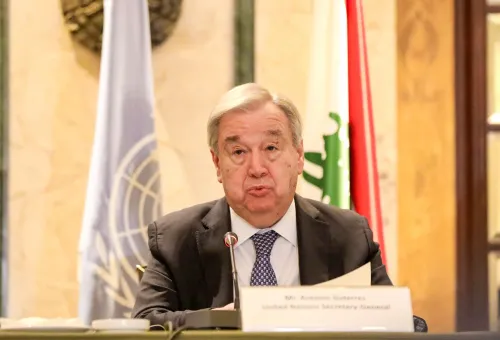
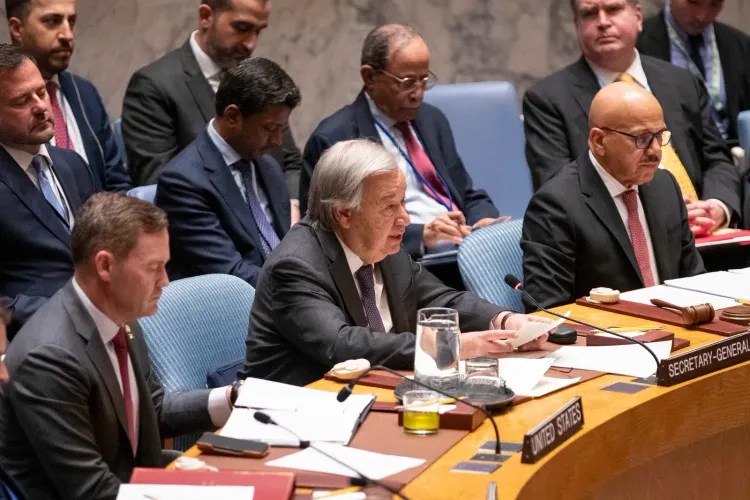
UN Secretary-General Antonio Guterres stood before the Security Council on 10 June and said the Gulf's fragile ceasefire had become a 'lesser-fire' — and that lesser fires become full wars. With US strikes on Iran, Iranian retaliation in Bahrain and Jordan, and Trump threatening fresh attacks, the warning is not rhetorical. The Strait of Hormuz is already choking global trade, and developing nations are first in line to absorb the pain.
Key Takeaways
UN Secretary-General Antonio Guterres warned the Security Council on 10 June that the Gulf risks a 'full war' .
The April ceasefire has deteriorated into what Guterres called a 'lesser-fire' , with attacks and hostile rhetoric surging in the preceding 48 hours .
Iran reportedly downed a US helicopter on Monday ; the US struck Iran the next day; Iran retaliated against targets in Bahrain and Jordan .
Guterres called for a 'new security architecture' for the Gulf, though no concrete mechanism was outlined.
Restrictions on the Strait of Hormuz are driving up global inflation and debt, with developing countries facing the heaviest fallout.
Guterres demanded a complete ceasefire , restored navigational rights, and negotiations to keep Iran's nuclear programme exclusively peaceful.
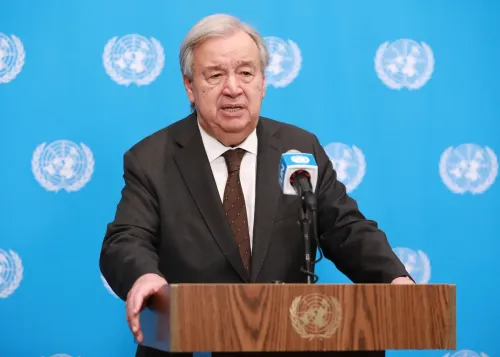
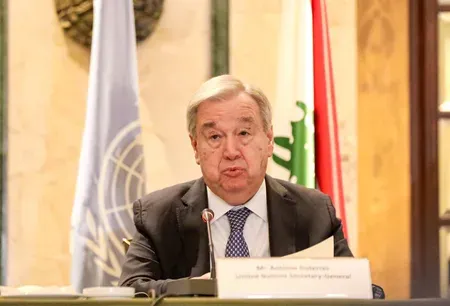
United Nations Secretary-General Antonio Guterres on Wednesday, 10 June warned the UN Security Council that the Gulf region risks sliding into a 'full war', urging world powers to build a 'new security architecture' for the region. The warning came as a fragile ceasefire, in force since April, showed signs of rapid deterioration amid fresh military exchanges and escalating rhetoric.
Ceasefire in Name Only
Guterres told the Security Council that the current ceasefire was functioning more like a 'lesser-fire', pointing to a sharp spike in attacks and hostile rhetoric over the preceding 48 hours. 'We should not minimise the risks of lesser fire becoming full fire, or in other words, full war,' he said. The remarks signal deep concern at the United Nations that diplomatic guardrails are failing.
What Triggered the Latest Escalation
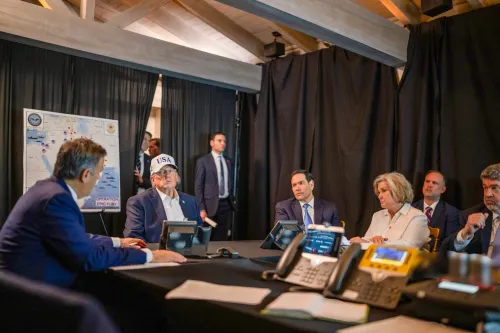
Tensions surged after Iran reportedly downed a US helicopter on Monday, according to US President Donald Trump. The United States responded with strikes on Iran the following day. Iran, in turn, launched retaliatory attacks on US-related targets in Bahrain and as far as Jordan. Trump separately threatened to 'hit them hard again' because negotiations were taking 'too long', further inflaming an already volatile situation.
Guterres Calls for a New Regional Order
The Secretary-General called for an overarching diplomatic reset, stating: 'It's time to explore a new security architecture for the Gulf — based on respect for the sovereignty and territorial integrity of all States, non-interference in their internal affairs, and enhanced multilateral cooperation.' He did not, however, outline concrete mechanisms beyond these broad principles.
Strait of Hormuz and Global Economic Fallout
Guterres warned that restrictions on navigation in the Strait of Hormuz were already causing 'hardships and instability across the world', driving up inflation and adding to sovereign debt burdens. 'Even in the best-case scenario, these shocks will be felt for many months — with developing countries bearing the heaviest impacts,' he cautioned. He called for a complete ceasefire, restoration of navigational rights under international law, and serious negotiations to ensure Iran's nuclear programme remains exclusively peaceful. The stakes extend well beyond the Gulf: the Strait of Hormuz handles roughly 20% of global oil trade, and any prolonged disruption would ripple through energy markets worldwide.
What Comes Next
The Security Council session underscored the absence of a credible off-ramp, with Guterres's call for a new architecture reflecting frustration at the limits of existing frameworks. Diplomatic channels remain open but strained, and the next 48 to 72 hours of military posturing will likely determine whether the lesser-fire cools or ignites into something far more consequential.
Point of View
No mediator with credibility in both Washington and Tehran, and no Security Council consensus. The Strait of Hormuz dimension is being underreported; a sustained closure would hit South Asian and African import bills far harder than Western ones, yet those voices were peripheral in the chamber. The cycle of strike-and-retaliate now has its own momentum, and the window for diplomatic intervention is narrowing with each exchange.
NationPress
19 Sept 2026
Frequently Asked Questions
What did UN Secretary-General Guterres warn about the Gulf on 10 June?
Guterres warned the UN Security Council that the Gulf's ceasefire had effectively become a 'lesser-fire' and that the world should not underestimate the risk of it escalating into a full war. He called for a new regional security architecture based on sovereignty, non-interference, and multilateral cooperation.
What military exchanges triggered the latest Gulf escalation?
According to US President Donald Trump, Iran downed a US helicopter on Monday. The US responded with strikes on Iran the following day, after which Iran launched retaliatory attacks on US-related targets in Bahrain and Jordan. Trump also threatened further strikes, saying negotiations were taking too long.
What is the significance of the Strait of Hormuz in this crisis?
Guterres warned that restrictions on navigation in the Strait of Hormuz are already pushing up global inflation and increasing debt burdens, with developing countries expected to bear the heaviest impact. The strait handles a critical share of global oil trade, making any disruption a worldwide economic event.
What does Guterres mean by a 'new security architecture' for the Gulf?
Guterres called for a framework grounded in respect for the sovereignty and territorial integrity of all states, non-interference in internal affairs, and enhanced multilateral cooperation. He did not, however, specify concrete institutions or mechanisms beyond these general principles.
What are the conditions Guterres has set for de-escalation?
Guterres called for a complete ceasefire, the restoration of navigational rights and freedoms in the Strait of Hormuz in line with international law, and serious negotiations to ensure Iran's nuclear programme remains exclusively peaceful.