India urges Gulf diplomacy at UN as Iran-US ceasefire frays
Synopsis
As the Iran-US ceasefire teetered on the edge of collapse, India's UN envoy did more than call for calm — he put numbers to the stakes: nearly ten million Indian citizens in the Gulf, three crew members killed on the tanker Setebello, and an economy exposed through the Strait of Hormuz. New Delhi's message was simultaneously humanitarian, economic, and structural — including a pointed demand to overhaul the Security Council that failed to prevent the crisis.
Key Takeaways
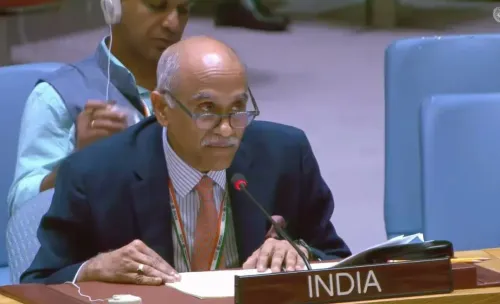
Harish addressed the UN Security Council on 11 June , urging dialogue and diplomacy to end the Gulf conflict .
The Iran-US ceasefire was reportedly under threat from renewed Tehran attacks and alleged downing of a US helicopter, followed by US retaliatory strikes.
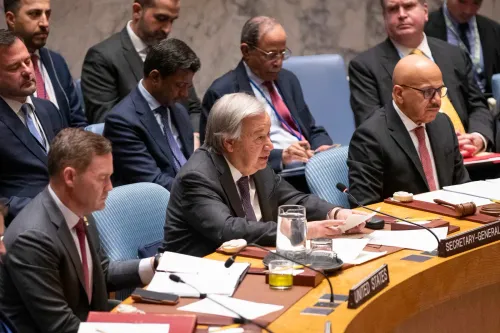
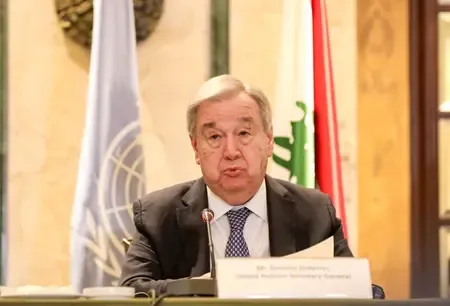
UN Secretary-General Antonio Guterres warned of a risk of 'full war' engulfing the region.
Nearly ten million Indian citizens live in the Gulf; three Indian crew members died after US aircraft reportedly struck oil tanker Setebello in the Gulf of Oman on Tuesday.
India flagged severe disruption to its trade and energy supply chains via the Strait of Hormuz .
Harish called for expansion of UN Security Council permanent and non-permanent membership, citing its 'eight-decade-old, outdated architecture' .
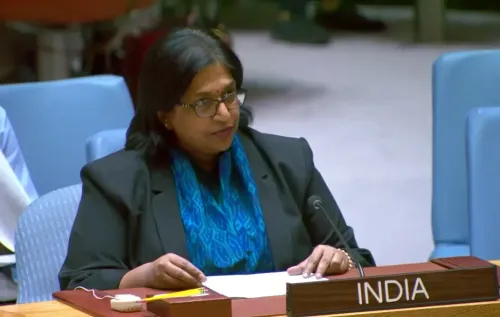
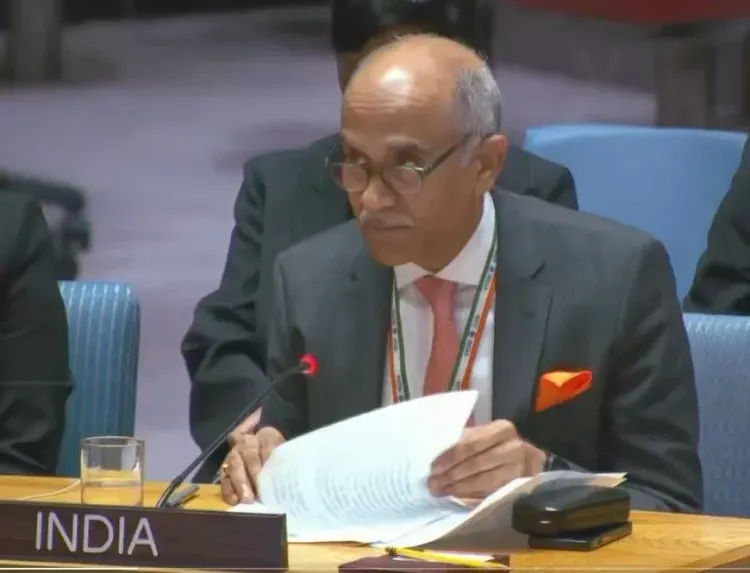
India's Permanent Representative to the United Nations, P. Harish, on Wednesday, 11 June called for immediate dialogue and diplomacy to contain the escalating Gulf conflict, warning that the crisis has 'deeply impacted India' — a country with nearly ten million citizens in the region and critical trade and energy dependencies running through the Strait of Hormuz. Harish spoke at a UN Security Council debate on the Middle East situation as the fragile Iran-US ceasefire appeared to be unravelling.
India's Position at the Security Council
Harish stressed that 'the people across the Middle East deserve sustained peace and normalcy' and that India stands 'fully ready to contribute towards realising this goal.' He reiterated India's call for avoiding any impediment to freedom of navigation and commerce, halting military targeting of commercial shipping, protecting civilian populations and infrastructure, and seeking an early end to hostilities.
He also expressed India's support for all peaceful efforts to resolve outstanding disputes, framing New Delhi's stance as one of constructive engagement rather than alignment with any side in the conflict.
Ceasefire Under Threat: What Triggered the Debate
The Security Council convened against a backdrop of serious deterioration. The Iran-US ceasefire was reportedly threatened by renewed attacks by Tehran on US-linked facilities in neighbouring countries and the alleged downing of a US helicopter, followed by retaliatory bombing by Washington.
UN Secretary-General Antonio Guterres warned earlier that a full-scale war could engulf the region. 'The ceasefire is more like a 'lesser-fire' — as we have seen with the escalating attacks and rhetoric over the last 48 hours,' he said. 'We should not minimise the risks of 'lesser fire' becoming 'full fire', or in other words, 'full war'.'
Indian Lives and Livelihoods at Stake
Harish underscored the human and economic cost for India. The mounting destruction, deaths, and cessation of normal economic activity in the Gulf have hit India hard as a 'proximate neighbour with critical stakes in the security and stability of the region.'
Restrictions on shipping through the Strait of Hormuz have disrupted India's trade and energy supply chains. 'Any major disruption has serious consequences for the Indian economy,' Harish said. He also raised attacks on merchant shipping, noting that 'many Indian nationals have lost their lives or are missing as a result of attacks against countries of the region and against merchant vessels and sea lanes of communication.'
In the most recent incident, on Tuesday, US aircraft reportedly fired on the oil tanker Setebello in the Gulf of Oman, resulting in the deaths of three Indian crew members.
India's Critique of UN Reform Deficit
Beyond the immediate crisis, Harish used the platform to renew India's long-standing demand for UN Security Council reform. He argued that the Council's 'eight-decade-old, outdated architecture' has rendered it incapable of managing contemporary conflicts, undermining the organisation's credibility worldwide.
'Raging conflicts in different parts of the world and the immeasurable human suffering are driving factors behind the crisis of the UN's legitimacy,' he said. He called for expansion of both permanent and non-permanent membership categories 'in accordance with today's geo-political realities' as essential to the UN's continued relevance.
What Comes Next
With the Iran-US ceasefire under serious strain and Secretary-General Guterres raising the spectre of full-scale regional war, international pressure for a negotiated settlement is mounting. For India, the stakes are compounded by the safety of its diaspora, its energy import dependency, and its role as a potential diplomatic bridge — a position New Delhi has sought to cultivate throughout the conflict. How the Security Council responds to the latest escalation will test both the UN's institutional credibility and India's diplomatic influence.
Point of View
New Delhi's 'dialogue and diplomacy' formulation is no longer an abstract principle; it is a domestic compulsion. The critique of the Security Council's outdated structure is well-worn, but its insertion here signals that India sees the UN's paralysis as directly enabling the conditions that endanger its citizens. What is notably absent from India's public posture is any direct attribution of blame — a studied neutrality that preserves New Delhi's role as a potential mediator, but also leaves it with limited leverage if either Washington or Tehran chooses to escalate further.
NationPress
13 Sept 2026
Frequently Asked Questions
What did India say at the UN Security Council about the Gulf conflict?
India's Permanent Representative P. Harish called for dialogue and diplomacy to end the Gulf conflict, urging all parties to avoid attacks on civilian shipping and infrastructure and to seek an early resolution. He stated that India stands fully ready to contribute to peace in the region.
Why does the Gulf conflict matter so much to India?
India has nearly ten million citizens living and working in the Gulf region, and its trade and energy supply chains run through the Strait of Hormuz. Any major disruption directly affects India's economy and energy security, making stability in the region a critical national interest.
What happened to Indian crew members in the Gulf of Oman?
On Tuesday, US aircraft reportedly fired on the oil tanker Setebello in the Gulf of Oman, resulting in the deaths of three Indian crew members. India's UN envoy also noted that several Indian nationals have been killed or gone missing in broader attacks on merchant vessels in the region.
What did UN Secretary-General Antonio Guterres say about the Iran-US ceasefire?
Guterres warned that the ceasefire was more like a 'lesser-fire' and cautioned against underestimating the risk of it escalating into 'full war.' His remarks came as Tehran allegedly renewed attacks on US-linked facilities and Washington responded with retaliatory bombing.
What UN reform did India call for at the Security Council debate?
India called for the expansion of both permanent and non-permanent categories of UN Security Council membership, arguing that the Council's eight-decade-old structure is no longer fit to manage contemporary conflicts. India has long advocated for a permanent seat on the Council as part of this reform push.