India urges Gulf ceasefire at UN Security Council, cites $180bn trade stakes
Synopsis
At the UN Security Council, India's envoy P Harish put hard numbers on New Delhi's Gulf anxiety — $180 billion in trade, $52 billion in remittances, and 10 million citizens. With Indian-flagged ships being attacked and PM Modi pitching a Seafarers Emergency Support Network, India is quietly repositioning itself as a maritime security stakeholder in a conflict it has carefully avoided taking sides in.
Key Takeaways
India's Permanent Representative P Harish called for immediate Gulf de-escalation at the UN Security Council on 16 October 2026 .
India's annual trade with the six GCC nations stands at $180 billion ; remittances exceed $52 billion .
10 million Indians live in the Gulf region, making their safety 'a core interest' for New Delhi .
Attacks on MV DP World Cauvery , MT Petro Dolphin , MT Valthera , MT On Peace , and MT Kazimah III were cited; many had Indian crew.
PM Modi has proposed a Seafarers Emergency Support Network (SESN) , first mooted at the BRICS summit ; a 23-nation Group of Friends on shipping safety has been launched.
India's cumulative contribution to UNRWA stands at $52 million , reportedly making it the agency's top contributor.
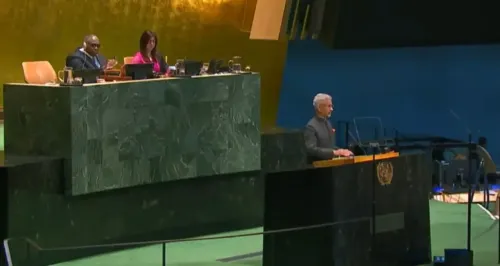
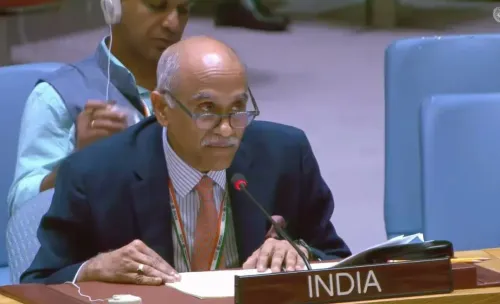
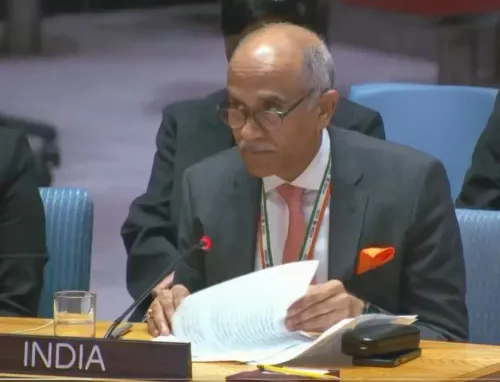
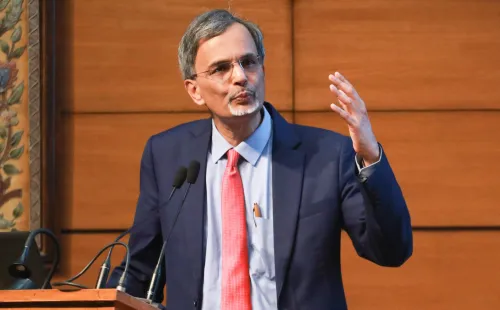
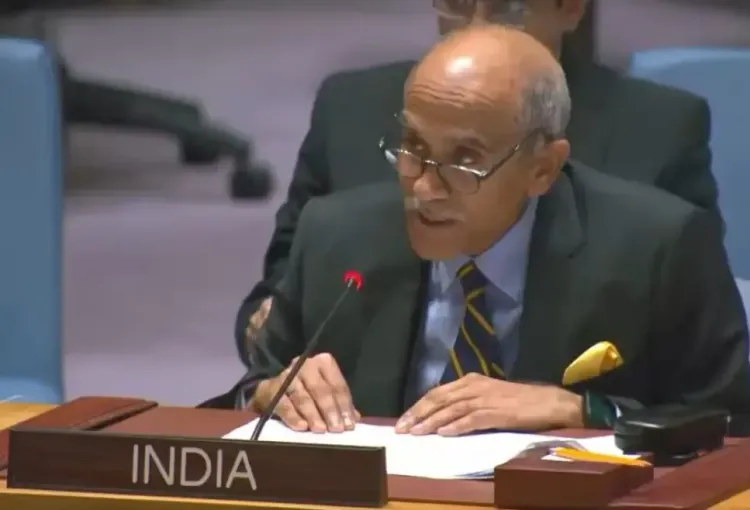
India on Thursday, 16 October 2026 reiterated its call for an immediate de-escalation and diplomatic resolution of the conflict engulfing the Gulf region, warning of severe consequences for its $180 billion annual trade relationship, 10 million diaspora members, and the safety of its seafarers. India's Permanent Representative to the United Nations, P Harish, made the appeal at the UN Security Council's quarterly open debate on the Middle East.
India's economic and human stakes in the Gulf
Harish underscored the depth of India's exposure to the region, citing figures that go well beyond diplomacy. With the six Gulf Cooperation Council (GCC) nations alone, India's annual bilateral trade stands at $180 billion, cumulative Foreign Direct Investment at $31 billion, and remittances at more than $52 billion.
'India has very high stakes in the safety, security and stability of the Middle East,' Harish said. 'Our political, economic, investment, energy and people-to-people relations with the region are extremely strong.'
The wellbeing of the 10 million Indians living across those countries, he added, is 'a core interest and a vital part of our bilateral relationships.'
Attacks on shipping and the seafarers' crisis
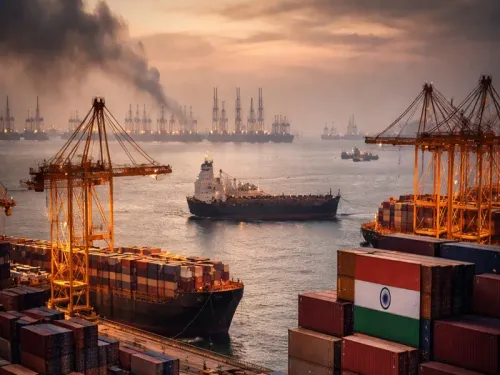
A central concern for New Delhi is the mounting threat to maritime commerce and Indian sailors. Harish stated plainly: 'All attacks on commercial shipping and merchant mariners are legally and morally indefensible.'
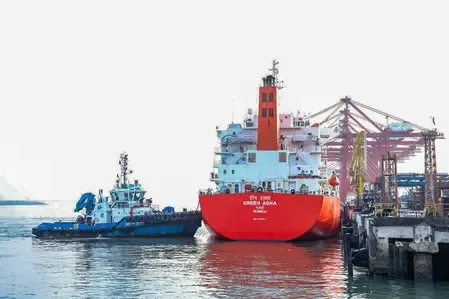
He cited attacks this week on the India-flagged MV DP World Cauvery, as well as recent strikes on MT Petro Dolphin, MT Valthera, MT On Peace, and MT Kazimah III — vessels under other flags but carrying Indian sailors. He thanked Oman and the United Arab Emirates for assisting in ensuring the safety of the crew members involved. Harish stopped short of naming the parties responsible for the attacks.
'Freedom of navigation, and the safe and unimpeded flow of maritime commerce through international waterways, in accordance with international law, must be upheld,' he said.
Modi's proposed Seafarers Emergency Support Network
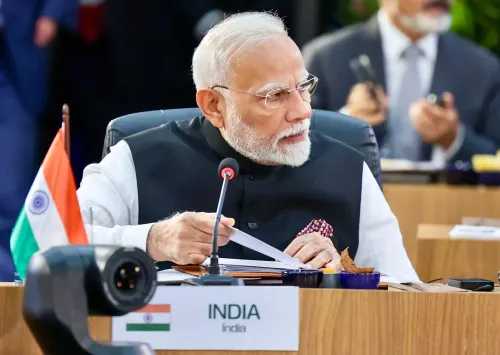
To address the growing vulnerability of maritime workers, Prime Minister Narendra Modi has proposed the creation of a Seafarers Emergency Support Network (SESN), an initiative first floated at the BRICS summit. According to Harish, the network 'could connect the maritime authorities and embassies of the countries concerned, and facilitate distress alerts, medical assistance, communication with families, and support for evacuation.'
Notably, India — which has the world's largest pool of seafarers — and Liberia, where the greatest number of ships are registered, jointly launched the Group of Friends on Safety and Security of Shipping and Seafarers on the sidelines of the recent UN General Assembly High Level Week. The group now counts 23 member nations.
Gaza, the Two-State Solution, and India's humanitarian role
Harish, who earlier in his diplomatic career served as India's representative to the Palestinian Authority stationed in Gaza City, cautioned that the crisis in the Strait of Hormuz must not divert attention from the humanitarian catastrophe in Gaza. India has 'unequivocally condemned' the 7 October attack three years ago, he said, reiterating that 'terrorism anywhere has no justification.'
'Civilians including women and children have borne the heaviest cost of the conflict since,' he said, urging the international community to 'act in unison to prevent any further loss of civilian lives and destruction of civilian infrastructure.'
India's position on a lasting resolution remains unchanged: a negotiated Two-State Solution with Israel and Palestine as independent, peacefully coexisting nations. On the ground, India is building a hospital, establishing educational institutions, and offering scholarships to Palestinians. With cumulative contributions of $52 million, India is reportedly emerging as the largest contributor to the UN Relief and Works Agency (UNRWA) for Palestine.
With the Gulf conflict showing no immediate signs of resolution, the pressure on New Delhi to protect its economic arteries and the millions of citizens living in the region is only set to intensify.
Point of View
But 23 member nations and a framework in early formation are thin cover for the scale of risk Indian seafarers now face. The more telling detail is the UNRWA contribution figure: if India is quietly becoming Palestine's largest UN donor, its Two-State advocacy carries more weight than the usual diplomatic boilerplate suggests.
NationPress
16 Oct 2026
Frequently Asked Questions
What did India say at the UN Security Council about the Gulf conflict?
India called for an immediate ceasefire and resolution through dialogue and diplomacy, with Permanent Representative P Harish warning that the conflict threatens $180 billion in annual trade, $52 billion in remittances, and the safety of 10 million Indians living in the Gulf. He also condemned attacks on commercial shipping, including on India-flagged vessels.
What is the Seafarers Emergency Support Network (SESN) proposed by PM Modi?
The SESN is a proposed international coordination mechanism, first announced by Prime Minister Narendra Modi at the BRICS summit, designed to link maritime authorities and embassies to provide distress alerts, medical assistance, family communication, and evacuation support for seafarers in crisis zones. India, which has the world's largest pool of seafarers, is leading the initiative.
Which ships were attacked and cited by India at the Security Council?
India cited attacks on five vessels: the India-flagged MV DP World Cauvery (attacked this week), and MT Petro Dolphin, MT Valthera, MT On Peace, and MT Kazimah III in recent weeks. Many of the ships carried Indian sailors; Harish thanked Oman and the UAE for helping ensure crew safety.
What is India's position on the Israel-Palestine conflict and the Two-State Solution?
India has unequivocally condemned the 7 October attack three years ago and supports a negotiated Two-State Solution with Israel and Palestine as independent, peacefully coexisting nations. India is also providing humanitarian assistance including building a hospital, educational institutions, and scholarships, and has contributed a cumulative $52 million to UNRWA.
Why does the Gulf conflict matter so much to India economically?
India's ties to the Gulf Cooperation Council alone include $180 billion in annual trade, $31 billion in cumulative FDI, and over $52 billion in annual remittances, making it one of India's most critical economic relationships. Additionally, 10 million Indian nationals live and work in the region, and India's energy imports are heavily dependent on Gulf supply routes.