India at UN condemns Hormuz, Bab al-Mandab ship attacks, demands free navigation
Synopsis
At the UN Security Council, India named the Houthis, flagged Iranian attacks on Indian-crewed ships, and disclosed that three Indian sailors were killed in a US strike on the MT Settebello — a rare moment where New Delhi's carefully calibrated Gulf diplomacy was forced into direct collision with the region's warring parties.
Key Takeaways
India's Permanent Representative P.
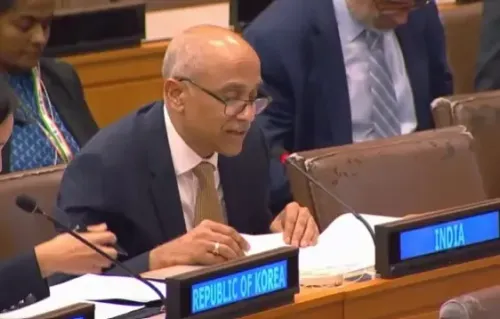
Harish condemned attacks on shipping in the Strait of Hormuz and Bab al-Mandab Strait at the UN Security Council on Tuesday, 29 July .
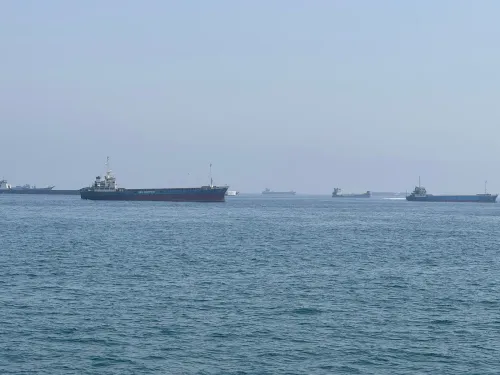
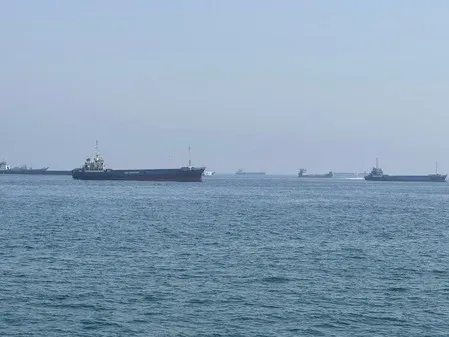
Three Indian-crewed vessels — GFS Galaxy , MT Al Bahiyah , and MT Mombasa — were attacked in the Strait of Hormuz; one Indian national died and one remains missing .
Three Indian sailors were killed aboard the Palau-flagged MT Settebello during US strikes linked to the blockade of Iranian ports.
The Houthis claimed attacks on four Saudi-connected ships in the Bab al-Mandab Strait, threatening the Red Sea–Suez Canal corridor.
India cited $180 billion in annual Gulf trade, $52 billion in GCC remittances, and 10 million Indians in the Gulf as reasons its stakes in regional stability are high.
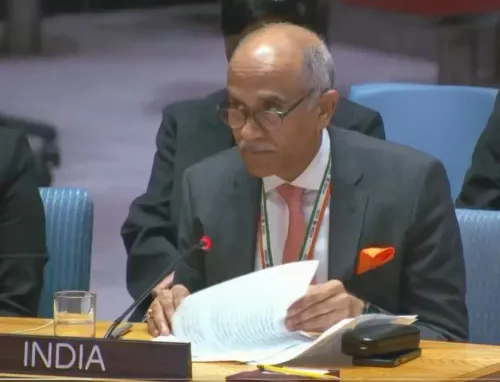
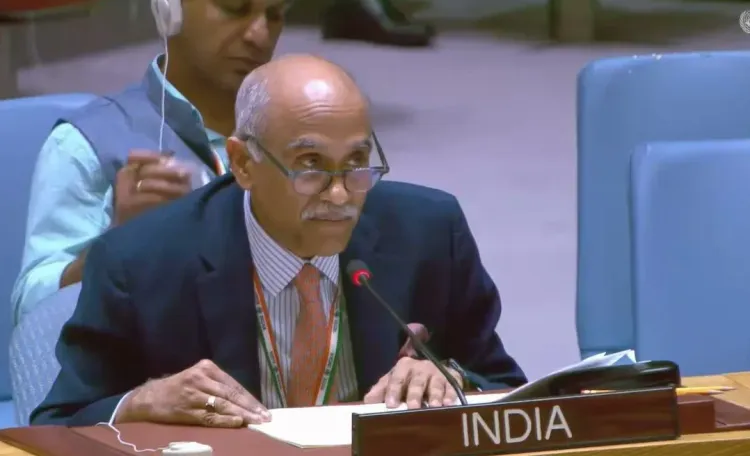
India on Tuesday strongly condemned the attacks on commercial shipping in the Strait of Hormuz and the Bab al-Mandab Strait — two critical arteries of global trade — and demanded the immediate restoration of free and unimpeded navigation in line with international maritime law. The statement was delivered at the United Nations Security Council during a debate on the situation in the Middle East.
India's Statement at the Security Council
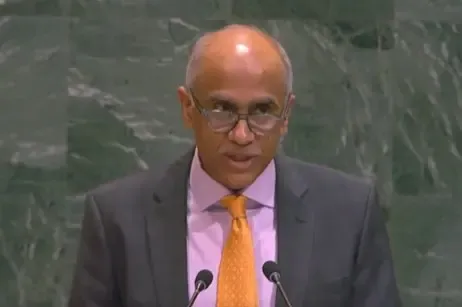
'The targeting of commercial shipping and civilian infrastructure in the region must end,' said P. Harish, India's Permanent Representative to the United Nations, addressing the Council. 'Free and unimpeded navigation and commerce through the international waterways in the region, in keeping with international law, must be restored at the earliest,' he added.
Harish drew specific attention to attacks on three vessels carrying Indian crew members — GFS Galaxy, MT Al Bahiyah, and MT Mombasa — in the Strait of Hormuz. 'Several Indian citizens were injured, including some seriously; one Indian tragically lost his life, and one is missing, in these attacks,' he said. While Harish did not name Iran directly — which reportedly attacked the three ships near the Oman coast — he did name the Houthis while condemning attacks in the Bab al-Mandab Strait.
The Houthi Threat in the Red Sea Corridor
The Houthis, an Iran-aligned rebel group operating in Yemen, have claimed responsibility for attacking four Saudi-connected ships in the Bab al-Mandab Strait, the narrow chokepoint that connects the Red Sea to the Gulf of Aden and eventually leads to the Suez Canal. The attacks have heightened concerns about the security of one of the world's most heavily trafficked maritime corridors.
'The protection of the Bab al-Mandab Strait and the Southern Red Sea is a shared international responsibility and is a global interest,' Harish said. He also reaffirmed India's support for the 'unity, sovereignty, and territorial integrity of the Republic of Yemen and rejection of any interference in its internal affairs.'
US Strikes and Indian Casualties in Hormuz
Separately, the United States has also conducted strikes on shipping in the Strait of Hormuz as part of its blockade of Iranian ports, resulting in the deaths of three Indian sailors aboard the Palau-flagged MT Settebello. The cumulative toll on Indian maritime workers underscores the direct human cost of the escalating conflict in the region.
India's Economic and Strategic Stakes
Harish underlined the deep economic ties that make Gulf stability a national priority for India. He cited bilateral annual trade of around $180 billion, cumulative Foreign Direct Investment of over $31 billion, and remittances of more than $52 billion from the Gulf Cooperation Council (GCC) — the six-member bloc comprising Bahrain, Kuwait, Oman, Qatar, Saudi Arabia, and the UAE. 'These linkages have direct implications for our economy and energy security,' he said.
The welfare of approximately 10 million Indians residing in the Gulf region was also highlighted as 'a key priority.' Harish called for 'a return to dialogue and diplomacy in the interests of peace, security and stability in the region.' This comes amid a broader pattern of maritime disruptions that have already pushed up global shipping insurance premiums and rerouted several major cargo lines away from the Red Sea.
Point of View
While the Houthis are named directly. This asymmetry reflects New Delhi's balancing act — it cannot afford to alienate Iran, a key energy supplier and connectivity partner for Chabahar, yet it must respond to the deaths of its own nationals. The disclosure that US strikes killed three Indian sailors on the MT Settebello adds a layer of complexity that mainstream coverage has underplayed: India is now facing casualties from multiple parties in the same waterway. With $180 billion in Gulf trade and 10 million citizens in the region, the cost of strategic ambiguity is rising faster than New Delhi's diplomatic bandwidth.
NationPress
28 Oct 2026
Frequently Asked Questions
What did India say at the UN Security Council about the Strait of Hormuz attacks?
India's Permanent Representative P. Harish condemned the attacks on commercial shipping in the Strait of Hormuz and the Bab al-Mandab Strait, calling for an immediate end to the targeting of civilian vessels and demanding the restoration of free navigation under international maritime law. He specifically cited attacks on three Indian-crewed ships — GFS Galaxy, MT Al Bahiyah, and MT Mombasa.
How many Indian nationals were affected by the Hormuz ship attacks?
Several Indian crew members were injured, including some seriously, in the attacks on the three vessels in the Strait of Hormuz. One Indian national lost his life and one remains missing. Additionally, three Indian sailors were killed when the US struck the Palau-flagged MT Settebello during its blockade of Iranian ports.
Who are the Houthis and why are they attacking ships in the Bab al-Mandab?
The Houthis are an Iran-aligned rebel group controlling large parts of Yemen. They have claimed responsibility for attacking four Saudi-connected ships in the Bab al-Mandab Strait, a key chokepoint linking the Red Sea to the Suez Canal, as part of a broader regional conflict tied to the war in Yemen and tensions between Iran and Saudi Arabia.
Why does India have high stakes in Gulf maritime security?
India's Gulf ties involve annual bilateral trade of around $180 billion, cumulative FDI of over $31 billion, and remittances exceeding $52 billion from the six-country Gulf Cooperation Council alone. Approximately 10 million Indian nationals live and work in the Gulf region, making its security and stability a direct economic and humanitarian priority for New Delhi.
Did India name Iran in its UN statement over the Hormuz attacks?
No. India's Permanent Representative P. Harish did not name Iran directly in his Security Council statement, even though Iran reportedly attacked the three Indian-crewed ships near the Oman coast. He did, however, name the Houthis while condemning the attacks in the Bab al-Mandab Strait.