Tencent, Alibaba, Meituan launch buybacks to lift battered valuations

Synopsis
Tencent spent a record HK$10 billion buying back its own shares in June alone — the largest monthly repurchase of 2026 — as Chinese big tech collectively deploys billions to arrest a punishing valuation slide that has rattled investor confidence across the sector.
Key Takeaways
Tencent Holdings repurchased nearly HK$10 billion (US$1.27 billion) of its own shares in June 2026 , its largest monthly buyback of the year.
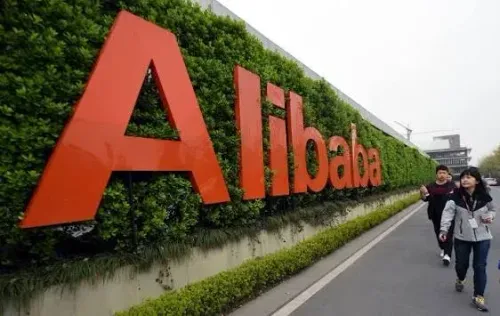
Alibaba Group Holding spent more than US$50 million on share repurchases in a single week.
Meituan disclosed a fresh buyback of nearly HK$200 million across two consecutive trading days.
Meituan CEO Wang Xing publicly acknowledged 'unsatisfactory' stock performance at the company's annual general meeting.
Citi Research analysts expect companies to accelerate buyback pace given 'solid net cash positions and outstanding buy-back programmes.' Meituan CFO Chen Shaohui confirmed plans to accelerate repurchases; Wang Xing also flagged monetisation of external investments as an additional confidence measure.
Tencent Holdings, Alibaba Group Holding, Meituan, and Xiaomi have launched aggressive share repurchase programmes in mid-2026 to restore investor confidence amid persistent scepticism toward Chinese big tech stocks. Analysts at Citi Research suggest a valuation floor may be approaching, even as stock prices remain near alarming lows across the sector.
Record-Scale Repurchases
Tencent Holdings repurchased nearly HK$10 billion (US$1.27 billion) of its own shares in June, marking its largest monthly buyback of the year. Alibaba Group Holding separately spent more than US$50 million on share repurchases in a single week, signalling sustained commitment to the strategy.
Meituan disclosed a fresh buyback of nearly HK$200 million across Monday and Tuesday, adding momentum to what has become a sector-wide defensive play against depressed market valuations.
Why It Matters
The coordinated buyback push reflects how deeply Chinese tech valuations have fallen — and how urgently management teams feel the need to act. Rather than waiting for macro tailwinds, these companies are deploying their substantial cash reserves directly into the market to put a floor under their own share prices.
Citi Research analysts noted in a recent note: 'With solid net cash positions and outstanding buy-back programmes, we expect companies to accelerate the buy-back pace.' That assessment implies the current pace of repurchases may intensify further in the months ahead.
Leadership Steps Forward
Meituan founder and CEO Wang Xing addressed the company's sluggish market valuation directly at its annual general meeting last Friday, acknowledging that its recent stock performance has been 'unsatisfactory.' The candid admission from one of China's most prominent tech founders underscored the severity of the pressure companies are facing.
CFO Chen Shaohui followed up by stating the company would accelerate its buyback plans to stabilise the stock. Wang also indicated Meituan would seek to boost market confidence through additional measures, including cashing out external investments.
The Competitive Backdrop
The buyback wave spans the breadth of China's consumer and platform tech ecosystem — from social media and e-commerce to food delivery and consumer electronics. Xiaomi is also participating in the repurchase trend, reflecting how broadly the valuation pressure has spread beyond any single sub-sector.
The moves come as global investors continue to weigh regulatory uncertainty, slowing domestic consumption, and geopolitical friction against the sector's underlying cash generation strength.
What's Next
Whether buybacks alone can sustainably re-rate these stocks remains an open question. The critical test will be whether improved earnings visibility in the second half of 2026 can complement the mechanical support that repurchases provide. Investors and analysts will be watching closely for any acceleration in buyback volumes — and for signs that external investment monetisation, as flagged by Wang Xing, begins to materialise.
Point of View
Alibaba, Meituan, and Xiaomi is less a sign of strategic confidence and more a symptom of how few other levers Chinese tech management teams currently have — organic growth is constrained, regulatory risk remains elevated, and global capital is still underweight the sector. What mainstream coverage underplays is that buybacks primarily benefit existing shareholders and do little to attract new institutional money, which typically requires a fundamental re-rating catalyst. The more telling signal will be whether Wang Xing's pledge to cash out external investments — essentially liquidating stakes in portfolio companies — indicates that Meituan sees limited growth optionality in its current investment portfolio. Citi Research's cautiously optimistic 'bottoming out' framing is worth watching: if it proves premature, the billions spent on repurchases will have provided only temporary relief.
NationPress
2 Jul 2026
Frequently Asked Questions
Why are Chinese tech companies buying back shares in 2026?
Tencent , Alibaba , Meituan , and Xiaomi are repurchasing shares to prop up valuations that have fallen to alarming lows amid persistent investor scepticism. The companies have strong cash positions and are using buybacks as a direct mechanism to support their stock prices while broader confidence remains fragile.
How much has Tencent spent on buybacks in 2026?
Tencent Holdings spent nearly HK$10 billion (US$1.27 billion) buying back its own shares in June 2026 alone, making it the company's largest single-month repurchase of the year. This figure covers only June and does not include earlier months of the ongoing programme.
What did Meituan's CEO say about the company's stock performance?
Meituan founder and CEO Wang Xing acknowledged at the company's annual general meeting that its recent stock performance has been 'unsatisfactory.' He committed to boosting market confidence through accelerated buybacks and by monetising external investments.
Will the buybacks be enough to reverse Chinese tech valuations?
Analysts at Citi Research suggest a valuation floor may be approaching, noting that 'solid net cash positions and outstanding buy-back programmes' give companies room to accelerate repurchases. However, buybacks provide mechanical price support rather than a fundamental re-rating, which typically requires improved earnings visibility or a shift in the macro and regulatory environment.
Which Chinese tech companies are involved in the 2026 buyback wave?
The four major participants are Tencent Holdings , Alibaba Group Holding , Meituan , and Xiaomi . Together they represent a cross-section of China's platform economy — spanning social media, e-commerce, food delivery, and consumer electronics — indicating the valuation pressure is sector-wide rather than company-specific.