Deepak Punia wins bronze in 97 kg wrestling at Asian Games 2026
Synopsis
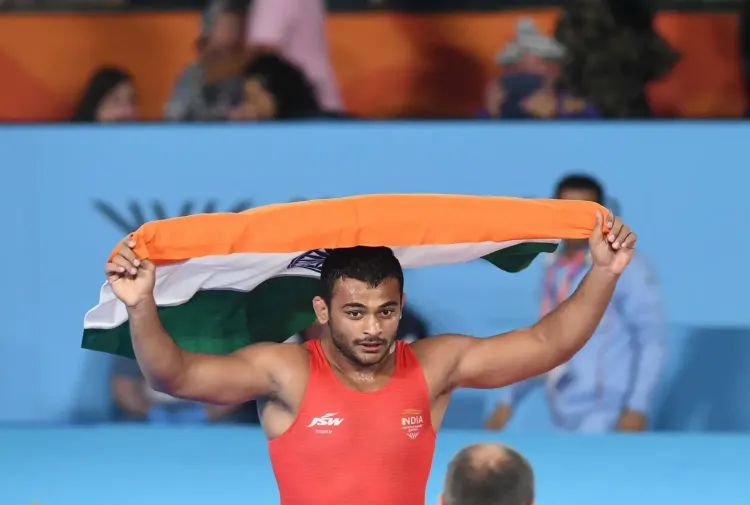
Deepak Punia's 2-1 win over Mongolia's Gankhuyag Ganbaatar in Nagoya brought India its fifth-ever medal in the men's 97 kg freestyle category at the Asian Games — a weight class India hadn't medalled in since 1966. Paired with golds from Aman Sehrawat and Sujeet Kalkal on the same day, India's wrestling Saturday in Nagoya was historic.
Key Takeaways
Deepak Punia won bronze in men's freestyle 97 kg wrestling at the Asian Games 2026 in Nagoya on 3 October .
He defeated Mongolia's Gankhuyag Ganbaatar by 2-1 in the bronze-medal bout.
This is Deepak's second Asian Games medal, after a silver in the 86 kg category at the 2023 Asian Games .
Only the fifth Indian medal in the men's freestyle 97 kg category across all Asian Games editions; the last came in 1966 .
Aman Sehrawat (57 kg) and Sujeet Kalkal (65 kg) both won gold on the same day, giving India two freestyle wrestling golds at a single Asian Games for the first time since 1978 .
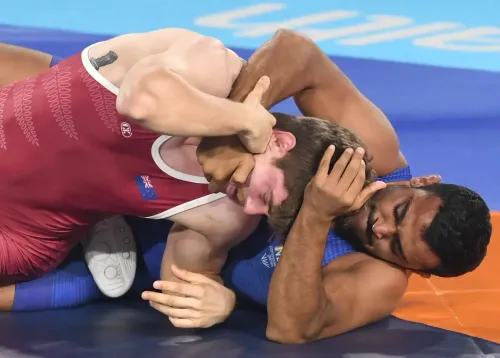
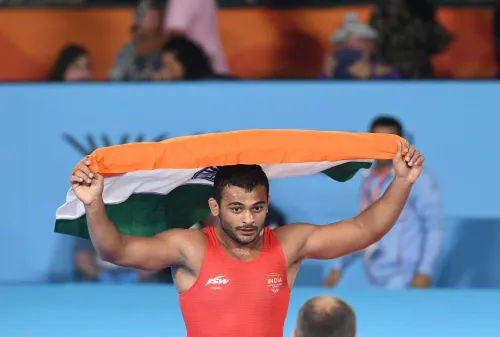
India's Deepak Punia clinched the bronze medal in the men's freestyle 97 kg wrestling event at the Asian Games 2026 in Nagoya on Saturday, 3 October, defeating Mongolia's Gankhuyag Ganbaatar by 2-1 in a cagey, low-scoring medal bout. The result adds a second Asian Games medal to Punia's career, following his silver in the 86 kg category at the 2023 Asian Games.
How the Bout Unfolded
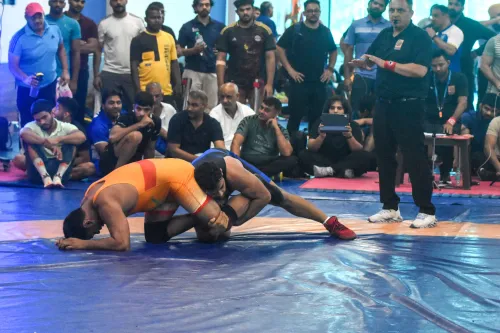
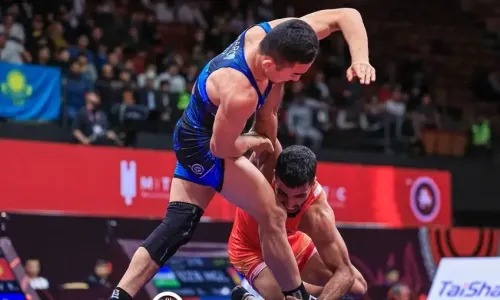
Deepak secured two points in the opening period and defended resolutely in the second, conceding one to Ganbaatar but holding on for the narrow victory. The composed, defensive display was characteristic of a wrestler who has repeatedly shown the ability to manage tight scorelines on the biggest stages.
Earlier in the competition, Deepak opened with a commanding 12-2 win over China's Zhou Junpeng. He advanced to the semifinals without wrestling his quarterfinal, after Hong Kong's Li Wui Fung Vincent failed to appear for the bout. In the semifinal, Deepak pushed Uzbekistan's Sherzod Poyonov hard before going down 8-9, sending him into the bronze-medal round instead.
Historic Context in the 97 kg Category
Deepak's bronze is only the fifth medal won by an Indian wrestler in the men's freestyle 97 kg category across all Asian Games editions. India's first medal in the weight class came via Maruti Mane, who won gold at the 1962 Asian Games. Ganpat Andalkar added a silver in the same edition, while Bishwanath Singh and Bhim Singh each secured silver and bronze respectively at the 1966 Asian Games. The category has seen no Indian medal since — making Deepak's podium finish a six-decade revival for the weight class.
India's Golden Day in Wrestling
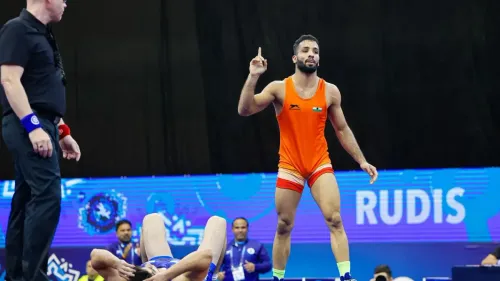
Deepak's bronze capped a remarkable Saturday for Indian men's freestyle wrestling in Nagoya. Aman Sehrawat defeated reigning world champion Han Chong-song of North Korea 11-7 to win gold in the men's 57 kg category, becoming the first Indian to claim an Asian Games gold in that division. Earlier, Sujeet Kalkal had ended India's wait for a wrestling gold at the Games by taking the men's 65 kg title with a dramatic 10-9 comeback win over Tajikistan's Abdulmazhid Kudiyev.
Notably, Aman's gold also marked the first time since 1978 that India have won two gold medals in men's freestyle wrestling at a single Asian Games — a milestone that underscores the depth emerging in Indian wrestling.
What This Means for India's Medal Haul
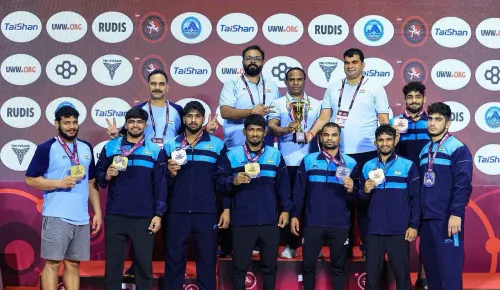
With two golds and a bronze from men's freestyle wrestling alone on Saturday, India's overall showing at the Nagoya Games has received a significant boost. Wrestling has historically been one of India's strongest disciplines at the Asian Games, and this edition reinforces that standing. All eyes will now turn to remaining bouts and whether India can add further medals before the Games conclude.
Point of View
A weight class that was once India's own. But the bigger story is structural: on a single Saturday, Indian men's freestyle wrestling produced two golds and a bronze, a depth of performance that India's wrestling establishment has been chasing for decades. The back-to-back golds from Aman Sehrawat and Sujeet Kalkal suggest this is not a one-champion sport anymore. Whether the national federation can sustain this pipeline — and protect it from the administrative disputes that have repeatedly disrupted Indian wrestling — will determine whether Nagoya 2026 is a peak or a turning point.
NationPress
3 Oct 2026
Frequently Asked Questions
How did Deepak Punia win his bronze medal at the Asian Games 2026?
Deepak Punia won bronze by defeating Mongolia's Gankhuyag Ganbaatar 2-1 in the bronze-medal bout of the men's freestyle 97 kg event in Nagoya on 3 October 2026. He scored two points in the opening period and defended successfully in the second despite conceding one.
What is Deepak Punia's Asian Games medal record?
Deepak Punia now has two Asian Games medals — a silver in the 86 kg category at the 2023 Asian Games and a bronze in the 97 kg category at the 2026 Asian Games in Nagoya.
Why is India's 97 kg wrestling bronze historically significant?
It is only the fifth Indian medal in the men's freestyle 97 kg category across all Asian Games editions. The previous medals came in 1962 and 1966, making Deepak's podium finish the first for India in this weight class in roughly six decades.
Who else won wrestling medals for India at the Asian Games 2026 on 3 October?
Aman Sehrawat won gold in the men's 57 kg category by beating North Korea's Han Chong-song 11-7, and Sujeet Kalkal won gold in the men's 65 kg category with a 10-9 comeback win over Tajikistan's Abdulmazhid Kudiyev. Combined with Deepak's bronze, India won two golds and a bronze in men's freestyle wrestling on a single day.
When was the last time India won two freestyle wrestling golds at a single Asian Games?
India last won two gold medals in men's freestyle wrestling at a single Asian Games in 1978. Aman Sehrawat and Sujeet Kalkal's golds at the 2026 Nagoya Games matched that historic feat.