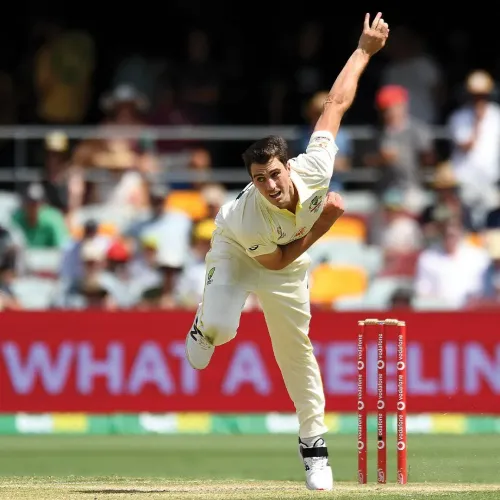
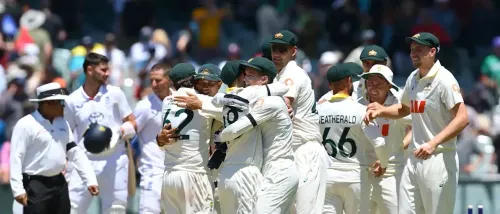
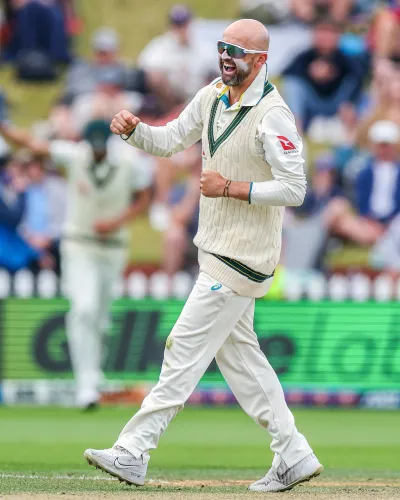
Cummins, Starc, Hazlewood, Lyon: Australia's bowling quartet hits 600 Test wickets
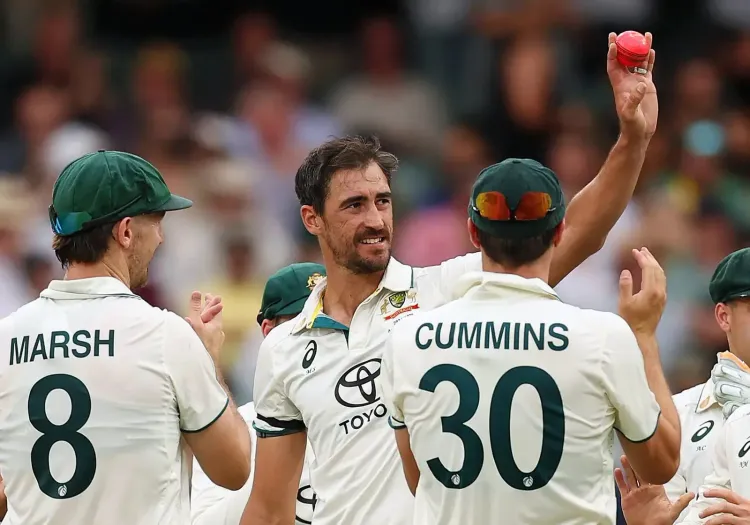
Synopsis
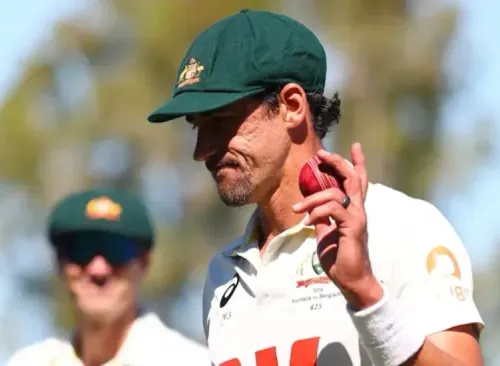
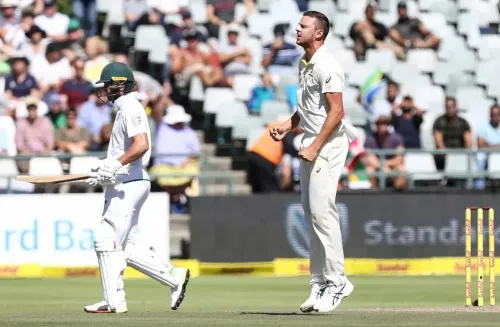
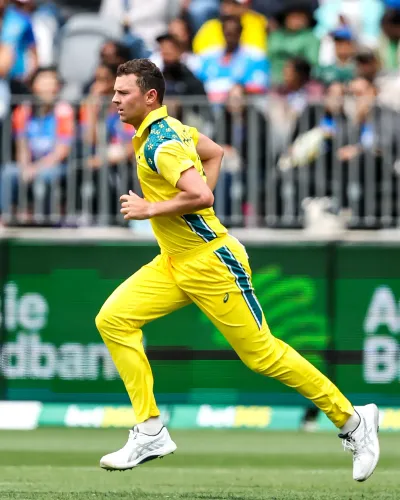
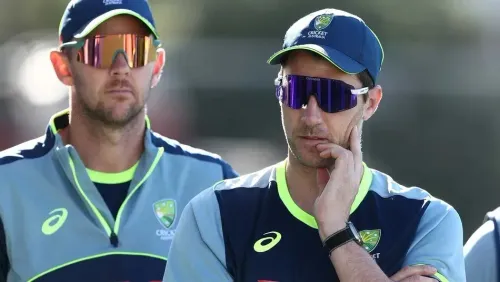
For the first time in Test cricket history, a bowling quartet has surpassed 600 combined wickets while playing together — and Australia's Cummins, Starc, Hazlewood, and Lyon did it on Day 2 in Durban. With a gap of over 167 wickets between them and any rival group, this is not just a record but a statement about sustained collective excellence that the sport may not see again for decades.
Key Takeaways
Pat Cummins , Josh Hazlewood , Mitchell Starc , and Nathan Lyon became the first bowling quartet in Test cricket to take 600 combined wickets while playing together.
The milestone was reached on Day 2 of the first Test against South Africa at Kingsmead, Durban on 11 October 2026 .
Cummins leads the quartet's tally with 160 wickets ; Starc has 155 , Hazlewood 152 , and Lyon 140 — all in matches played together.
The nearest rival quartet — England's Anderson, Broad, Stokes, and Ali — took 433 wickets in 34 Tests together, more than 167 behind Australia's unit.
Australia made 390 batting first, with Matt Renshaw scoring a century; South Africa were 197/8 in reply.
Pat Cummins, Josh Hazlewood, Mitchell Starc, and Nathan Lyon became the first bowling quartet in Test cricket history to surpass 600 combined wickets while playing together, achieving the milestone during Day 2 of the first Test against South Africa at Kingsmead, Durban, on 11 October 2026. The achievement, sealed during South Africa's first innings, adds a historic chapter to what is already one of the most formidable bowling attacks in the modern game.
The Numbers Behind the Milestone
Coming into the Durban Test, the quartet had taken 599 wickets across 37 matches played together, meaning the landmark was always going to fall in this fixture. Across 38 matches, the four now hold more than 600 combined Test wickets — a figure no other bowling group has reached while operating as a unit.
Cummins leads the tally with 160 wickets in games alongside his three teammates. Starc is second with 155 scalps in 74 innings, while Hazlewood is third with 152 wickets in 72 innings. Lyon sits a close fourth with 140 wickets in 70 innings.
How They Compare to the Next-Best Quartet
The closest rival group — England's James Anderson, Stuart Broad, Ben Stokes, and Moeen Ali — managed 433 wickets in 34 Tests together, leaving Australia's unit with a commanding lead. The gap of more than 167 wickets underlines just how dominant and durable this Australian combination has been over its tenure.
Notably, this is a record built across different conditions and continents, reflecting not only individual excellence but a rare cohesion that has kept all four playing together consistently — a feat in itself given injury rates in fast bowling.
Day 3 Bowling Effort Against South Africa
On Day 3 at Kingsmead, the quartet continued to apply pressure. Cummins took three wickets, while Hazlewood and Lyon claimed two each, and Starc contributed one. South Africa found themselves in deep trouble at 197/8 after Hazlewood removed Marco Jansen, pushing the Proteas further into difficulty.
Australia had established a solid platform, posting 390 in their first innings, anchored by a masterful century from Matt Renshaw.
What This Milestone Signals
This landmark comes at a time when questions about the longevity of pace-heavy attacks are often raised, making Australia's record all the more remarkable. All four have operated at the highest level simultaneously across a sustained period — a combination of selection continuity, fitness management, and collective skill that cricket administrators and coaches globally will study.
With the series only one match old, Australia's bowling unit will look to build on this historic moment and press for a commanding series lead in Durban.
Point of View
World-class attack that remains intact across years. Australia's achievement matters because it was earned across varied conditions and against top-ranked opposition, not manufactured in favourable home fixtures. The 167-wicket gap over the next-best English quartet also exposes how selection volatility and injury have prevented other sides from sustaining a comparable unit. The real question now is how much longer this group can operate together — and whether any successor combination will ever match the consistency this quartet has delivered.
NationPress
11 Oct 2026
Frequently Asked Questions
What is the 600-wicket record achieved by Australia's bowling quartet?
Pat Cummins, Josh Hazlewood, Mitchell Starc, and Nathan Lyon became the first bowling quartet in Test cricket history to take 600 combined wickets while playing together, reaching the mark during the first Test against South Africa in Durban on 11 October 2026. The four have taken more than 600 wickets across 38 Tests played as a unit.
How are the wickets distributed among the four Australian bowlers?
Pat Cummins leads with 160 wickets in matches alongside his three teammates. Mitchell Starc has 155 in 74 innings, Josh Hazlewood has 152 in 72 innings, and Nathan Lyon has 140 in 70 innings. Together they crossed 600 wickets in their 38th Test as a combined unit.
Which quartet is the next most prolific in Test cricket playing together?
England's James Anderson, Stuart Broad, Ben Stokes, and Moeen Ali are the next most prolific quartet, having taken 433 wickets in 34 Tests together. Australia's unit leads by more than 167 wickets, making the gap historically significant.
How did Australia perform in the first Test against South Africa in Durban?
Australia posted 390 in their first innings, with Matt Renshaw scoring a century. Their bowling quartet then reduced South Africa to 197/8 in the first innings, with Cummins taking three wickets, Hazlewood and Lyon two each, and Starc one on Day 3.
Why is this record considered historic?
It is the first time any bowling quartet has collectively reached 600 wickets while consistently playing Test matches together, highlighting an extraordinary combination of individual skill, fitness, and selection continuity over an extended period. No other group in the history of the sport has matched this collective output while operating as a sustained unit.