Baranica Elangovan's Asian Games bronze just the start, says coach Russell
Synopsis
Baranica Elangovan became the first Indian ever — male or female — to win a pole vault medal at the Asian Games, Olympics, or Commonwealth Games, clearing 4.15 m in Nagoya. Her coach Milber Bertrand Russell is already looking ahead: the next target is 4.40–4.50 m, and a permanent place among the world's best.
Key Takeaways
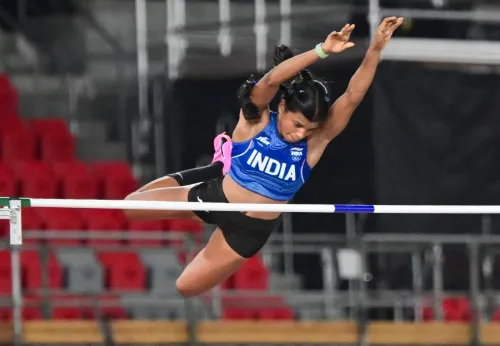
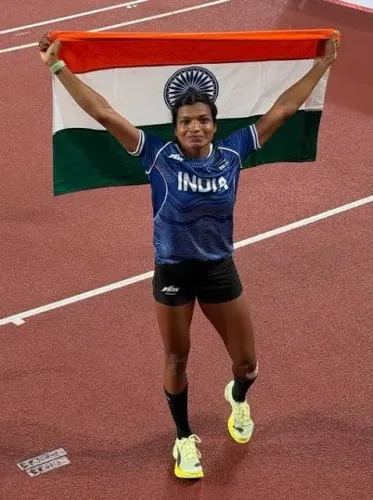
Baranica Elangovan won bronze at the Asian Games in Nagoya on 25 September , clearing 4.15 m — the first pole vault medal for any Indian at a major multi-sport championship.
She shared the bronze with Polina of Kazakhstan ; Japan's Misaki Morota (4.55 m) took gold and China's Niu Chunge (4.50 m) took silver.
Coach Milber Bertrand Russell has set a next target of 4.40–4.50 m and consistent performance at top international meets.
Baranica's personal best is 4.23 m ; the current national record of 4.25 m is held by G.
Sindhusree Ganesha .
Russell called for better facilities, equipment, and government support for pole vault through the Athletics Federation of India .
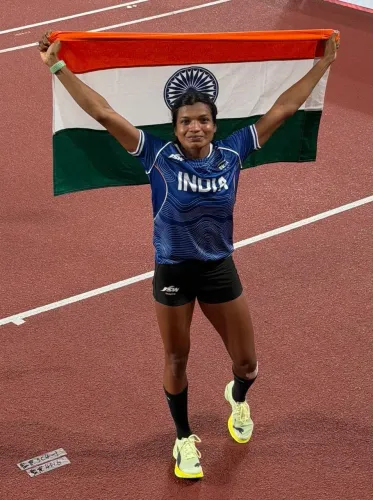
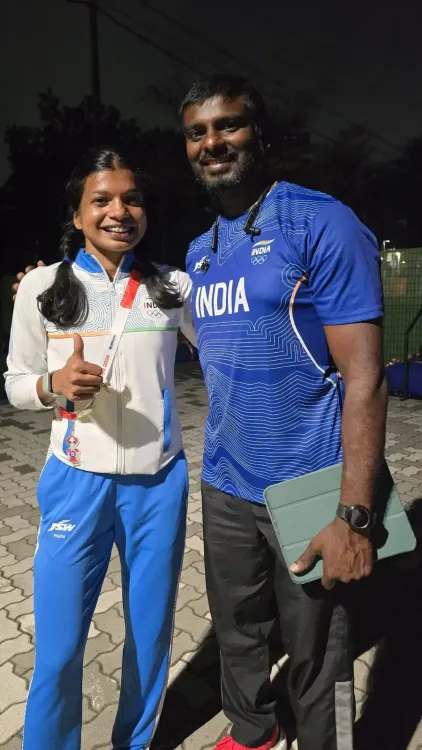
Baranica Elangovan, the 29-year-old Tamil Nadu pole vaulter, made history on 25 September by becoming the first Indian athlete — male or female — to win a pole vault medal at the Asian Games, the Olympics, or the Commonwealth Games. Her coach, Milber Bertrand Russell, says the Nagoya bronze is not the destination but the launchpad for a world-class career.
A Historic Bronze in Nagoya
Baranica shared the bronze medal with Polina of Kazakhstan, both clearing 4.15 metres at the Asian Games in Nagoya. Japan's Misaki Morota claimed gold with a clearance of 4.55 m, while China's Niu Chunge took silver at 4.50 m. It was Baranica's debut at the Asian Games, making the achievement all the more remarkable.
The athlete herself admitted the outcome exceeded her expectations. 'No one was expecting me to win a medal. I only wanted to improve my personal best but I ended up on the podium. At least I have opened India's account at the Asian Games and I thank my support team and family for this,' Baranica said in an interaction with SAI Media.
Coach Russell Sets the Next Bar
Russell, who has guided Baranica since the early stages of her athletics career, described the medal as the beginning of a new chapter. 'The next targets will be to consistently improve her personal best and move towards the 4.40–4.50 m level. Beyond that, we want her to compete strongly at major international competitions and continue improving her position at the world level,' Russell told SAI Media.
He elaborated on the approach that delivered the medal in Nagoya. 'Our target was to take the competition one height at a time and focus on the process rather than thinking too much about the medal. We believed Baranica had the potential to fight for a medal, but we also knew that she had to execute well on the day. She showed a lot of fighting spirit and eventually won the medal,' Russell said.
From Basketball Courts to the Vaulting Pit
Baranica's journey to pole vault was far from conventional. It was Russell — himself a coach who came to the event by circumstance — who steered her away from basketball and into athletics. 'I am a pole-vaulter by chance and it was my coach who brought me to this level,' Baranica acknowledged.
Her personal best stands at 4.23 m, which had been the national record until G. Sindhusree Ganesha broke it by clearing 4.25 m. Russell's immediate focus is on pushing Baranica past that mark consistently, with improvements targeted in her approach run, take-off mechanics, and overall speed and power.
Pole Vault's Moment to Shine in Indian Athletics
Russell believes Baranica's medal carries significance well beyond the individual achievement. Pole vault, despite its visual appeal, has long been overshadowed in India by javelin, discus, and shot put. 'When Indian athletes start performing well at international competitions, people begin to notice the event. Baranica winning an Asian Games medal will hopefully encourage more young athletes, coaches, and academies to take up the event,' Russell said.
He also called on the Athletics Federation of India to leverage the moment and secure better government support. 'We still need better facilities, equipment, proper coaching, and more opportunities for young athletes to compete and develop,' Russell said, noting that Olympic sports attract significant public investment that has yet to fully reach pole vault.
Athletics' Broader Rise — and What Comes Next
Track and field consistently fields India's largest contingent at major multi-sport events. The discipline received a transformative boost when Neeraj Chopra elevated javelin to Olympic gold-medal status, and Russell hopes Baranica's breakthrough can do for pole vault what Chopra did for the throwing events. Baranica is expected to compete at major international meets in the coming season as she and Russell work toward the 4.40–4.50 m target that would place her firmly among Asia's elite.
Point of View
But the infrastructure conversation it has sparked matters as much as the result itself. Pole vault demands specialised equipment and technical coaching that most Indian athletics programmes have never prioritised — and one medal, however landmark, does not change that overnight. Russell's call for better facilities is not a footnote; it is the central condition for whether this becomes a one-off or the start of a pipeline. The Neeraj Chopra parallel is instructive but imperfect: javelin had a deeper grassroots base; pole vault is starting almost from scratch. The Athletics Federation of India's response to this moment will determine whether Baranica remains an outlier or becomes a trailblazer.
NationPress
29 Sept 2026
Frequently Asked Questions
What did Baranica Elangovan achieve at the Asian Games?
Baranica Elangovan won a bronze medal in pole vault at the Asian Games in Nagoya on 25 September, becoming the first Indian — male or female — to win a pole vault medal at the Asian Games, the Olympics, or the Commonwealth Games. She cleared 4.15 m to share the bronze with Polina of Kazakhstan.
Who is Baranica Elangovan's coach?
Her long-time coach is Milber Bertrand Russell, who also introduced her to the sport after she transitioned from basketball. Russell guided her through the Nagoya campaign with a process-focused, height-by-height approach.
What are the next targets for Baranica after the Asian Games bronze?
Coach Russell has set a target of reaching the 4.40–4.50 m range consistently and competing strongly at major international competitions. Baranica's current personal best is 4.23 m, and the plan involves improving her approach, take-off, speed, and power.
What is Baranica Elangovan's personal best in pole vault?
Baranica's personal best is 4.23 m, which was the national record until G. Sindhusree Ganesha broke it by clearing 4.25 m. Coach Russell's immediate goal is to push her consistently beyond that mark.
Why is Baranica's medal significant for Indian athletics?
It is the first pole vault medal for any Indian at a major multi-sport championship, opening a discipline that has long been overshadowed by javelin, discus, and shot put. Coach Russell believes it will encourage more young athletes and coaches to take up the event and prompt the Athletics Federation of India to seek better government support for pole vault.