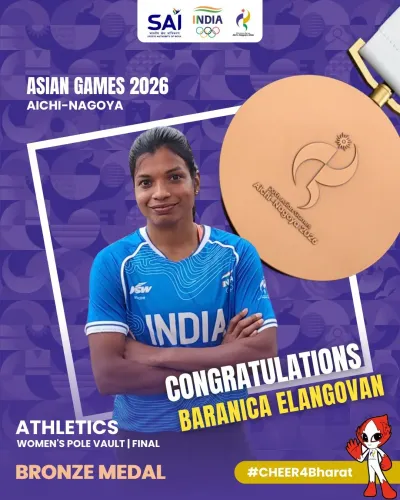
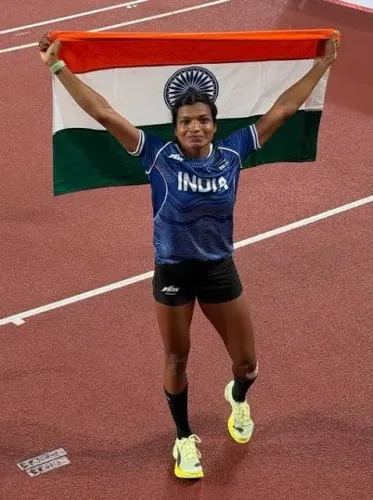
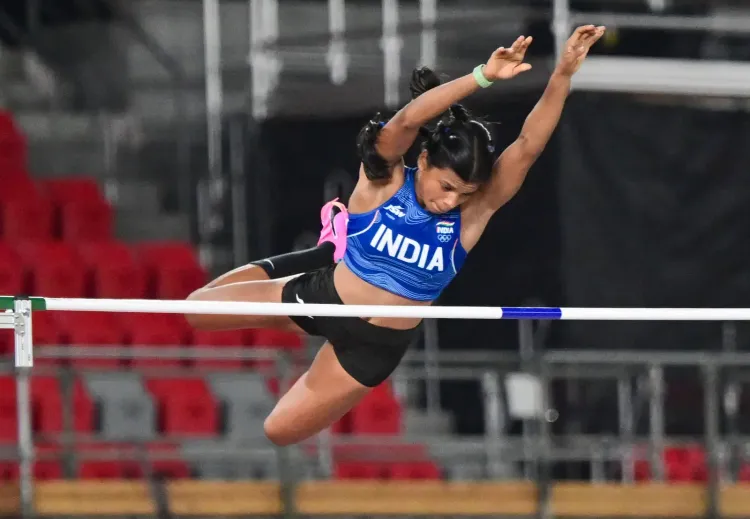
Baranica Elangovan wins Asian Games bronze in pole vault after clearing 4.20m at Nagoya
Synopsis
Baranica Elangovan's Asian Games bronze in pole vault is more than a medal — it is a rebuttal. Village voices once warned her parents that a pole vault injury would end her marriage prospects. She came back from ACL surgery, cleared 4.20m in Nagoya, and dedicated the podium finish to the coach who said she would shine.
Key Takeaways
Baranica Elangovan won a bronze medal in the women's pole vault at the Asian Games in Nagoya , clearing 4.20m .
She shared the bronze with a Kazakhstani athlete who also cleared the same height.
Elangovan underwent ACL surgery in 2019 after a vaulting injury early in her career.
Village community members had warned her parents that pole vault was too risky and that an injury would make her unmarriageable.
The Athletics Federation of India (AFI) arranged pole transport and a preparatory camp at Sugupa University one week before the Games.
She dedicated the medal to her coach, Milber Bertrand Russell .
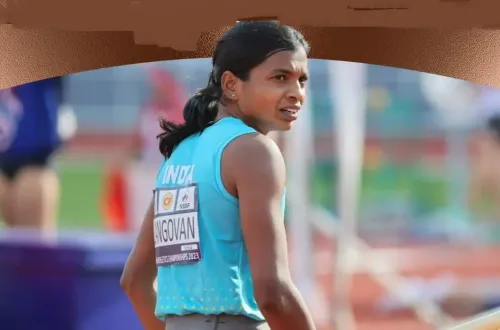
Baranica Elangovan, a 24-year-old Indian athlete from a small village, claimed a bronze medal in the women's pole vault at the Asian Games in Nagoya after clearing 4.20m, capping a journey marked by an ACL injury, social stigma, and unwavering family support. The medal makes her one of India's standout performers in athletics at the Games.
The doubts she left behind
When Elangovan first took up pole vault, her village community was openly sceptical. People reportedly warned her parents that the sport was too dangerous for a girl and that an injury would ruin her marriage prospects. 'I come from a village. When I started, I underwent ACL surgery after an injury while vaulting in 2019. At that time, everyone was telling my parents, "Why let a girl take part in Pole Vault? This event is quite risky. If something happens to her, no one will marry her." They were talking behind our backs,' Elangovan said after her bronze-medal finish.
Her parents refused to yield to the pressure. They consulted her coach, who told them plainly: 'She'll be able to do more than you think. She'll definitely shine in sport.' That vote of confidence, Elangovan said, changed everything.
A medal she almost did not realise she had won
The bronze arrived in unexpected fashion. With a Kazakhstani athlete also clearing the same height, Elangovan initially did not know she had finished on the podium. 'I didn't believe I'd won the medal. My colleague came up and said, "You were at the bronze, you won it." There was another athlete sharing the bronze, the Kazakhstan athlete,' she recalled. She added that her primary target had been a personal best, making the medal a bonus she had not anticipated.
AFI's behind-the-scenes role
Elangovan credited the Athletics Federation of India (AFI) for logistical support that she described as decisive. Transporting vaulting poles across international airlines is notoriously difficult, and she acknowledged the AFI navigated every hurdle to ensure her equipment arrived in Japan on time. 'This time, our Athletics Federation of India tried every possible way with every airline to take our poles, and they made it really possible,' she said.
A preparatory camp at Sugupa University, held one week before the Games, allowed her to acclimatise to local conditions, food, and recovery schedules — details that athletes competing across time zones say can make or break a performance.
Dedication to coach Milber Bertrand Russell
In her first words after the medal, Elangovan made clear who she wanted to honour most. 'I'm dedicating this to my coach, Milber Bertrand Russell,' she said — the man who first told her parents she would shine, and who guided her back from an ACL reconstruction to an Asian Games podium. This comes amid a broader push by Indian athletics to develop field events beyond traditional strengths, with the AFI investing in training infrastructure and international exposure for young athletes.
Frequently Asked Questions
Who is Baranica Elangovan and what did she win at the Asian Games?
Baranica Elangovan is a 24-year-old Indian pole vaulter who won a bronze medal at the Asian Games in Nagoya after clearing 4.20m in the women's pole vault event. She shared the bronze with a Kazakhstani athlete who cleared the same height.
What injury did Baranica Elangovan overcome to reach the Asian Games podium?
Elangovan underwent ACL surgery in 2019 after sustaining an injury while vaulting in the early stages of her career. She recovered and continued competing, eventually reaching the Asian Games podium in Nagoya.
What was the social pressure Baranica Elangovan faced when she started pole vaulting?
People in her village reportedly told her parents that pole vault was too risky for a girl and that an injury would mean 'no one will marry her.' Her parents disregarded the warnings and supported her alongside her coach, Milber Bertrand Russell.
What role did the Athletics Federation of India play in Baranica's medal?
The AFI arranged transportation of her vaulting poles across airlines to Japan and organised a preparatory camp at Sugupa University one week before the Asian Games. Elangovan credited both efforts as critical to her bronze medal performance.
Who did Baranica Elangovan dedicate her Asian Games bronze medal to?
She dedicated the medal to her coach, Milber Bertrand Russell, who had told her parents early in her career that she would 'definitely shine in sport.'