How does a new chapter and tone shift define Coventry's debut as IOC president?
Synopsis
Kirsty Coventry's election as the 10th IOC president in 2025 marks a transformative moment for the Olympic Movement. With a focus on inclusivity and structural reform, her leadership aims to inspire future generations and address critical challenges within the IOC. Explore how her presidency signals a new era in Olympic governance.
Key Takeaways
Kirsty Coventry is the first woman and African IOC president.
Her presidency marks a shift towards more inclusive governance.
Initiated 'Pause and Reflect' to gather member input.
Established working groups to tackle systemic challenges.
Prioritized the protection of female athletes based on scientific discussions.
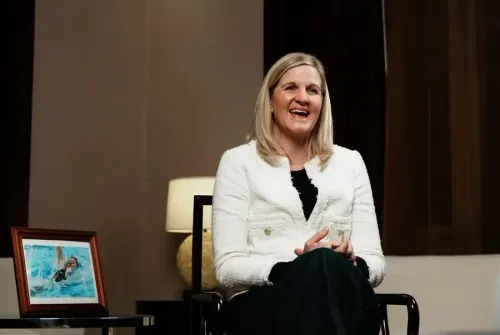
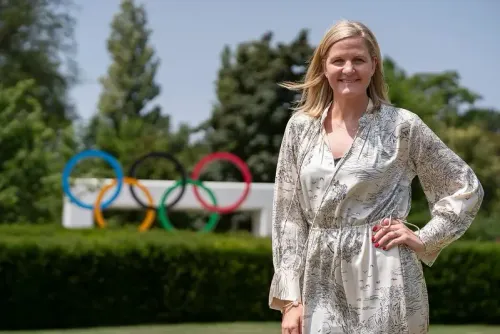
Beijing, Dec 23 (NationPress) The year 2025 represented a pivotal moment for the International Olympic Committee (IOC) as Kirsty Coventry, a distinguished seven-time Olympic swimming medallist from Zimbabwe, took office as the 10th IOC president. What followed in the ensuing months was not a flurry of bold statements, but a thoughtful realignment of how the IOC engages, decides, and progresses.
Her landmark victory on March 20 in Costa Navarino, Greece, broke a 131-year tradition, making her the first woman and the first African to lead the global Olympic Movement, according to reports from Xinhua.
Coventry secured her presidency with 49 votes in a first-round ballot, symbolizing the evolving values she now advocates. Outgoing president Thomas Bach praised the election as a testament to unity, expressing that he was “very much relieved” to witness IOC members rally behind Coventry.
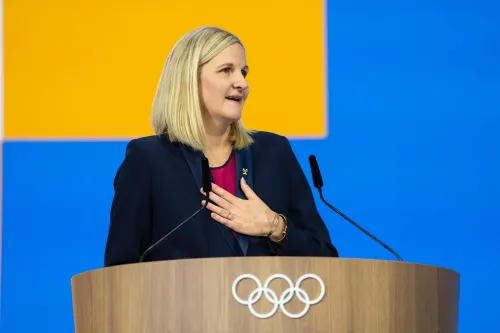
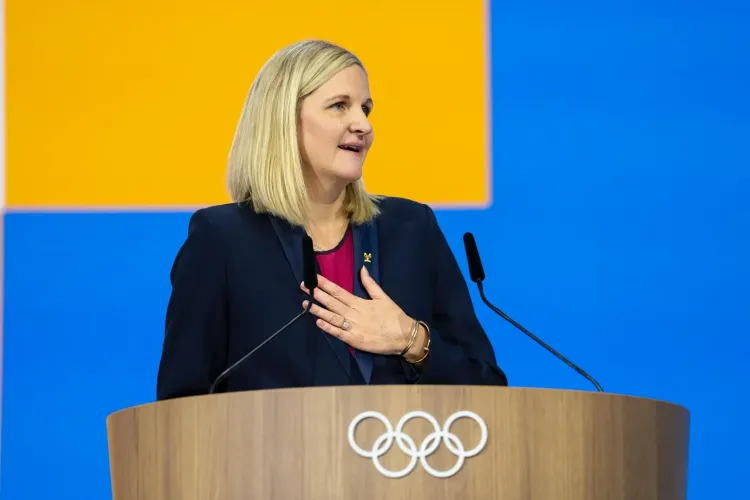
Reflecting on the significance of her achievement, Coventry stated, “An extraordinary moment. As a 9-year-old girl, I never envisioned standing here one day, contributing to this wonderful movement of ours.”
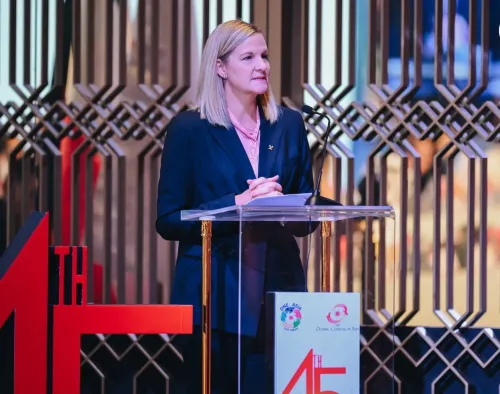
“I can hardly believe that in 1992, when I dreamed of competing at the Olympic Games and winning a gold medal for Zimbabwe, I would be here with all of you, striving to make those dreams reality for numerous young people worldwide,” she articulated during her inaugural speech as IOC president, emphasizing her mission centered around inspiration and accessibility.
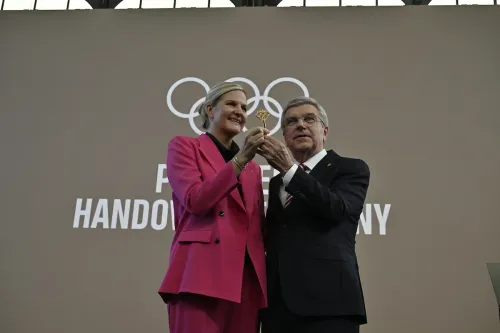
While some expected a continuation of Bach’s policies, Coventry introduced a “Pause and Reflect” phase upon officially assuming office on June 23, conducting a multi-day workshop with IOC members. The message was lucid: before charting a new course, Coventry sought to comprehend the underlying currents.
“To build a successful team, everyone must feel they are individually thriving. Much of this process is about listening and obtaining collective input from all,” Coventry elaborated on the “Pause and Reflect” initiative during a November interview with Xinhua.
This consultative period transitioned into decisive structural reforms by September, under the “Fit For The Future” initiative. Coventry announced the establishment of four specialized working groups, a clear approach to tackle systemic challenges.
These groups concentrate on the Youth Olympic Games, the Olympic program, commercial partnerships and marketing, and the crucial issue of protecting the female category. Regarding the latter, Coventry has adopted a deliberate and scientifically-based position amidst ongoing global discussions.
“We have formed a working group to examine the protection of the female category,” she clarified via Xinhua. “This is a medically driven, scientific discourse. Some may be prematurely jumping to conclusions. We must allow the experts to complete their work.”
Another notable early decision involved pausing the host election process for future Games, with a working group created to reassess the timeline and member involvement.
“Members are eager to be more engaged in the process,” Coventry remarked. This initiative paves the way for a shift away from the long-term, fixed schedule that has characterized recent host elections, such as LA 2028 and Brisbane 2032.
Her readiness to reevaluate significant commitments was further highlighted by the IOC’s decision to terminate its partnership with Saudi Arabia for the inaugural Olympic Esports Games. Coventry framed this not as a retreat, but as responsible governance.
“We mutually acknowledged the necessity to reassess several aspects,” she explained. “There exists a tremendous opportunity, but uncertainties remain regarding implementation and its implications. We must be very clear as this is uncharted territory for us.”
This decision echoed a principle she championed during her campaign: adapting to contemporary trends without sacrificing core values. “We must persist in innovating without compromising these principles,” she had stated earlier in March.
Coventry’s connections with China were a focal point during her initial months in office. Her November visit, which included attendance at China’s National Games, marked both a return to the nation where she won one gold medal, three silvers, and set two world records at the 2008 Olympics, and an opportunity to engage with a vital Olympic partner.
“Whenever I discuss Beijing 2008, I can’t help but smile. It meant so much to me,” she noted.
During her trip, she met with Chinese TOP sponsors Alibaba, TCL, and Mengniu, reinforcing commercial partnerships.
“They all articulated values that resonate profoundly with the Olympic Movement,” she stated, vowing to enhance collaboration so “best practices can be shared globally.”
The first major challenge of her administration is approaching with the Milan-Cortina 2026 Winter Olympics, now less than two months away. The Games pose logistical difficulties due to their geographically dispersed nature, yet Coventry has expressed her commitment to attending events across the various venues.
“We will strive to do our utmost, and I believe that at this stage in our agenda, yes, that is indeed the plan,” she told The Associated Press in early December.
Beyond logistics, she faced the ongoing challenge of ensuring the Olympic Movement's neutrality amid a fractured geopolitical landscape, a principle she ardently defended as a candidate.
Her administration's position was put to a rigorous test concerning athletes from Russia and Belarus. In September, the IOC affirmed they would be permitted to compete at Milan-Cortina 2026 as Individual Neutral Athletes (AIN), under the same conditions as for Paris 2024.
“This will be nothing new. Nothing has changed,” Coventry stated. The decision directly reflects her earlier emphasis on the necessity for the IOC to maintain its neutrality and ensure that politics does not interfere with athletes’ chances to compete.
Coventry's early initiatives, including structural reforms and reassessed partnerships, seem aimed at rejuvenating the institution while reinforcing its foundational values. As the world’s gaze shifts to Milan-Cortina, her leadership will transition from the planning phase to the global stage, poised for its first Olympic-scale evaluation.
Point of View
It’s crucial to recognize Coventry’s presidency as a significant step towards inclusivity and progressive governance in the IOC. Her initiatives reflect a commitment to engage stakeholders meaningfully while addressing pressing issues. The upcoming Winter Olympics will serve as a litmus test for her leadership, showcasing her ability to navigate complex challenges in a rapidly changing landscape.
NationPress
24 Sept 2026
Frequently Asked Questions
Who is Kirsty Coventry?
Kirsty Coventry is a seven-time Olympic swimming medallist from Zimbabwe, elected as the 10th president of the International Olympic Committee (IOC) in 2025.
What is Coventry's mission as IOC president?
Coventry aims to inspire young athletes worldwide and enhance accessibility in sports while implementing structural reforms within the IOC.
What are the key reforms introduced by Coventry?
Coventry has initiated a 'Pause and Reflect' phase, established working groups focusing on critical areas, and emphasized the importance of member engagement.
How does Coventry plan to address the protection of female athletes?
Coventry has formed a working group dedicated to the protection of the female category, focusing on a medically driven and scientific approach.
What challenges does Coventry face with the upcoming Winter Olympics?
Coventry will navigate logistical challenges presented by the geographically spread-out venues of the Milan-Cortina 2026 Winter Olympics.