Rally of Himalayas 2026: Dhritimaan wins Moto, Rajiv Yadav/Rohit Gowda take 4-Wheel Xtreme title
Synopsis
Over four gruelling days across Kunzum La, Shinku La and the Zanskar Valley, the Rally of Himalayas 2026 produced standout performances and a dramatic retirement from a former champion. Dhritimaan Singh ruled the Moto class while Rajiv Yadav and Rohit Gowda held off a fast-charging Daksh Gill — who hit 200 km/h at altitude — to seal the Xtreme 4-Wheel title in one of India's most demanding rally raids.
Key Takeaways
Dhritimaan Singh won the Moto (2-Wheel) category at the Rally of Himalayas 2026 .
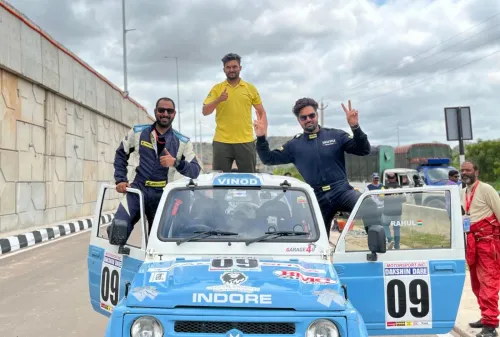
Rajiv Yadav and Rohit Gowda claimed the Xtreme (4-Wheel) title; Daksh Gill and Virender Kashyap finished second runner-up.
The rally ran from 26 September to 1 October 2026 , covering high-altitude routes across Lahaul-Spiti and Zanskar , concluding in Padum .
50 cars and 80 riders competed, navigating terrain exceeding 16,500 feet in altitude.
Former champion Lakhpa Tsering (2015 Raid de Himalaya winner) retired after a technical failure in his Toyota Hilux .
Soham Hazra and Nirav Mehta won the Adventure (4-Wheel) category.
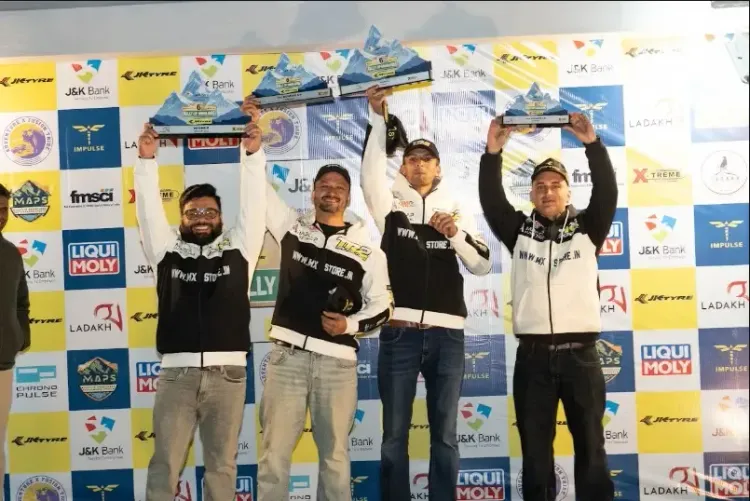
Dhritimaan Singh claimed the Moto (2-Wheel) title while the pair of Rajiv Yadav and Rohit Gowda won the Xtreme 4-Wheel category as the Rally of Himalayas 2026 concluded on Wednesday, 1 October in Padum, Zanskar. The gruelling rally raid, widely regarded as one of India's most demanding motorsport events, spanned more than four days of high-altitude competition across the Lahaul-Spiti and Zanskar regions before wrapping up at Padum, the headquarters of Zanskar district.
Course and Conditions
The rally was flagged off from Manali on 26 September, drawing 50 cars and 80 riders to tackle some of the most punishing mountain routes in the country. Competitors navigated steep inclines, fast stretches, unpredictable weather and high-altitude terrain that pushed both machines and drivers to their limits. Key sections included the iconic Kunzum La crossing, known for its extreme conditions, and a high-altitude run through the Zanskar Valley where the route climbed beyond 16,500 feet.
A standout feature of this edition was a 72-km competitive stage that was subsequently run in reverse, forcing competitors to recalibrate braking points, turn-in timing and pacing strategies on a familiar stretch approached from the opposite direction. The format underscored the rally's reputation as a true test of adaptability, not merely outright speed.
Key Moments and Withdrawals
The rally produced several defining moments. Rajiv Yadav set the early pace, leading on Day 1 while keeping a close watch on Aaryak Rana, who remained a closely tracked rival in the opening stages. As the event grew increasingly technical, consistency became as valuable as raw speed.
A significant development came when Lakhpa Tsering, the 2015 Raid de Himalaya winner, was forced to retire his Toyota Hilux following a technical failure — a reminder of how mechanical reliability is as decisive as driving skill in Himalayan raid conditions. Following the reverse stage, Daksh Gill surged into contention, winning the next two stages including the reverse Losar to Gramphu stretch. During the critical Zanskar phase, Gill reportedly reached speeds of up to 200 km/h, demonstrating the combination of precision and control required at extreme altitude. Despite his strong stage performances, Gill ultimately finished as second runner-up in the Xtreme category alongside co-driver Virender Kashyap.
Category Winners and Podium Results
In the Moto (2-Wheel) category, Dhritimaan Singh took the top honours, with Happy Verma finishing runner-up and Nitish Bharadwaj claiming second runner-up.
The Xtreme (4-Wheel) podium saw Rajiv Yadav and Rohit Gowda win ahead of Aaryak Rana and Aditya Sharma in second, while Daksh Gill and Virender Kashyap completed the top three.
In the Adventure (4-Wheel) category, Soham Hazra and Nirav Mehta claimed victory. Santosh HM and Prakash Muthusamy were runners-up, with Chandra Mouli and Sri Sakthi Kumar N. taking second runner-up honours. Sachin Mandhwani and Adhitya Anthony finished third in the Adventure class.
Conclusion and Ceremony
The rally concluded with a prize distribution ceremony in Padum, featuring cultural performances celebrating the region's heritage. Competitors, organisers and supporters gathered to recognise the efforts of all finishers who navigated over four days of some of the most demanding rally terrain in Indian motorsport. The event once again reinforced the Rally of Himalayas as a benchmark for high-altitude rally raids in the country, with the next edition likely to attract an even stronger field given the competitive performances this year.
Point of View
Yet the retirement of Lakhpa Tsering — a proven champion — on a mechanical issue points to a persistent challenge: Himalayan rally raids remain as much an engineering and logistics puzzle as a driving test. As the field grows and international-standard competitors emerge, the organisational infrastructure and safety frameworks will need to scale proportionately to match the event's ambitions.
NationPress
1 Oct 2026
Frequently Asked Questions
Who won the Rally of Himalayas 2026?
Dhritimaan Singh won the Moto (2-Wheel) category, while Rajiv Yadav and Rohit Gowda claimed the Xtreme (4-Wheel) title at the Rally of Himalayas 2026, which concluded on 1 October in Padum, Zanskar. Soham Hazra and Nirav Mehta won the Adventure (4-Wheel) category.
Where did the Rally of Himalayas 2026 start and finish?
The rally was flagged off from Manali on 26 September 2026 and concluded in Padum, the headquarters of Zanskar district, on 1 October 2026. The route covered high-altitude terrain across Lahaul-Spiti and Zanskar, including the Kunzum La and Shinku La passes.
Who is Daksh Gill and how did he perform?
Daksh Gill is a rally driver who delivered one of the standout performances of the 2026 event, winning two consecutive stages including the reverse Losar-to-Gramphu stretch and reportedly reaching speeds of 200 km/h during the Zanskar phase. Despite his pace, he finished as second runner-up in the Xtreme 4-Wheel category alongside co-driver Virender Kashyap.
Why did Lakhpa Tsering withdraw from the Rally of Himalayas 2026?
Lakhpa Tsering, the 2015 Raid de Himalaya winner, was forced to retire his Toyota Hilux due to a technical failure during the event. His withdrawal highlighted the importance of mechanical reliability alongside driving skill in high-altitude rally raids.
How many competitors took part in the Rally of Himalayas 2026?
A total of 50 cars and 80 riders took part in the Rally of Himalayas 2026, competing across multiple categories including Moto (2-Wheel), Xtreme (4-Wheel) and Adventure (4-Wheel) over more than four days of racing.