Esports World Cup 2027 opens 400+ qualifier events, targets 1.8m players globally
Synopsis
The Esports World Cup is going wider than ever for 2027 — 400+ events, 1.8 million players, and a new grassroots qualifier route that lets cyber cafés, universities, and local festivals feed directly into the global championship. For India, with four chess Grandmasters already competing at EWC 2026 and a booming gaming ecosystem, this expansion could be a genuine inflection point.
Key Takeaways
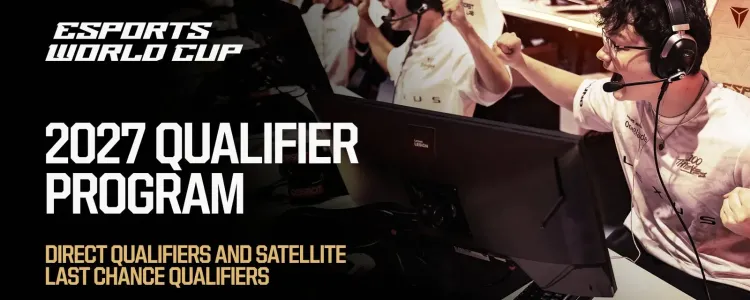
The Esports World Cup has launched an expanded EWC Qualifier Programme for its 2027 edition , targeting 1.8 million players across more than 400 events .
Two pathways introduced: EWC Direct Qualifiers for established tournaments, and EWC Satellite Last Chance Qualifiers (SLCQs) for grassroots organisers including cyber cafés, universities, and gaming festivals.
Initial SLCQ titles include Chess , Counter-Strike 2 , FATAL FURY: City of the Wolves , and Street Fighter 6 ; more titles to follow.
India had four chess Grandmasters at EWC 2026 ; Vidit Gujrathi reached the India Rising final and Karthik Venkataraman finished in the top 12 of the LCQ.
Applications are open now; deadline is 20 December 2026 , with all approved tournaments to conclude by 1 June 2027 .
Winners of approved satellite events receive guaranteed entry into EWC Last Chance Qualifiers, with accommodation and visa support provided.
The Esports World Cup (EWC) has announced a significantly expanded qualification framework for its 2027 edition, with the Road to EWC initiative aiming to reach 1.8 million players through more than 400 events worldwide. The expanded EWC Qualifier Programme, unveiled on 21 October 2026, introduces two structured pathways designed to bring both established tournaments and grassroots gaming communities into the global championship pipeline.
Two New Pathways to the Global Championship
The programme is structured around two distinct routes. The first, EWC Direct Qualifiers, links established tournament organisers directly to the championship while allowing them to retain their own identities, branding, and local commercial arrangements. Organisers operating under this route must adhere to EWC and publisher requirements but gain the benefit of an official qualification status within the Road to EWC structure.
The second route, EWC Satellite Last Chance Qualifiers (SLCQs), is designed specifically to deepen grassroots access. Local tournament organisers, esports federations, associations, cyber cafés, universities, gaming venues, and festivals are all eligible to apply to host qualifying competitions. Organisers may connect existing events to the programme or create new ones under their own branding, with marketing support provided by the Esports Foundation.
Games Included and Application Details
The Satellite Last Chance Qualifier pathway will initially cover four titles: Chess, Counter-Strike 2, FATAL FURY: City of the Wolves, and Street Fighter 6. Additional titles are expected to be confirmed in the coming months. Winners of approved satellite events will receive guaranteed entry into the corresponding EWC Last Chance Qualifier tournaments scheduled for next summer, where they will compete for spots at the main event. The Esports Foundation will provide accommodation and visa support for winners.
Applications for both the Direct Qualifier and Satellite LCQ programmes are now open via the official EWC website, with a submission deadline of 20 December 2026. All approved tournaments must conclude by 1 June 2027.
India's Growing Stakes in EWC
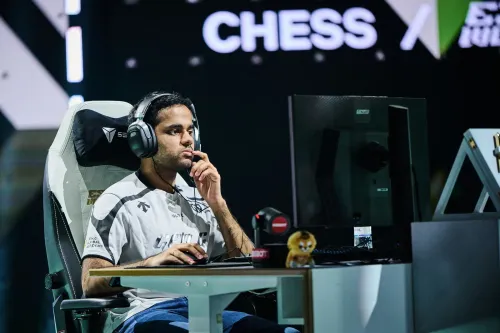
The inclusion of Chess in the initial rollout is particularly significant for India. At the 2026 Esports World Cup, India fielded four Grandmasters in the chess competition. Vidit Gujrathi reached the final of India Rising, the official chess qualifier for EWC 2026, while Karthik Venkataraman finished in the top 12 of the Last Chance Qualifiers. A year earlier, Grandmaster Nihal Sarin, representing S8UL Esports, advanced through the Last Chance Qualifier to reach the quarter-finals at the 2025 edition — a performance widely credited with building momentum for Indian chess in the esports space.
The expanded grassroots pathway could open fresh avenues for Indian players beyond chess as well, given the country's rapidly growing competitive gaming ecosystem spanning PC cafés, universities, and organised federation structures.
What the Esports Foundation Said
Faisal Bin Homran, Chief Product Officer at the Esports Foundation, said the initiative was designed to formally integrate local communities and existing competitive structures into the global championship journey. “Road to EWC has shown what is possible when the different pathways across competitive esports connect to one global destination,” he said. “There are great tournaments and strong esports communities in every part of the world. By bringing more of them into Road to EWC, we can create more opportunities for players to compete in their own communities and give local esports ecosystems an official role in building the pathway to the Esports World Cup,” he added.
The Jafonso Effect and Why Qualification Pathways Matter
The expansion of qualification routes draws partly on the demonstrated impact of last-chance formats. At EWC 2024, João ‘jafonsogv’ Vasconcelos progressed through the EA SPORTS FC Last Chance Qualifier before going on to win the EWC title — a result that directly inspired the creation of the Jafonso Award, which recognises players who reach the championship through qualification pathways. His journey has become a reference point for why accessible, structured routes to the top matter within competitive esports.
With applications now open and the clock ticking toward the 20 December 2026 deadline, the scale of the 2027 EWC ecosystem — and India's potential role within it — will begin to take shape over the coming weeks.
Point of View
Universities, and local festivals, the Esports Foundation is essentially franchising the qualification pyramid — a model that could accelerate esports legitimacy in emerging markets, India included, faster than any top-down federation effort. The chess inclusion is no accident: it bridges traditional competitive gaming credibility with a country that already has global chess infrastructure. The real question is execution — whether the Esports Foundation can maintain competitive integrity across hundreds of decentralised events in diverse regulatory environments, particularly in markets where anti-cheat enforcement is inconsistent.
NationPress
21 Oct 2026
Frequently Asked Questions
What is the Esports World Cup 2027 Qualifier Programme?
The EWC Qualifier Programme is an expanded qualification framework for the 2027 Esports World Cup, operating under the Road to EWC initiative. It aims to reach 1.8 million players through more than 400 events, offering two structured pathways — EWC Direct Qualifiers for established tournaments, and EWC Satellite Last Chance Qualifiers for grassroots organisers worldwide.
Which games are included in the EWC Satellite Last Chance Qualifiers?
The initial Satellite LCQ rollout covers Chess, Counter-Strike 2, FATAL FURY: City of the Wolves, and Street Fighter 6. The Esports Foundation has indicated that additional game titles will be announced in due course.
How can Indian players and organisers participate in EWC 2027 qualifiers?
Indian organisers — including cyber cafés, universities, esports associations, and gaming festivals — can apply to host Satellite Last Chance Qualifier events. Applications are open through the official Esports World Cup website, with a deadline of 20 December 2026. Winners of approved events receive guaranteed entry into the EWC Last Chance Qualifier tournaments the following summer, along with accommodation and visa support.
What has been India's track record at the Esports World Cup?
India has shown a growing presence at the EWC, particularly in chess. At EWC 2026, four Indian Grandmasters competed; Vidit Gujrathi reached the final of India Rising and Karthik Venkataraman finished in the top 12 of the Last Chance Qualifiers. At EWC 2025, Grandmaster Nihal Sarin, representing S8UL Esports, advanced through the Last Chance Qualifier to reach the quarter-finals.
What is the application deadline for EWC 2027 qualifier events?
The deadline for applications to both the Direct Qualifier and Satellite LCQ programmes is 20 December 2026. All approved tournaments are required to conclude by 1 June 2027, ahead of the Last Chance Qualifier tournaments scheduled for next summer.