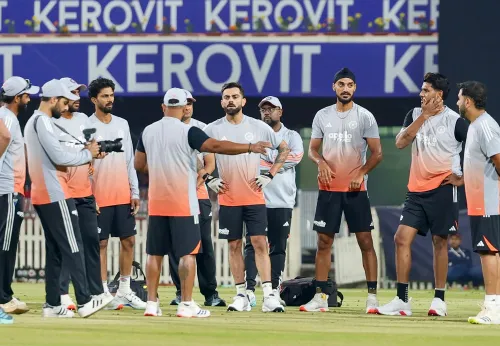
Faf du Plessis: Virat Kohli's 2018 India was hardest Test side to tour SA
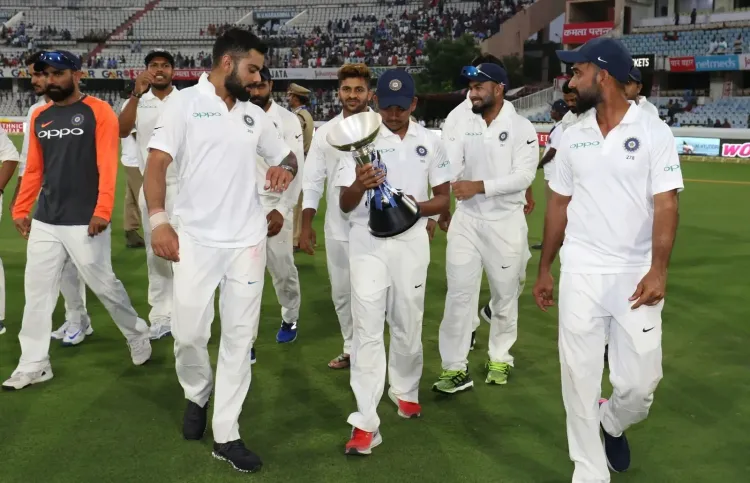
Synopsis
Two of South Africa's greatest cricketers — Faf du Plessis and Dale Steyn — have revealed just how much Virat Kohli's 2018 Indian Test side unnerved them. The story of India refusing to complain about a 'dangerous' Johannesburg pitch while batters were struck repeatedly, all because they knew they were ahead in the match, captures the fighting spirit Kohli built — and why that tour marked a turning point in Indian cricket history.
Key Takeaways
Faf du Plessis and Dale Steyn described Virat Kohli 's 2018 Indian Test side as the 'hardest-looking' team to visit South Africa.
India secured a 63-run win in the Johannesburg Test despite batters being struck repeatedly on a treacherous pitch.
South Africa opener Dean Elgar was hit on the helmet by a Jasprit Bumrah delivery; Elgar later called the pitch 'dangerous'.
India made no complaint to the umpires during the second innings because they were ahead in the match and saw a path to victory.
Du Plessis credited Kohli with bringing a new culture of fitness and mental toughness to Indian cricket, calling it a visible transformation.
Former South Africa captain Faf du Plessis and pace legend Dale Steyn have paid a glowing tribute to Virat Kohli's 2018 Indian Test side, describing it as the toughest-looking Indian team they had ever faced on South African soil. The remarks came during an appearance on Cricinfo's 'Cricketers on Cricketers' show, where the two Proteas greats reflected on a bruising series that tested the mettle of both sides.
The Johannesburg Test That Defined a Generation
The Johannesburg Test of 2018 remains one of the most physical encounters in recent memory. The pitch was treacherous, with deliveries rearing sharply off a length and striking batters on gloves and bodies with alarming regularity. South Africa opener Dean Elgar was struck on the helmet by a Jasprit Bumrah delivery — a moment Elgar himself later described as evidence of a 'dangerous' surface.
Yet it was the Indian team's response that left the deepest impression on the two South Africans. Despite taking several blows, India made no complaint to the umpires and held their nerve to claim a famous 63-run win — one of their most celebrated Test victories away from home.
What Du Plessis and Steyn Recalled
'Do you know what I remember from that series? The standout from that specific match and the series thereafter was that I could see visibly in the Indian team that his leadership made them harder, tougher,' du Plessis said, addressing Steyn on the show.
Steyn, recalling the broader narrative around India's touring sides, was equally candid. 'Well, there was always talk about them coming to South Africa and being soft. And I remember that Test match when it was a messy wicket. The one where Dean got hit on the head in Jo'burg. And a lot of their batters got hit like popping off a length, hitting their gloves. And they showed nothing,' he said.
Du Plessis on Why India Refused to Complain
Du Plessis elaborated on a telling dynamic that unfolded during the match — South Africa, trailing in the contest, wanted the umpires to intervene over the pitch conditions, while India, in a commanding position, chose silence. 'They didn't complain to the umpires. And why? Because they were ahead in the Test match. It was the hardest-looking Indian team that I've seen come to South Africa. We were like (saying to the umpires), but see, it's dangerous for them. And they're like, no, but they're not complaining,' du Plessis recalled.
He went on to credit Kohli's personal ethos for the transformation. 'India won that Test match, and it was because of that. Otherwise, it should have actually been called off. But it was obviously a Virat Kohli thing. 'Guys, we're not gonna step back here. We're gonna front up'. Also physically, you could see the transition in the different Indian teams. Like, he brought an element of fitness into the team. He probably started it, right?' du Plessis said.
Kohli's Legacy: Fitness, Fight and a Cultural Shift
The anecdote underscores a widely acknowledged shift in Indian cricket under Kohli's captaincy — from a side historically seen as vulnerable away from home, particularly in pace-friendly conditions, to one willing to absorb punishment and compete toe-to-toe. This cultural change has been credited as the foundation for India's subsequent away series wins, including their historic Test series victories in Australia in 2018-19 and 2020-21.
Notably, while India did not win the 2018 South Africa series overall, the Johannesburg Test victory — secured under extreme physical duress — has come to symbolise the competitive character Kohli instilled in the side. The reflections from two of South Africa's most respected cricketers add further weight to that legacy.
Point of View
Yet the one Test they won is the one both sides remember. That says everything about how sporting legacies are really built: not on series scorelines, but on individual moments of defiance.
NationPress
15 Nov 2026
Frequently Asked Questions
What did Faf du Plessis say about Virat Kohli's 2018 Indian Test team?
Du Plessis said the 2018 Indian side was the 'hardest-looking Indian team' he had seen tour South Africa, crediting Kohli's leadership for making the team visibly tougher and more physically imposing. He made the remarks on Cricinfo's 'Cricketers on Cricketers' show alongside Dale Steyn.
What happened in the Johannesburg Test of 2018?
India won the Johannesburg Test by 63 runs on a pitch so hazardous that du Plessis said it 'should have actually been called off.' Several batters from both sides were struck on the body, including South Africa opener Dean Elgar, who was hit on the helmet by a Jasprit Bumrah delivery.
Why did India not complain about the dangerous pitch in Johannesburg?
According to du Plessis, India chose not to raise concerns with the umpires because they were ahead in the match and believed they could win. He contrasted this with South Africa, who were trailing and therefore keen for the umpires to intervene over the pitch conditions.
How did Virat Kohli change Indian cricket's culture, according to du Plessis?
Du Plessis said Kohli brought a new culture of fitness and mental toughness that was 'visibly' apparent in the 2018 side. He credited Kohli with instilling a 'we're not gonna step back' attitude and said the fitness transformation Kohli drove was a landmark shift for Indian cricket.
How significant was India's 2018 Johannesburg win in a broader context?
The victory is widely regarded as a symbol of India's growing competitiveness in pace-friendly overseas conditions. While India lost the series 1-2, the Johannesburg Test win under extreme duress helped lay the cultural groundwork for subsequent away series victories, including their historic wins in Australia in 2018-19 and 2020-21.