FIFA explains Croatia's disallowed equaliser vs Portugal at World Cup 2026
Synopsis
Croatia thought they had snatched a last-gasp equaliser against Portugal — but an IMU sensor inside the match ball told a different story. The Adidas Trionda's Connected Ball Technology detected a near-invisible head flick from Igor Matanovic, triggering the VAR offside call that ended Croatia's World Cup 2026 campaign in heartbreaking fashion.
Key Takeaways
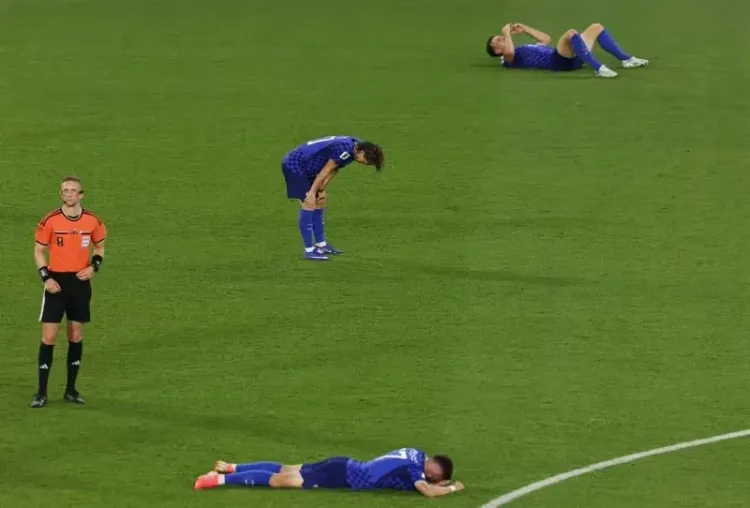
Croatia's 103rd-minute equaliser by Josko Gvardiol was disallowed for offside in their FIFA World Cup 2026 Round of 32 clash against Portugal in Toronto on 3 July .
IMU sensors in the Adidas Trionda official match ball confirmed a faint head touch by Igor Matanovic , placing Mario Pasalic in an offside position.
FIFA Media confirmed the ruling via a post on X , citing Connected Ball Technology data.
Cristiano Ronaldo scored his third goal of the tournament; Goncalo Ramos netted a stoppage-time winner as Portugal came from behind to win.
The decision highlights the growing role of ball-embedded sensor data in high-stakes VAR calls at the 2026 World Cup .
Croatia's dramatic late equaliser against Portugal in their FIFA World Cup 2026 Round of 32 clash in Toronto on 3 July was ruled out after VAR determined that Igor Matanovic made a faint but decisive touch on the ball — a contact confirmed not by the human eye, but by Connected Ball Technology embedded in the official match ball. The ruling ended Croatia's hopes of forcing extra time in what had been a gripping, back-and-forth encounter.
How the Goal Unfolded
With Croatia trailing, a Hail Mary delivery into the Portugal box fell to Mario Pasalic, who squared for Josko Gvardiol to tap home in the 103rd minute. It appeared, briefly, that Croatia had rescued itself in characteristically dramatic fashion. The initial assumption was that Pasalic had chested the ball off a deflection from Portugal's Renato Veiga, which would have kept him onside.
VAR review, however, revealed a different sequence. Igor Matanovic had gotten a slight flick on the ball before it reached Veiga. At the precise moment Matanovic's head made contact, Pasalic was in an offside position — rendering the goal invalid.
The Role of Connected Ball Technology
What made this decision possible was the IMU (Inertial Measurement Unit) sensor housed within the Adidas Trionda, the official match ball of the FIFA World Cup 2026. FIFA Media confirmed via a post on X that the sensor detected Matanovic's contact, which was displayed to broadcast viewers as a 'heartbeat graphic' — a visual cue indicating ball contact.
'According to the data provided by Connected Ball Technology housed within the @adidasfootball Trionda, the official match ball of the @FIFAWorldCup, it was proven that contact was made by Croatia's #20 Igor Matanovic in the build up to the goal against Portugal, allowing the referee to correctly determine offside and disallow the goal,' FIFA Media stated.
The statement added: 'IMU sensors housed within the Trionda ball are capable of determining any slight contact, displayed to viewers in the broadcast as a heartbeat graphic, and allowing officials an unprecedented level of data to make fast, accurate decisions.'
Match Summary: Portugal Edge a Thriller
Ivan Perisic had given Croatia the lead shortly after half-time, before Cristiano Ronaldo's third goal of the tournament drew Portugal level. Goncalo Ramos then rose highest to head home a Rafael Leao cross in the fourth minute of stoppage time, putting Portugal ahead. Croatia's late push ultimately came to nothing, with the disallowed goal sealing Portugal's progression from the Toronto tie.
What This Means for VAR and Ball Technology
The incident underscores how Connected Ball Technology has fundamentally shifted the threshold of VAR intervention. Contacts invisible to cameras and the naked eye can now be confirmed with sensor data in real time. This is not the first time the technology has been decisive at a major tournament, but the Matanovic ruling — hinging on a near-imperceptible head flick — may be its most high-profile application yet. As the FIFA World Cup 2026 progresses, expect officiating accuracy debates to centre increasingly on data, not just replays.
Point of View
But the speed and accessibility of that data for fans, coaches, and media still lags behind the technology itself. If Connected Ball Technology is to be trusted, its outputs need a clearer public-facing audit trail — not just a post on X.
NationPress
1 Oct 2026
Frequently Asked Questions
Why was Croatia's equaliser against Portugal disallowed at the 2026 World Cup?
Croatia's goal was disallowed because VAR determined that Igor Matanovic made a slight head contact with the ball before it reached Portugal's Renato Veiga, placing Mario Pasalic in an offside position at the moment of that touch. The ruling was confirmed using IMU sensor data from the official Adidas Trionda match ball.
What is Connected Ball Technology and how did it affect this decision?
Connected Ball Technology refers to IMU (Inertial Measurement Unit) sensors embedded inside the official FIFA World Cup 2026 match ball, the Adidas Trionda. These sensors can detect any contact with the ball — however slight — and relay that data to match officials in real time, enabling VAR to identify touches invisible to cameras.
What was the score in the Croatia vs Portugal Round of 32 match?
Portugal defeated Croatia in their Round of 32 clash in Toronto on 3 July. Ivan Perisic gave Croatia the lead before Cristiano Ronaldo equalised and Goncalo Ramos scored a stoppage-time winner to send Portugal through.
How did FIFA communicate the explanation for the disallowed goal?
FIFA Media posted an explanation on X (formerly Twitter), stating that Connected Ball Technology data from the Adidas Trionda confirmed Matanovic's contact and allowed the referee to correctly determine offside and disallow the goal.
What is the 'heartbeat graphic' shown during the World Cup 2026 broadcasts?
The heartbeat graphic is a broadcast visualisation triggered when the IMU sensor inside the Adidas Trionda detects a contact with the ball. It signals to viewers that ball-touch data has been recorded, providing transparency around sensor-assisted officiating decisions.