Robinson, Atkinson, Tongue to lead England's pace rebuild vs New Zealand
Synopsis
Steven Finn's BBC column is a quiet alarm bell: England's batting reshuffle has grabbed headlines, but the bowling cupboard is barer than it looks. With Anderson, Broad, Woakes, and Wood all absent — over 1,600 Test wickets gone — Robinson, Atkinson, and Tongue must grow up fast at Lord's. Whether they can is the real question of England's summer.
Key Takeaways
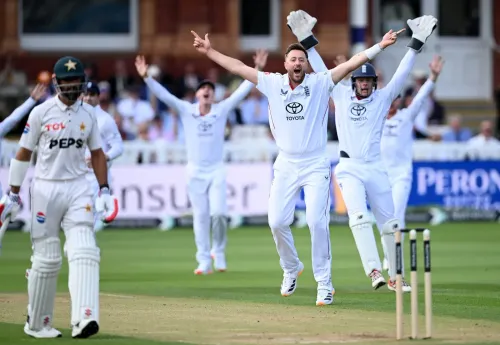
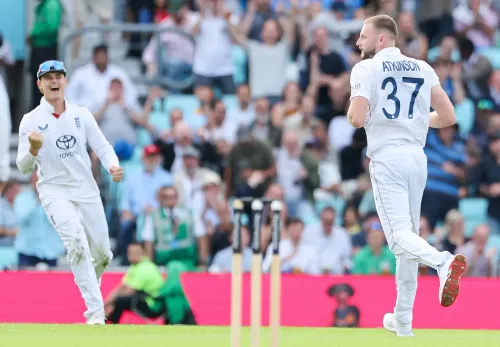
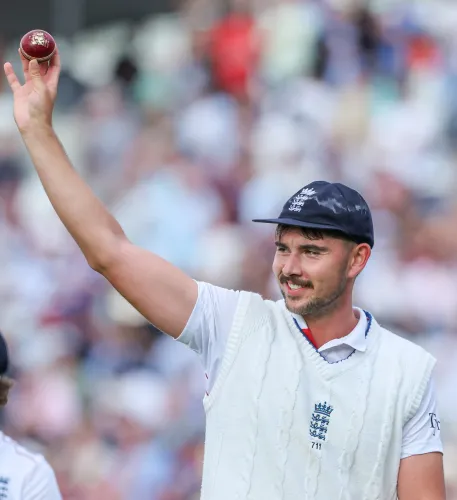
Steven Finn named Ollie Robinson , Gus Atkinson , and Josh Tongue as the core of England's rebuilt pace attack ahead of the New Zealand Test at Lord's .
England have lost bowlers accounting for over 1,600 Test wickets — Anderson , Broad , Woakes , and Wood — from recent squads.
Finn cited Robinson's Test bowling average of 22.92 as proof of his credentials to lead the attack despite playing just one Test in over a year .
Zak Crawley was identified as the most high-profile batting casualty of the Ashes defeat; Finn suggested he may be better suited to batting at No.
Finn flagged the selection of eight fast bowlers in a 15-man squad as a potential sign of directional uncertainty in England's management.
Jofra Archer was described as England's best fast bowler when fit, despite being absent from the current squad alongside Brydon Carse .
Former England fast bowler Steven Finn has argued that Ollie Robinson, Gus Atkinson, and Josh Tongue must step up as the cornerstones of a rebuilt England pace attack, as the side prepares to face New Zealand at Lord's to open the home Test summer. Writing in a column for the BBC, Finn warned that England's bowling stocks have been underexamined amid the wider conversation about batting changes following the Ashes defeat.
A Generation Ends, a Rebuild Begins
Finn drew a direct parallel between England's current crossroads and the aftermath of the 5-0 Ashes whitewash in Australia in 2013/14. 'After losing 5-0 in Australia in 2013/14, I, as well as the rest of that team that went down to Mitchell Johnson and co, was sent home with our tails between our legs,' Finn wrote. 'It was the end of the road for that team as we knew it; a huge shift was required.'
This summer marks the first home Test series since 2007 in which England have not had Jimmy Anderson, Stuart Broad, and Chris Woakes available simultaneously. Combined with the absence of an injured Mark Wood, Finn calculated that England have lost access to bowlers who collectively account for over 1,600 Test wickets — 'some of the greatest fast bowlers in English cricket,' in his words.
Robinson as the Attack Leader
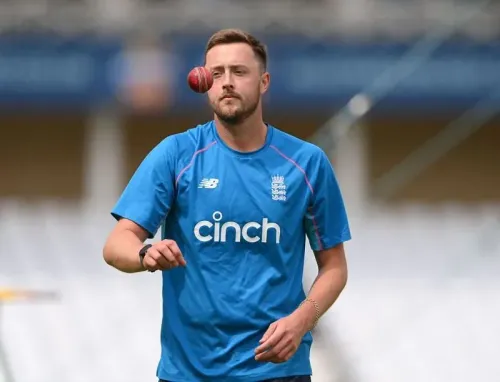
Finn identified Robinson as the natural leader of the new-look pace unit. Despite the seamer having played just one Test in more than a year due to injury, Finn pointed to his Test bowling average of 22.92 as evidence of his technical credentials. 'He's been recalled to lead the pack, and with good reason,' Finn stated. 'The skills to do the job have always been obvious — anyone who averages 22.92 with the ball in Test cricket has the technique to be very effective, but more so, the discipline and application to be selected for that role.'
Finn stressed that Robinson must demonstrate physical durability across a full five-day Test and resist being drawn into confrontations with opposition batters beyond what is tactically necessary. 'If Robinson can execute those two things, I believe he is the leading candidate in England to be the attack leader and put his imprint on this English bowling unit,' he concluded.
Atkinson's Control and Tongue's Hostility
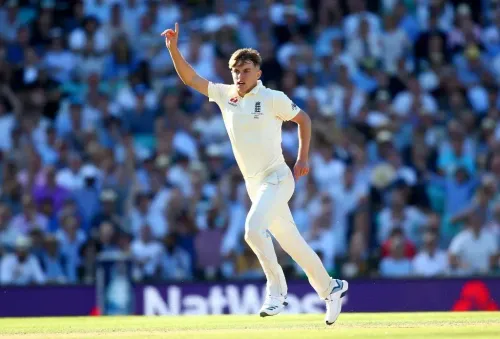
For the supporting role, Finn backed Gus Atkinson, praising the Surrey seamer's use of height, control of pace, and ability to hit consistent lengths. 'He's an assassin rather than a warrior,' Finn wrote, adding that Atkinson's more reserved nature complements Robinson's combative style.
Josh Tongue was named as Finn's preferred X-factor option, with his steep bounce and awkward angle from behind the perpendicular singled out as qualities that have consistently unsettled opposition batters. 'His hostility and the speed he picked up while being able to trouble any opposition batsmen' were cited as the key attributes. Finn expressed surprise that Tongue had been left out of the opening Ashes Test in Perth and believes a consistent run in the side this summer could cement his place in England's first-choice Test XI.
The Crawley Question and the Eight-Pacer Squad
On the batting side, Finn identified Zak Crawley as 'the most high-profile casualty' of England's Ashes performance, though he left open the possibility that Crawley could reinvent himself batting at No. 3 or No. 4 rather than as an opener. Finn also questioned the selection of a 15-man squad containing eight fast bowling options for the first Test, suggesting it could signal uncertainty in the management's planning. 'Selecting eight fast bowlers is indicative of something else happening in the background,' he wrote.
Archer's Absence Felt, but Not Forgotten
Finn was unequivocal that the unavailability of both Brydon Carse and Jofra Archer has weakened the attack's ceiling. He maintained that Archer, when fit, remains England's single best fast bowler, capable of filling any position in the line-up with his combination of swing and raw pace. England will hope that the Robinson-Atkinson-Tongue axis can hold the fort until Archer is available again — and that this summer provides the competitive experience the new pace engine room urgently needs.
Point of View
But the bowling transition is just as severe and far less planned. Losing Anderson, Broad, Woakes, and Wood in the same cycle is not a rotation — it is a generational rupture. The selection of eight fast bowlers in a single squad reads less like depth and more like indecision. Robinson's 22.92 average is genuinely elite, but he has played one Test in over a year; leaning on him as a five-day workhorse from match one is a gamble dressed up as a plan. England's pace identity for the next decade will be shaped this summer — and right now, the blueprint looks more aspirational than executable.
NationPress
25 Sept 2026
Frequently Asked Questions
Who has Steven Finn picked to lead England's pace attack against New Zealand?
Finn has backed Ollie Robinson to lead England's pace attack, supported by Gus Atkinson in a complementary role and Josh Tongue as the X-factor wicket-taker. He made the case in a BBC column ahead of the Lord's Test.
Why is England's pace attack considered weakened this summer?
England are without Jimmy Anderson, Stuart Broad, Chris Woakes, and the injured Mark Wood — a combined loss of over 1,600 Test wickets. Finn described this as the first home summer since 2007 without that core group available together.
What did Steven Finn say about Ollie Robinson's Test record?
Finn highlighted Robinson's Test bowling average of 22.92 as evidence of his technical quality and discipline, arguing it makes him the leading candidate to be England's attack leader despite having played just one Test in more than a year due to injury.
Why did Steven Finn question England's squad selection?
Finn expressed concern over the inclusion of eight fast bowlers in a 15-man squad for the first Test, suggesting it could indicate uncertainty or unresolved decisions within England's management rather than genuine depth.
What did Finn say about Jofra Archer's absence?
Finn maintained that Archer remains England's best fast bowler when fit, and that his absence — along with Brydon Carse's — has measurably weakened the attack. He indicated Archer could return to fill any role in the pace unit once available.