Gambhir backs ICC pink ball trial in Tests to beat bad light
Synopsis
The ICC has approved a trial allowing teams to swap the red ball for a pink one mid-Test when bad light looms — a structural fix to one of cricket's oldest frustrations. India coach Gautam Gambhir is firmly on board, invoking WTC qualification scenarios to argue that no team should lose a shot at a final because of fading daylight.
Key Takeaways
The ICC approved a trial allowing a switch from a red ball to a pink ball during a standard day Test when bad light is anticipated.
The switch requires prior agreement from both teams and aims to maximise overs played under stadium lights.
India head coach Gautam Gambhir called the move 'proactive and positive,' citing WTC qualification scenarios as justification.
Pink balls have until now been used exclusively in day-night Tests , predominantly in Australia .
Gambhir's comments came on the eve of India's one-off Test against Afghanistan in New Delhi .
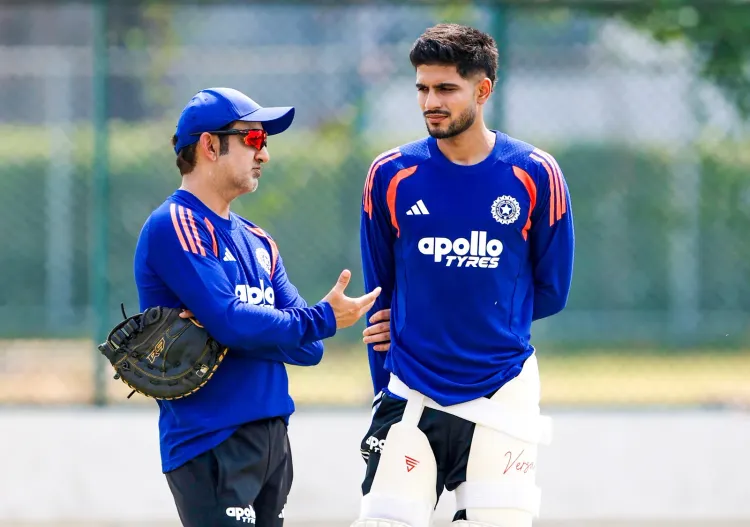
India head coach Gautam Gambhir has thrown his weight behind the International Cricket Council (ICC)'s newly approved trial that would allow teams to switch from a red ball to a pink ball mid-Test when bad light threatens play, describing it as a 'proactive and positive move.' Gambhir made the remarks on 4 June, on the eve of India's one-off Test against Afghanistan, scheduled to begin on Saturday in New Delhi.
What the ICC Has Approved
During its board meeting on Monday, the ICC greenlit a trial allowing teams to switch from a red ball to a pink ball before the start of a Test session that is likely to be disrupted by bad light. The switch is subject to prior agreement from both competing teams. The stated aim is to keep play going under stadium lights when natural light fades, reducing the overs and time lost to bad-light stoppages.
Until now, pink balls have been used exclusively in day-night Test matches, a format played predominantly in Australia. The new trial marks the first time a pink ball could be introduced into a standard day Test in progress.
Gambhir's Case for the Change
'I love that because I've always believed that if there's an opportunity to get a result, you should always have that opportunity,' Gambhir said. He specifically invoked the stakes of the World Test Championship (WTC) cycle to make his point: 'Imagine if you are playing the last Test match before the World Test Championship final and you have the chance to win that Test match to qualify, and because of bad light, it's not happening. So I'm all for it.'
Gambhir acknowledged the adjustment the trial demands of players. 'I know it could be a little unfair and difficult for the players,' he said, 'but imagine working hard for two years and the last Test match before the World Test Championship final; if you don't play five days because of bad light, how unfair that could be.' He expressed hope that teams would embrace the move constructively.
Why This Matters for Test Cricket
Bad light has long been one of Test cricket's more contentious interruptions, with teams occasionally accused of exploiting the playing conditions rules tactically. A mid-match ball switch, while novel, could remove that leverage and protect the integrity of results — particularly in high-stakes matches on the WTC calendar.
Notably, the trial is consent-based, meaning both teams must agree in advance, which introduces its own strategic dimension: a side batting comfortably under natural light may be reluctant to agree to a switch that benefits the fielding team under floodlights.
What Happens Next
The ICC is yet to announce which series or venues will host the trial. The consent requirement means its uptake will depend heavily on team managements and tour agreements. Gambhir's public endorsement, coming from one of Test cricket's highest-profile coaching positions, is likely to add momentum to the proposal's acceptance among playing nations.
Point of View
But the consent clause is where it could unravel. A team defending a first-innings lead under overcast skies has every incentive to refuse the switch — meaning the rule may only work when neither side feels disadvantaged, which is precisely when bad light is least likely to be decisive. Gambhir's WTC framing is the strongest argument for it: the cost of a washed-out qualifier is asymmetric and irreversible. But until the ICC removes the bilateral veto or builds in an umpire override for knockout-stage matches, this remains a voluntary workaround rather than a systemic solution.
NationPress
19 Sept 2026
Frequently Asked Questions
What is the ICC's pink ball trial in Test matches?
The ICC has approved a trial allowing teams to switch from a red ball to a pink ball before a Test session when bad light is expected to disrupt play. The change is subject to both teams agreeing in advance and is designed to keep play going under stadium lights rather than suspending it.
Why did Gautam Gambhir support the ICC's pink ball trial?
Gambhir argued that no team should be denied a result — particularly a WTC qualification — because of bad light. He called the trial 'a proactive and positive move' and said the benefit of maximising play outweighs the adjustment cost for players.
How is this different from existing day-night Tests?
In day-night Tests, the pink ball is used from the start of the match. Under the new trial, teams begin with a red ball in a standard day Test and may switch to a pink ball mid-match if bad light is anticipated, which has never been permitted before.
Does both teams' agreement matter for the pink ball switch?
Yes. The ICC's trial explicitly requires prior consent from both competing teams before the switch can take place. Either team can decline, which means the rule's effectiveness depends on mutual agreement in each individual match.
When did Gambhir make these comments?
Gambhir made these remarks on 4 June, on the eve of India's one-off Test against Afghanistan in New Delhi, the day after the ICC board meeting approved the trial.