Niraj Kumar: From college fund to rifle, shooting his way to Asian Games glory
Synopsis
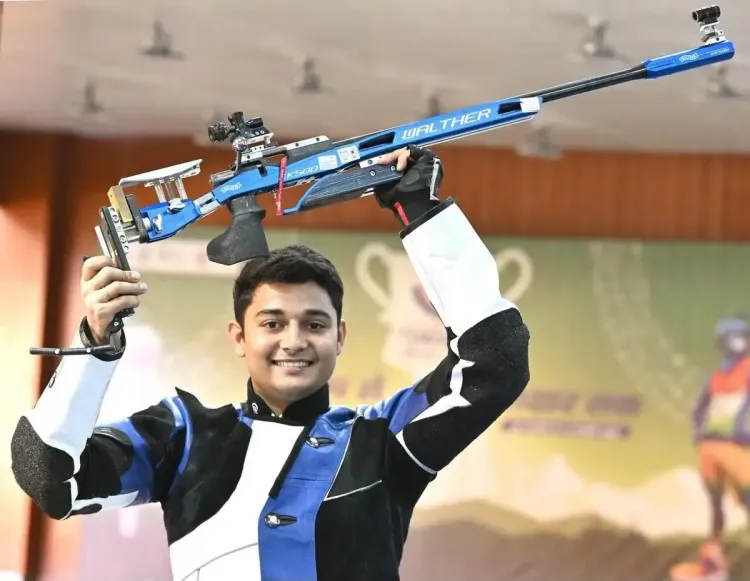
Niraj Kumar told his parents to skip his college fund and buy him a ₹3.5 lakh rifle instead. That single bet — made at 14 through an NCC range — led to national gold, an Indian Navy berth, a 2019 Asian Championships junior medal, and an Olympic medal ambition that is nowhere close to being set aside.
Key Takeaways
Niraj Kumar first picked up a rifle at age 14 in 2014 through the National Cadet Corps (NCC) .
He asked his parents to spend his college fund on a rifle costing ₹3–3.5 lakh , prioritising shooting over a degree.
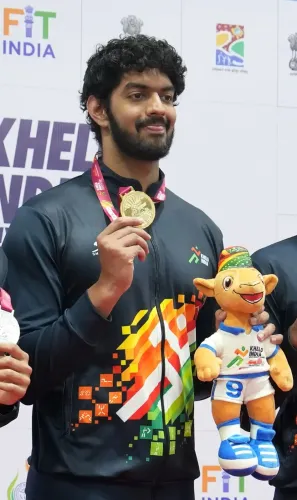
He won a junior silver at the National Championships in 2016 and junior gold in 2017 .
He joined the Indian Navy through its sports quota in January 2018 after earning his national gold.
He learned the 50m Rifle 3 Positions discipline largely through ISSF YouTube videos before entering the national camp system.
Foreign coach Thomas Farnik (joined 2022 ) and the NRAI have been central to his development toward an Olympic medal goal.
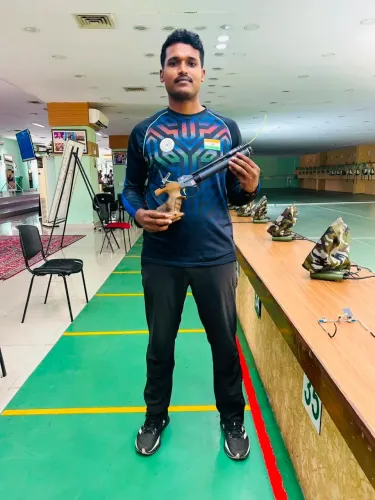
When Niraj Kumar completed Class 12, his family had one expectation — college. Niraj had another. He asked his parents to spend the money saved for his higher education on a rifle, convinced that competitive shooting was the career he was meant to pursue. That gamble, made years ago in New Delhi, has since taken him through national championships, the Indian Navy's sports quota, and onto the international stage with an Asian Games berth in his sights.
The Rifle Over the Degree
'I told them, buy me the rifle. I will see the college degree later. First, I have to shoot,' Niraj recalled. The rifle he had in mind cost around ₹3–3.5 lakh — a considerable sum for a family with no sporting background. His father, a retired Army officer, had originally enrolled him in the National Cadet Corps (NCC) hoping the experience would steer his son toward a career in the armed forces. Shooting was never part of that plan.
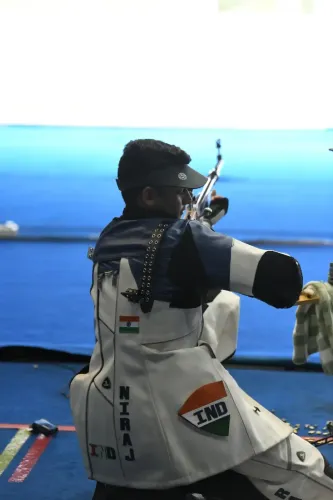
Niraj first picked up a rifle at the age of 14 in 2014 through NCC. He had played kabaddi, table tennis, and basketball during his school years, but shooting quickly emerged as the discipline that fascinated him most. His early exposure was to the 50m Rifle Prone event, through which he participated in Inter-Battalion and Inter-Group competitions. As medals followed, a casual interest hardened into serious ambition.
Persuading a Sceptical Family
With no competitive sportsperson in the family, his parents were understandably wary. Shooting demanded expensive equipment and offered uncertain returns — a combination that made it difficult to advocate for. Niraj understood he would need results before his family would share his belief.
NCC provided him with a rifle until his first national competition, but he would need his own equipment after that. For a period, he taught younger NCC cadets and used the final 15–20 minutes of their sessions to practise on his own. He also competed with rented rifles, but soon found the limitations of that arrangement frustrating. After one competition, he returned home deflated and began questioning whether to continue. 'That was my breaking point. I thought either I will do it with my own rifle, or I will stop. Otherwise, my time would just be wasted,' he said. His parents eventually backed his conviction and bought him the rifle.
National Medals and the Navy
The investment paid off quickly. Niraj claimed a junior silver at the National Championships in 2016 and followed it with a junior gold in 2017. Those results also opened the door to another ambition that had taken shape during his NCC days — joining the Indian Navy. After his first national medal, he approached a Navy coach, who told him he was too young and would need another medal before being considered. He returned with exactly that, and joined the Indian Navy through its sports quota in January 2018.
For his parents, the Navy posting represented the professional security they had always sought for their son. For Niraj, it meant a stable platform from which to pursue elite-level shooting. 'They told me that now my future is secure from their side and that I could fly as high as I wanted,' he said.
Mastering 3 Positions — the Hard Way
His next challenge was transitioning from the 50m Rifle Prone event to the more demanding 50m Rifle 3 Positions discipline, which requires athletes to compete in kneeling, prone, and standing positions. Without a dedicated coach to guide him through the transition, Niraj took an unconventional route: for much of 2018 and the first half of 2019, he studied technique by watching ISSF videos on YouTube. He also observed senior shooters and sought guidance from national coaches once he entered the national setup.
His efforts paid off on the international stage, including a junior medal at the Asian Championships in 2019. Foreign coach Thomas Farnik, who joined the Indian squad in 2022, has since become one of the most influential figures in his development. The National Rifle Association of India (NRAI) also became a key pillar of his progression. 'When I came into the junior squad, I started going for national camps. There were four-five camps in a year, and that gave me a proper platform to train and improve,' he said.
The Support System Behind the Shooter
Niraj credits the evolution of India's shooting support infrastructure for allowing athletes like him to focus purely on performance. 'Whether it is the coaches, physiotherapists, psychologists, nutritionists or the arrangements for camps and competitions, the federation takes care of a lot of things. As an athlete, you can then focus on your shooting,' he said. He also acknowledged the federation's role in creating a defined pathway: 'The federation has supported us very well, and it has given us a proper pathway towards our goal of winning an Olympic medal.'
Away from the formal system, a close network has been equally important. His friend Sumesh, who has known him since his early shooting days, shared training ammunition with him when resources were scarce. At home, his father — once apprehensive about a sporting career — is now among his loudest supporters. His elder brother serves in the Army, and his mother watched Niraj compete for the first time on television during the 2021 Delhi World Cup, where he reached the final.
What began with a son redirecting his college fund toward a rifle has grown into a career anchored by national medals, international exposure, and a firm place in India's elite shooting setup. The question Niraj now carries into every competition is no longer whether shooting can give him a future — it is how far that future can take him, with an Olympic medal still firmly on the horizon.
Point of View
Urban, well-resourced phenomenon. A retired Army officer's son who taught NCC cadets to buy himself extra practice time and learned technique from YouTube is not the typical profile of a national medallist — yet here he is. What his journey surfaces is how much of India's shooting pipeline still depends on individual sacrifice and informal networks rather than a systematic talent-identification system. The NRAI's improving support infrastructure is real, but it tends to benefit athletes who have already cleared the early hurdles largely on their own.
NationPress
14 Sept 2026
Frequently Asked Questions
Who is Niraj Kumar, the Indian shooter?
Niraj Kumar is an Indian Navy serviceman and competitive shooter specialising in the 50m Rifle 3 Positions event. He first picked up a rifle at 14 through the NCC in 2014, won national junior gold in 2017, and joined the Indian Navy via its sports quota in January 2018.
Why did Niraj Kumar choose shooting over college?
After reaching the pre-national level, Niraj became convinced that shooting was his career and asked his parents to spend his college savings on a rifle costing ₹3–3.5 lakh. He later said the rifle was a non-negotiable first step — the degree, he felt, could wait.
How did Niraj Kumar join the Indian Navy?
After winning junior gold at the National Championships in 2017, Niraj approached a Navy coach who had earlier told him he needed another medal before being considered. He delivered that medal and was admitted through the Indian Navy's sports quota in January 2018.
How did Niraj Kumar learn the 50m Rifle 3 Positions discipline?
Without a dedicated coach during his transition from 50m Rifle Prone, Niraj spent much of 2018 and early 2019 studying ISSF competition videos on YouTube. He later supplemented that with observation of senior shooters and guidance from national coaches at NRAI camps.
What is Niraj Kumar's ultimate sporting goal?
Niraj Kumar's stated long-term target is an Olympic medal. He has described the NRAI's support system and the influence of foreign coach Thomas Farnik as central to building a clear pathway toward that goal.