Modi-Xi BRICS meet: Border concessions unlikely, says ex-diplomat K.P. Fabian
Synopsis
Former diplomat K.P. Fabian's post-BRICS read is blunt: Xi's New Delhi visit opens a diplomatic window, but China has no incentive to surrender its most effective pressure tool — the unresolved border. The BRICS declaration's strong anti-terror language sounds like a win for India, but Fabian immediately asks the harder question: will Beijing back it at the UN Security Council, where it has historically shielded Pakistani militant groups?
Key Takeaways
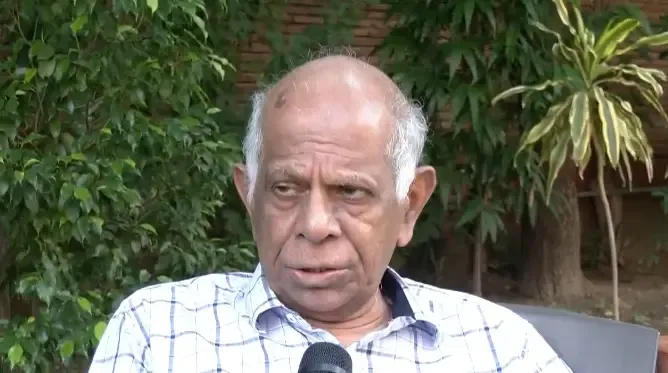
Former diplomat K.P.
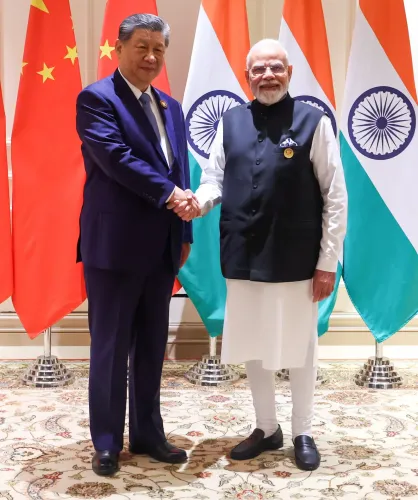
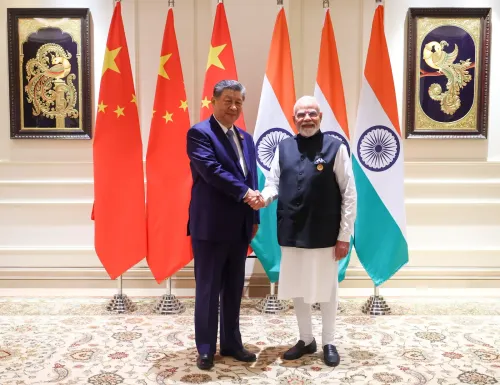
Fabian says the Modi-Xi bilateral at the BRICS Summit in New Delhi could bring incremental progress but not major border concessions from China .
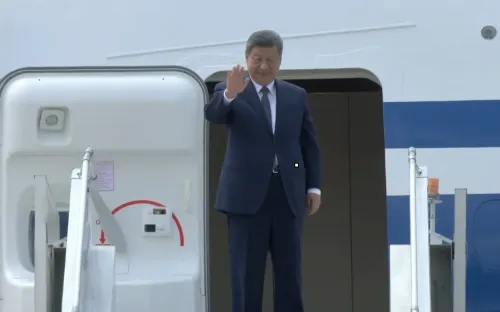
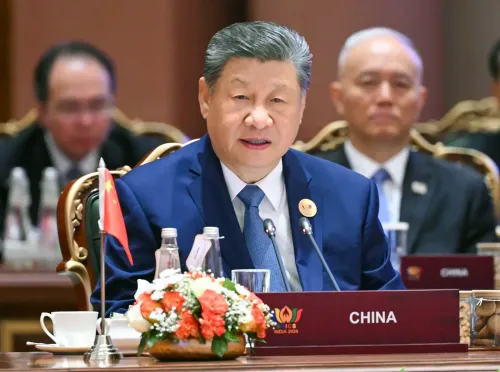
Xi Jinping 's visit to India is his first in seven years , with the last in-person India meeting in 2019 .
Fabian argues Beijing may deliberately keep the border dispute unresolved to use as a diplomatic pressure tool.
The New Delhi BRICS Declaration condemns the Pahalgam terror attack and cross-border terrorism, but Fabian questions whether China will support UNSC designations of Pakistani militant groups.
Fabian advises against the term 'de-dollarisation', calling it provocative, and opposes a common BRICS currency , warning it would be dominated by China whose economy is $20 trillion of the bloc's $34 trillion total.
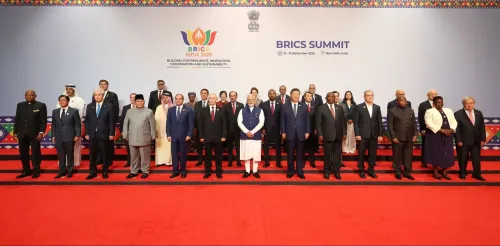
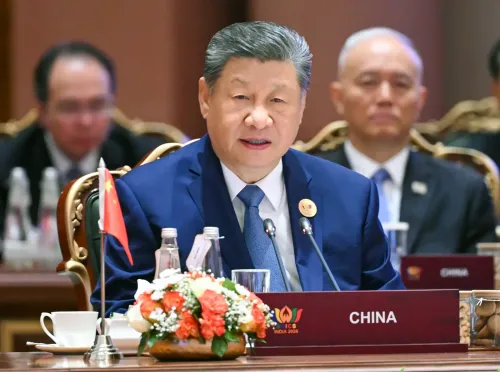
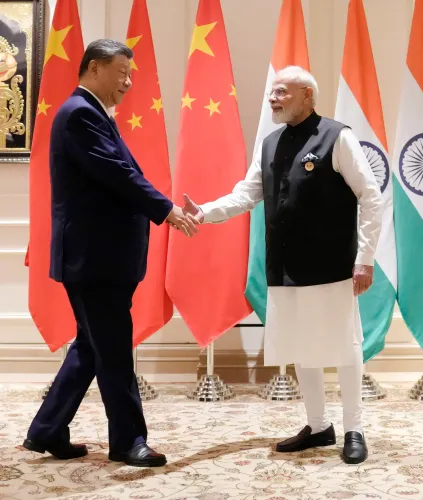
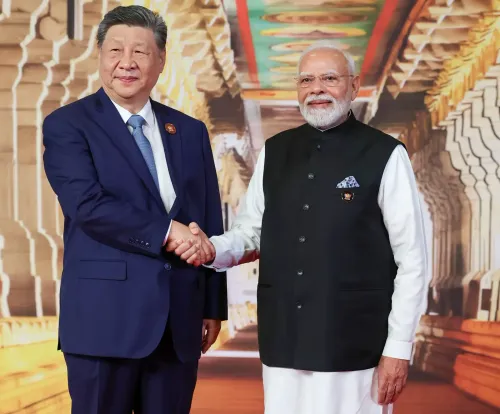
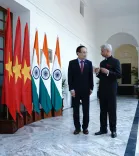
Former diplomat K.P. Fabian on Monday, 14 September 2026 assessed that Prime Minister Narendra Modi's bilateral meeting with Chinese President Xi Jinping on the sidelines of the BRICS Summit in New Delhi could yield incremental progress in India-China relations, but warned that Beijing was unlikely to offer any significant concessions on the longstanding border dispute.
Why Xi's Visit to India Matters
Fabian underscored the symbolic weight of Xi's presence in India, noting it was the Chinese President's first visit to the country in seven years. 'The last meeting was in 2019. But the two of them have met in other places. But Xi Jinping coming to India for the BRICS is important, and that naturally gave an opportunity for a bilateral meeting,' he said.
The former diplomat stressed that progress in Sino-Indian ties is structurally dependent on top-level engagement. 'What you have to understand about India-China relations is that nothing moves unless there is a signal from the top. And the signal from the top comes only after they meet,' he said, adding that some forward movement could be expected as a result.
China's Strategic Calculus on the Border
Despite the diplomatic opening, Fabian cautioned against expecting a breakthrough on the territorial front. 'We should recognise that China is unlikely to make any large concessions on the border matter,' he said. He argued that Beijing may deliberately keep the border question unresolved, using it as a pressure lever in bilateral diplomacy whenever strategically convenient — a pattern critics of Chinese foreign policy have long highlighted.
This comes amid continued efforts by both sides to stabilise ties following the 2020 Galwan Valley clash, which had plunged bilateral relations to their lowest point in decades. Multiple rounds of military-level and diplomatic talks have since produced partial disengagement at several friction points, but a comprehensive settlement remains elusive.
BRICS Declaration and the Cross-Border Terror Test
On the New Delhi Declaration adopted at the summit — which included a condemnation of the Pahalgam terror attack and firm language against cross-border terrorism — Fabian described it as a positive development for India, but raised a pointed question about its practical value. 'It is good that the declaration roundly condemns cross-border terrorism and has used language which India has been using,' he said.
He was quick to add, however, that declaratory consensus at BRICS did not guarantee aligned action at the United Nations Security Council. 'At the UN Security Council, if some of the Pakistani terrorist organisations have to be designated as terrorist agencies, will China cooperate?' he asked. The question cuts to the heart of a long-running diplomatic tension: China has on multiple occasions blocked or delayed UNSC designation of Pakistan-based militant groups.
Currency Diplomacy: Fabian Argues Against De-Dollarisation Framing
On BRICS discussions around reducing dependence on the US dollar, Fabian urged a careful shift in language. 'Our media has been talking about de-dollarisation. In my view, it is unnecessary and impolitic to speak of de-dollarisation because that irritates President Trump,' he said. He advocated instead for framing the objective as the 'increased use of national currencies' — a distinction he argued was both diplomatically prudent and practically accurate, given that China and Russia were already settling bilateral trade in their own currencies, while India and Russia were conducting a significant share of trade in Rupees and Roubles.
Fabian was equally firm in opposing any proposal for a common BRICS currency, warning it would erode member states' financial sovereignty. 'If there is a common currency, that means you cannot do anything with the interest rates — you are losing your financial sovereignty. India is not prepared,' he said. He further cautioned that a common currency would inevitably be dominated by China, given that its economy accounts for roughly $20 trillion of the bloc's combined $34 trillion GDP across 11 member states.
What Comes Next
The Modi-Xi bilateral will be closely watched for any follow-through signals — whether through official joint statements, subsequent military-level disengagement moves, or trade and connectivity overtures. Analysts will also track China's posture at the UN Security Council in the weeks ahead as a real-world test of the goodwill expressed in the BRICS declaration.
Point of View
But China's incentive structure on the border has not changed — keeping it unresolved preserves leverage. The sharper question he raises about UNSC behaviour is the real litmus test; BRICS declarations are non-binding, and Beijing's track record of blocking Pakistani terror designations at the Security Council is well-documented. The de-dollarisation framing debate, meanwhile, reveals how much of India's multilateral strategy is constrained by the Trump variable — a reminder that New Delhi must simultaneously manage Washington's sensitivities while deepening alternate trade architecture.
NationPress
14 Sept 2026
Frequently Asked Questions
What did K.P. Fabian say about the Modi-Xi bilateral at the BRICS Summit?
Former diplomat K.P. Fabian said the meeting could lead to some progress in India-China relations but that China was unlikely to make any large concessions on the border issue. He noted that Xi Jinping's visit to India after seven years was significant and created the conditions for a bilateral discussion.
Why does China prefer to keep the border issue unresolved, according to Fabian?
Fabian argued that China may strategically prefer an unresolved border because it can be used as a diplomatic tool or pressure lever whenever Beijing needs it. This view reflects a broader assessment that territorial ambiguity serves Chinese interests in managing the bilateral relationship.
What is the significance of the BRICS New Delhi Declaration on terrorism?
The New Delhi Declaration condemned the Pahalgam terror attack and included strong language against cross-border terrorism, which Fabian called a positive development for India. However, he cautioned that the real test lies at the UN Security Council, where China has historically resisted designating Pakistan-based militant groups as terrorist organisations.
Why is Fabian against the term 'de-dollarisation' in the BRICS context?
Fabian argued that using the word 'de-dollarisation' is diplomatically impolitic because it risks irritating US President Trump. He recommended framing the objective as the 'increased use of national currencies' instead, pointing to existing Rupee-Rouble and yuan-rouble trade arrangements as practical examples.
Why does Fabian oppose a common BRICS currency?
Fabian opposes a common BRICS currency because it would require member states to cede control over their interest rate policy, effectively surrendering financial sovereignty. He also warned that given China's economy of $20 trillion out of the bloc's $34 trillion combined GDP, any common currency would inevitably be dominated by Beijing.