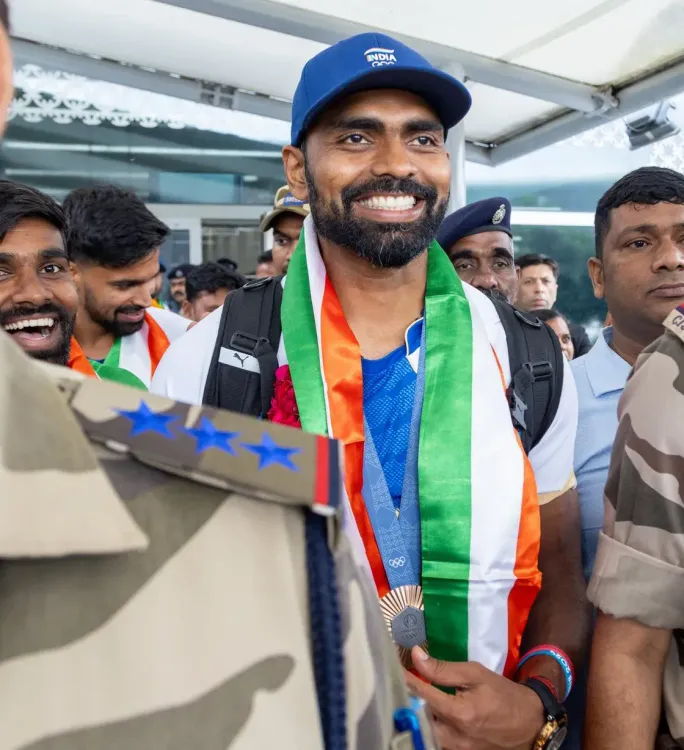
Sreejesh: India-Pakistan hockey clashes no longer as tough, ahead of FIH World Cup 2026
Synopsis
PR Sreejesh's pre-match verdict on India vs Pakistan at the FIH Hockey Men's World Cup 2026 is unusually direct: the rivalry has lost its old terror. With India's fitness, tactical evolution, and late-game composure all transformed, Sreejesh argues the balance of power has shifted — and the numbers from past encounters back him up.
Key Takeaways
PR Sreejesh says India-Pakistan hockey matches are no longer as difficult as they once were, citing Indian improvements in fitness, strength, and decision-making.
India faces Pakistan in a crucial FIH Hockey Men's World Cup 2026 group clash, with their semifinal prospects tightened after a loss to England .
Sreejesh urged the team to press high, stay compact, and avoid dropping too deep — playing their natural attacking game.
Harmanpreet Singh was praised as a 'very good captain', with Sreejesh emphasising that a hockey captain's most important work happens off the field.
Sreejesh noted that while Pakistan retain potential, their current squad's level is not comparable to previous generations.
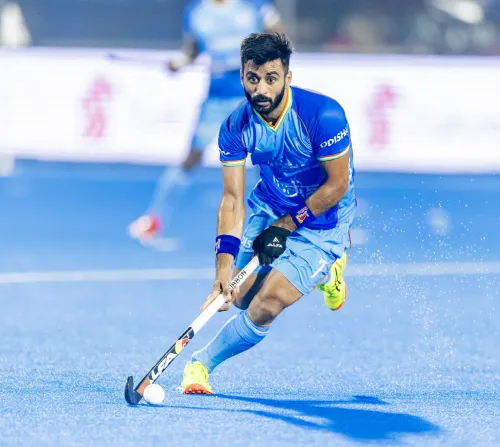
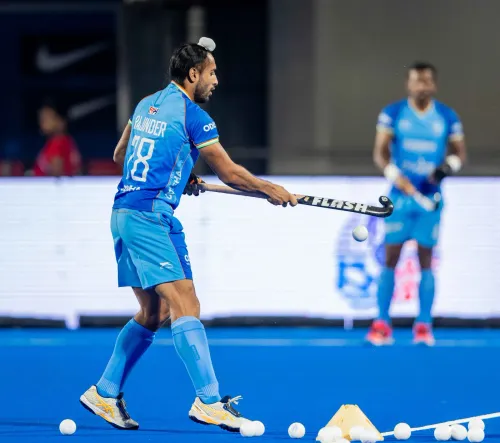
Former India hockey goalkeeper PR Sreejesh has said that matches against Pakistan are no longer as challenging as they once were, crediting the Indian team's significant strides in fitness, physical strength, tactical awareness, and in-game decision-making. His remarks come ahead of India's high-stakes FIH Hockey Men's World Cup 2026 clash against Pakistan, a fixture that carries added weight following India's defeat to England in their previous group-stage match.
Why India Has the Edge Over Pakistan
'Conceding goals in the last quarter or final minutes used to be a problem for us, but that is no longer the case. Now, we are the ones scoring late to win matches,' Sreejesh said in an interview with JioStar. He traced the shift to the introduction of the four-quarter system and a sustained improvement programme that preceded it. 'Earlier, during the 35-minute halves, we used to make mistakes due to fitness or poor decision-making and let in goals. But since the four-quarter system came in, and even before that, we made big improvements in our fitness, strength, game awareness, and decision-making,' he explained.
Sreejesh acknowledged that Pakistan retain potential as a hockey nation but noted that their current squad does not match the standard of previous generations. 'In the past, India vs Pakistan games were tight, often ending 1-0 or 2-1. Pakistan still have potential, but their current team's level is not the same as before,' he said. This is a notable shift in a rivalry that once defined Asian hockey and routinely produced the tournament's most tense encounters.
Tactical Blueprint: Press High, Stay Compact
On strategy, Sreejesh urged the Indian side to resist the temptation of sitting deep defensively and instead impose themselves with a high press. 'The Indian men's hockey team has been playing a new formation for the past year and a half. That formation mostly forces us into defense, but in the recent Pro League, we pushed up and pressed hard in many matches,' he said.
He drew a distinction between how India should approach European opponents versus the broader World Cup field. 'One important thing is that we need to stay compact in defense when playing against European teams. Otherwise, we should play our natural game in the World Cup. In defense, we used zonal marking, so we need to improve our understanding in that area. We should not drop too deep. We need to step out, press high, and defend even beyond the centre line,' Sreejesh said.
On Harmanpreet Singh's Leadership
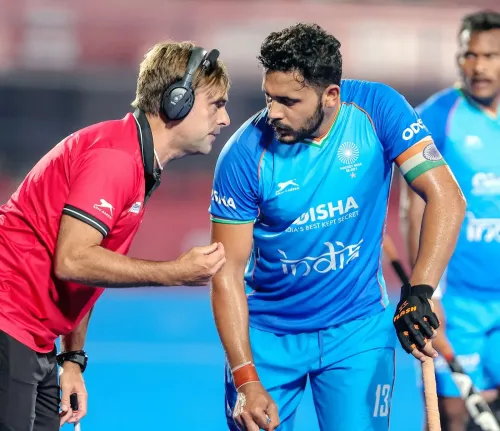
Sreejesh also weighed in on the captaincy of Harmanpreet Singh, arguing that a hockey captain's most critical contributions happen away from the playing surface. 'Harmanpreet Singh is a very good captain. On the pitch, a captain's influence is limited because you cannot control every move or player. The person with the ball has to make the decision,' he said.
He elaborated that the real work of leadership lies in team cohesion and communication: 'Most of a captain's work happens off the pitch — keeping the team united, supporting younger players, helping them settle in, creating a positive team environment, taking players' concerns to the coach, clearing doubts, and making sure everyone understands the coach's instructions. So, for a hockey captain, the work off the field is much more important than what you do on the field,' Sreejesh added.
Stakes for India at the World Cup
India's loss to England in their preceding group match has tightened the path to the semifinals, making the Pakistan fixture effectively a must-win scenario in terms of momentum and qualification arithmetic. Notably, the India vs Pakistan hockey rivalry carries enormous public interest and bilateral sporting significance, making this encounter one of the most-watched matches of the tournament. With India's improved conditioning and tactical clarity, Sreejesh's assessment suggests the team is approaching the clash with confidence rather than anxiety.
Point of View
Combined with a serious fitness overhaul, has eroded Pakistan's traditional advantage of physical endurance and late-game pressure. What mainstream coverage underplays is the tactical nuance: Sreejesh's call to press beyond the centre line against Pakistan signals that India now sees this as a match to dominate, not just survive. The real test, however, is whether that mindset holds when the stadium pressure peaks — because India's loss to England shows vulnerability is still present, and Pakistan, however diminished, remain capable of exploiting hesitation.
NationPress
18 Aug 2026
Frequently Asked Questions
What did PR Sreejesh say about India vs Pakistan at the Hockey World Cup 2026?
Sreejesh said matches against Pakistan are no longer as tough as they used to be, crediting India's improved fitness, strength, game awareness, and decision-making. He noted that past India-Pakistan clashes were tight, often ending 1-0 or 2-1, but the balance has shifted in India's favour.
Why is the India-Pakistan Hockey World Cup 2026 match so important?
India lost to England in their previous group game, making the Pakistan clash critical for their semifinal qualification prospects. The match also carries significant bilateral sporting weight as one of hockey's most-watched rivalries.
What tactical advice did Sreejesh give for the India-Pakistan match?
Sreejesh urged India to press high, stay compact, and avoid dropping too deep defensively. He said India should play their natural game and defend even beyond the centre line, while being especially compact against European-style teams.
What did Sreejesh say about Harmanpreet Singh's captaincy?
Sreejesh called Harmanpreet Singh a 'very good captain' and said a hockey captain's most important work happens off the field — keeping the team united, supporting younger players, and ensuring everyone understands the coach's instructions.
Has Pakistan weakened as a hockey rival to India?
According to Sreejesh, Pakistan still have potential as a hockey nation but their current squad's level is not the same as previous generations. He said this is why India-Pakistan matches, once routinely tight, are now less difficult for the Indian side.