India U31 team wins bronze at World Youth Bridge Championships in Hefei
Synopsis
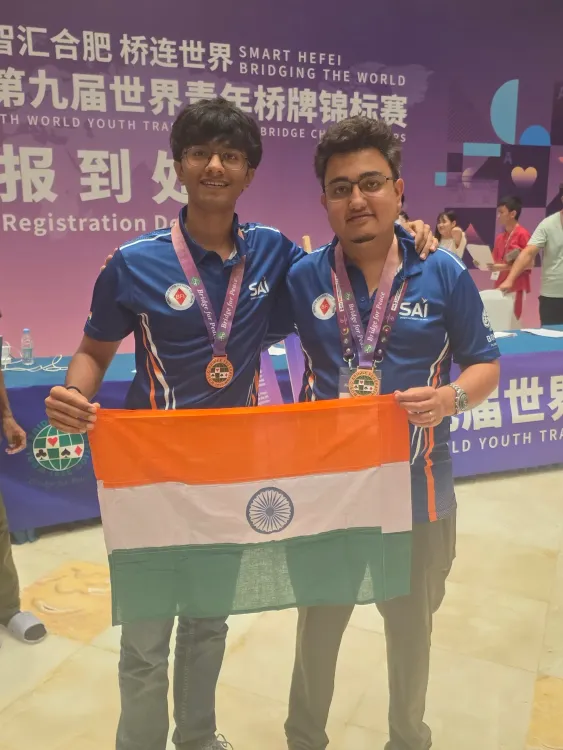
India's Under-31 bridge team beat the odds in Hefei — navigating visa chaos and forced partnership changes — to claim bronze at the 9th World Youth Transnational Bridge Championships with 82.34 Victory Points. The result, with a 17-year-old as a standout performer, points to a quietly deepening youth bridge pipeline that India's mainstream sports coverage rarely notices.
Key Takeaways
India's U31 team won bronze at the 9th World Youth Transnational Bridge Championships in Hefei, China on 5 August .
India finished third in the eight-team final round robin with 82.34 Victory Points ; gold went to China's AGOOFANS (89.96 VP) and silver to China U31 (89.47 VP).
Visa delays forced last-minute partnership changes, with Anshul Bhatt and Vidhya Patel each playing six of eight qualifying rounds .
The squad — Anshul Bhatt, Sagnik Roy, Sayantan Kushari, Shubham Acharya, Surajit Bar and Vidhya Patel — was coached by Kaustubh Bendre .
17-year-old Anshul also founded BridgeBlitz boot camps and developed PawPath , an ISEF Grand Award-winning animal-science project.
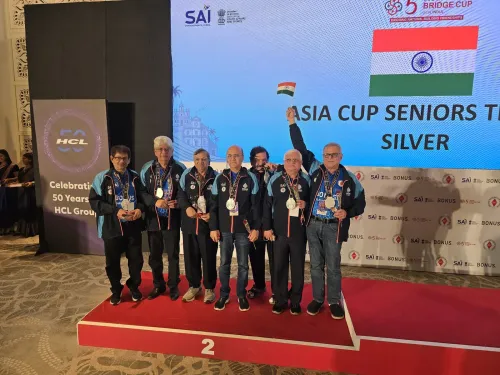
India's Under-31 bridge team claimed the bronze medal in the Teams Event at the 9th World Youth Transnational Bridge Championships in Hefei, China on 5 August, finishing third in the eight-team final round robin with 82.34 Victory Points. The achievement is notable given that the squad navigated visa delays and last-minute partnership reshuffles before competing on the international stage.
Final Standings and Competition Format
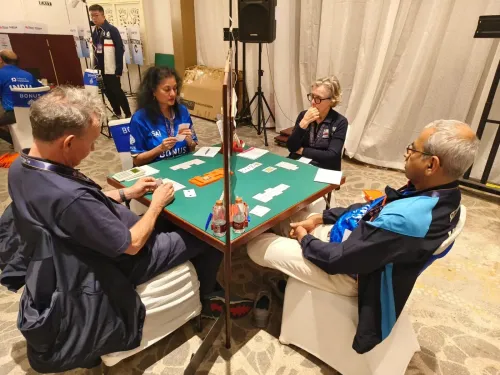
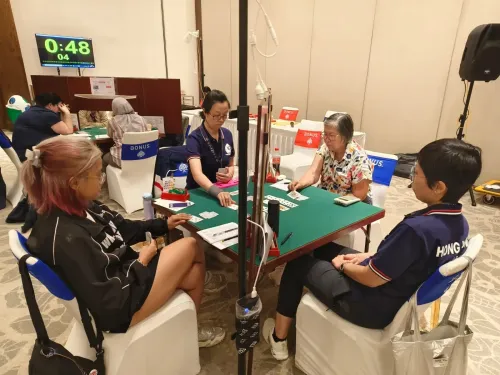
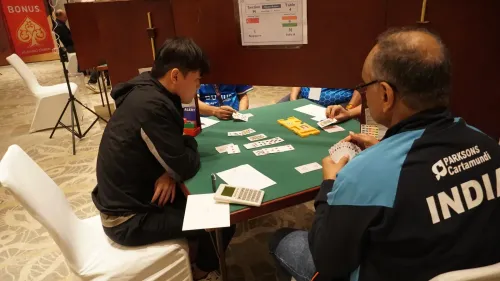
China's AGOOFANS claimed gold with 89.96 Victory Points, while China U31 took silver with 89.47 VP. India's 82.34 VP was enough to secure third place ahead of the remaining five finalists. The final was a round-robin format on 5 August, with each team playing a seven-board match against every other finalist. India had qualified by finishing seventh in the preliminary rounds held on 3 and 4 August, making the cut for the eight-team final.
Visa Delays Force Last-Minute Changes
Chinese visas for some players did not arrive in time, forcing the team management to reconfigure playing combinations at short notice. Anshul Bhatt, who had trained extensively with Shubham Acharya, was instead paired with Kolkata-based national player Sayantan Kushari. Shubham, in turn, partnered Vidhya Patel, who hails from Raibidpura, a Madhya Pradesh village with a reputation for producing competitive bridge players. Because of these unforeseen circumstances, Anshul and Vidhya each played six of India's eight qualifying rounds. Sagnik Roy and Surajit Bar arrived from Kolkata in time to reinforce the squad for the final.
The Squad and Coaching Staff
The full team comprised Anshul Bhatt, Sagnik Roy, Sayantan Kushari, Shubham Acharya, Surajit Bar, and Vidhya Patel, captained and coached by Kaustubh Bendre. Bendre defended the selection of 17-year-old Anshul — one of the younger members of the U31 squad — saying: 'Anshul has been selected because he has earned his place, not because of his age or reputation. At 17, he already shows the discipline, composure and partnership awareness expected at the U31 level.'
Anshul Bhatt: Bridge Prodigy and Beyond
Beyond his playing record, Anshul runs a school bridge club and BridgeBlitz boot camps that have produced other India age-group players. A BridgeBlitz-trained team reportedly reached the semifinals of the 2025 World Youth Teams Championships. Outside bridge, he developed PawPath, a wearable sensor system that analyses dog gait using machine learning. The project won an ISEF Grand Award in Animal Sciences and is being developed into a pet-health platform called Sniff.
What This Result Means
India's bronze at the World Youth Transnational Bridge Championships underscores the depth of the country's youth bridge pipeline, particularly from states like West Bengal and Madhya Pradesh. The result, achieved despite logistical disruptions, signals a growing competitive presence on the global youth bridge circuit. With several players in this squad still well within the U31 age bracket, India's prospects at future editions appear strong.
Point of View
But the story underneath deserves more attention. A squad reshaped hours before competition by visa bureaucracy still outperformed five other nations — a testament to depth, not just individual talent. The emergence of players from Raibidpura, a Madhya Pradesh village, alongside Kolkata regulars, suggests that India's bridge talent base is genuinely widening beyond its traditional urban centres. The real question is whether the federation can convert this youth momentum into senior-level consistency, or whether logistical failures — like the visa delays here — will keep undermining squads that are clearly good enough to compete.
NationPress
20 Sept 2026
Frequently Asked Questions
What medal did India win at the 2025 World Youth Transnational Bridge Championships?
India's Under-31 team won the bronze medal in the Teams Event at the 9th World Youth Transnational Bridge Championships held in Hefei, China. They finished third in the eight-team final round robin with 82.34 Victory Points.
Who were the gold and silver medallists at the Hefei bridge championships?
China's AGOOFANS won gold with 89.96 Victory Points and China U31 took silver with 89.47 VP. India's 82.34 VP secured the bronze position in the final.
How did visa delays affect India's performance at the championships?
Chinese visas for some players did not arrive in time, forcing last-minute changes to playing partnerships. Anshul Bhatt, who had trained with Shubham Acharya, had to partner Sayantan Kushari instead, while Shubham paired with Vidhya Patel. Despite these disruptions, the team held together to reach the final and claim bronze.
Who is Anshul Bhatt and why is he significant to this team?
Anshul Bhatt is a 17-year-old bridge player selected for the Under-31 squad on merit, according to coach Kaustubh Bendre. Beyond bridge, he founded BridgeBlitz boot camps that have produced other India age-group players, and developed PawPath, a machine-learning wearable for dog gait analysis that won an ISEF Grand Award in Animal Sciences.
How did India qualify for the final at the World Youth Bridge Championships?
India finished seventh in the preliminary qualifying rounds held on 3 and 4 August, making the cut for the eight-team final. The final was a round-robin format on 5 August, with each team playing a seven-board match against every other finalist.