India can produce world-class golfers in a decade, says PGTI's Amitabh Kant
Synopsis
Amitabh Kant, former NITI Aayog CEO and PGTI board member, has drawn a direct parallel between India's cricket rise and its golf potential — arguing that tribal communities in Chhattisgarh and Jharkhand could produce the country's next great golfers if infrastructure reaches them in time. It is a bold bet on demographics over tradition.
Key Takeaways
Amitabh Kant , Board Member of PGTI , said India can produce world-class golfers within the next 10 years , citing demographics and grassroots expansion.
Kant called for making golf accessible in tier-two and tier-three cities , highlighting early traction in Chhattisgarh and Jharkhand .
He proposed reserving 25 per cent of college admissions for athletes based on verifiable sporting merit such as state representation.
Atul Chaturvedi said India needs stronger branding to unlock its potential as a golf tourism destination.
Amandeep Johl , CEO of DP World PGTI , outlined plans to invite players from the Sunshine, Korean, Thai and Japan Tours and expand co-sanctioned events with the Asian Tour .
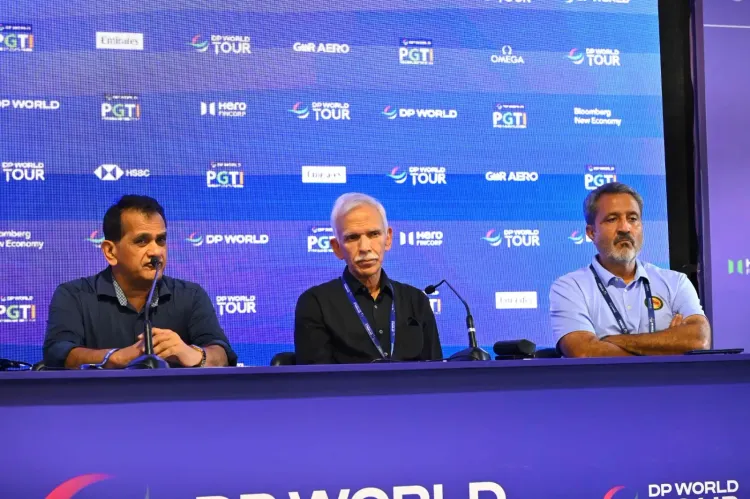
The remarks were made at a media interaction on the sidelines of the India Championship at Delhi Golf Club on 17 October 2026 .
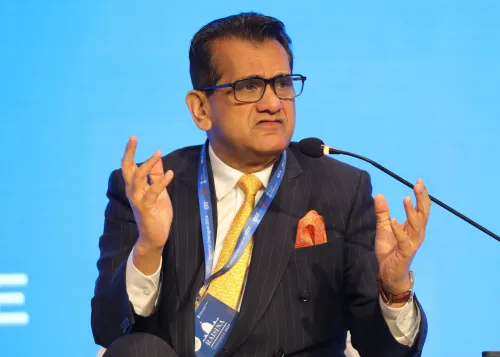
Amitabh Kant, Board Member of the Professional Golf Tour of India (PGTI) and former CEO of NITI Aayog, said on Saturday, 17 October 2026, that India's demographic advantage and expanding grassroots infrastructure position the country to produce world-class golfers within the next decade. Kant made the remarks at a media interaction on the sidelines of the India Championship at the Delhi Golf Club in New Delhi.
Key Developments at the PGTI Media Interaction
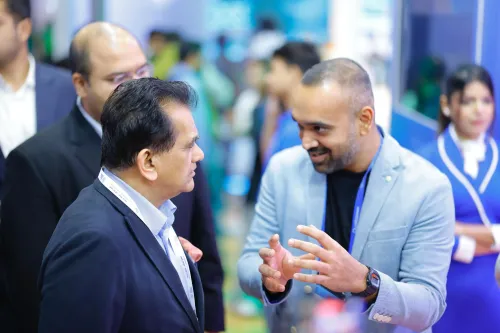
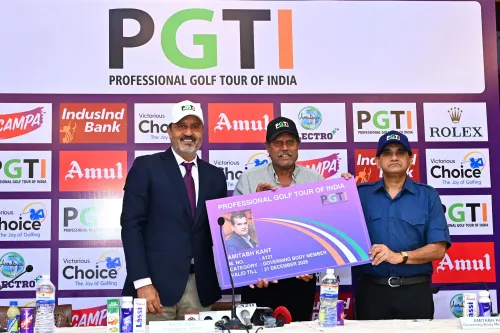
Senior PGTI leadership — including Atul Chaturvedi (IAS), Member of the National Company Law Tribunal (NCLT) and former Secretary to the Government of India, and Amandeep Johl, CEO of DP World PGTI — gathered to outline the tour's ambitions. The three leaders highlighted plans to widen golf's reach, strengthen India's international competitive presence, and develop the country as a destination for golf tourism.
Kant: Demographics and Accessibility Are the Game-Changers
Drawing a parallel with India's rise in cricket, Kant said, 'India has established itself in world cricket, and we are now beginning a similar journey in golf. Golf is entering an exciting phase in the country. This is a rare opportunity. The crowds coming to watch some of the world's best golfers will inspire young Indians to take up the game. Our demographics are in our favour, and I believe the next decade can produce Indian golfers who will compete and win on the world stage.'
Kant stressed that expanding the sport beyond elite urban enclaves was essential. 'Golf has often been seen as an elitist sport, but that perception is changing. Tier-two and tier-three cities can produce some of our best golfers,' he added. He pointed to encouraging early responses from Chhattisgarh and Jharkhand, citing the Chhattisgarh Government's efforts to develop golf facilities for young players, including those from tribal communities. 'If young boys and girls from tribal communities get those opportunities, there is no reason they cannot become exceptional golfers,' Kant said.
He also called on large enterprises to follow DP World's lead in sponsoring the sport, and proposed that 25 per cent of college and university admissions be reserved for athletes on the basis of sporting merit — pegged to verifiable benchmarks such as state representation — so that student-athletes can balance education with competitive careers.
Golf Tourism: India's Untapped Potential
Chaturvedi argued that India already has the course quality and cost advantage to attract international golf tourists, but lacks the branding muscle to monetise that edge. 'I believe India has excellent golf courses and supporting infrastructure. What we need is stronger branding. India offers exceptional value as a golfing destination, both in terms of its courses and the cost of playing. Just as India has developed as a destination for health tourism, there is an opportunity to build golf tourism,' he said.
PGTI's International Expansion Strategy
Johl outlined a multi-pronged strategy to elevate the competitive calibre of the tour. This includes inviting players from the Sunshine Tour, Korean Tour, Thai Tour, and Japan Tour; adding more co-sanctioned events with the Asian Tour and the HotelPlanner Tour; and funding Indian players to compete at overseas qualifying schools. Johl invoked India's 1983 Cricket World Cup victory as a cultural reference point, saying, 'The 1983 Cricket World Cup changed what India believed it could achieve. We are working towards a similar moment in golf. It could happen at the DP World India Championship, the Indian Open or somewhere else. We cannot predict it, but we can keep creating opportunities.' He acknowledged that building a sporting culture takes decades, but expressed confidence that committed board leadership, strong brand partnerships, and growing international ties put PGTI on the right trajectory.
What This Means for Indian Golf
This comes amid a broader push by Indian sporting bodies to leverage the country's young population — over 65 per cent under the age of 35 — to build depth in non-cricket disciplines. Golf, historically confined to metros and defence cantonments, is reportedly seeing growing participation at the junior level. With international events now drawing global fields to Indian venues, the visibility gap that long hampered grassroots conversion is, according to PGTI leaders, beginning to close. Whether policy follow-through on sports-based admissions and state-level infrastructure matches the ambition articulated on Saturday will determine how quickly India moves from aspiration to results on the global fairway.
Point of View
BCCI's financial muscle, and a board that ran the global game — none of which golf in India currently enjoys. The proposal to tie 25 per cent of university admissions to sporting merit is the most concrete policy ask in the room, and it is the one that will face the most institutional resistance. Grassroots golf also requires land — a resource that is expensive and contested in urban India — which makes Kant's tier-two and tier-three city thesis dependent on state governments that have rarely prioritised golf. The early signals from Chhattisgarh are genuine, but one state's enthusiasm is not a national programme.
NationPress
17 Oct 2026
Frequently Asked Questions
What did Amitabh Kant say about India's potential in golf?
Amitabh Kant, Board Member of the Professional Golf Tour of India (PGTI) and former CEO of NITI Aayog, said India can produce world-class golfers within the next decade, driven by its young population, wider sport access, and stronger grassroots infrastructure. He drew a parallel with India's rise in cricket, speaking at the India Championship at Delhi Golf Club on 17 October 2026.
How does PGTI plan to expand golf in tier-two and tier-three cities?
PGTI leaders highlighted the need to develop golf facilities in smaller cities, citing the Chhattisgarh Government's active efforts as a model. Kant specifically noted strong early responses from Chhattisgarh and Jharkhand, and said tribal communities in these states could produce exceptional golfers if given infrastructure access.
What is PGTI's international expansion strategy for Indian golfers?
PGTI CEO Amandeep Johl outlined plans to invite players from the Sunshine, Korean, Thai, and Japan Tours, add co-sanctioned events with the Asian Tour and HotelPlanner Tour, and fund Indian players at overseas qualifying schools. The goal is to raise the competitive level of the tour and increase global exposure for Indian golfers.
What policy change did Amitabh Kant propose for student athletes?
Kant suggested that 25 per cent of college and university admissions be based on sporting merit, using clear and verifiable criteria such as state-level representation. The proposal aims to allow athletes to continue their education without sacrificing their competitive careers.
What is India's potential as a golf tourism destination?
Atul Chaturvedi, Member of the NCLT and former Secretary to the Government of India, said India already has quality golf courses and a cost advantage over other destinations, but needs stronger branding to attract international golf tourists. He compared the opportunity to how India successfully developed health tourism.