SAI's National Centres of Excellence Propel India's Olympic Dreams
Synopsis
As India gears up for the 2036 Olympics, the Sports Authority of India is amplifying its athlete development initiatives through National Centres of Excellence, fostering talents across various sports and enhancing India's medal potential on the global stage.
Key Takeaways
SAI's NCOEs are pivotal in enhancing athlete performance and medal prospects.
The framework supports over 4,000 athletes in a high-performance ecosystem.
Para sports receive significant attention and resources.
Success stories are emerging from diverse sports disciplines.
India aims for greater competitiveness on the global stage.
New Delhi, March 16 (NationPress) As India progresses towards its goal of hosting the 2036 Olympics, the Sports Authority of India (SAI) is enhancing its athlete development framework to increase the nation's medal opportunities in forthcoming significant competitions.
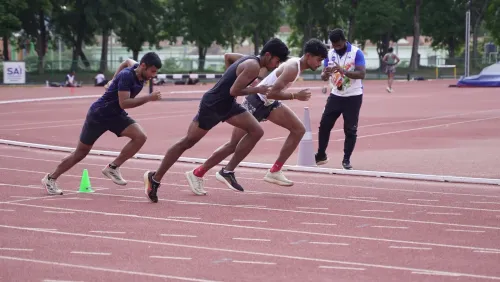
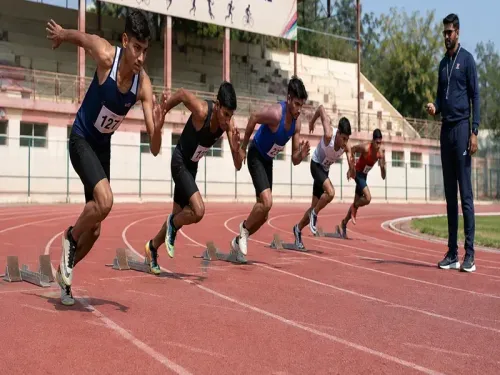
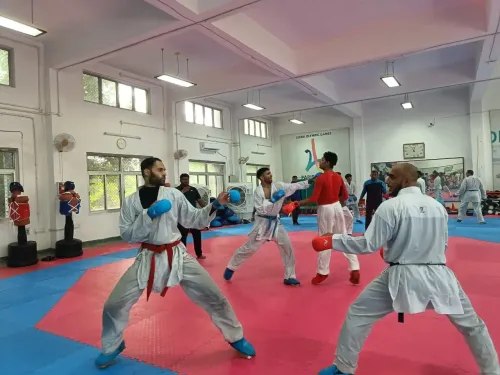
At the National Centres of Excellence (NCOEs) and numerous SAI Training Centres (STCs), a new generation of athletes is transitioning from grassroots initiatives to the international stage. With the rising number of these centres, academies, and institutions, the process of nurturing future champions is becoming increasingly organized.
Initiated in 2019, the NCOE model was established as an ‘athlete-centric, coach-driven’ high-performance ecosystem, incorporating Sports Science, High-Performance Directors, and an Athlete Management System into regular training schedules. NCOEs support over 4,000 athletes, forming the elite section of a larger pyramid that also includes STCs, which cater to nearly 4,800 trainees.
The visibility of lesser-known athletes proudly representing India in prominent international competitions is steadily rising. For instance, trainees Mohith HS and Chandura Boby Poovanna from the SAI Regional Centre (RC) Bhopal played a crucial role in securing a silver medal for India at the Sultan Azlan Shah Cup, illustrating the growing faith in nurturing talent and fortifying the bench strength.
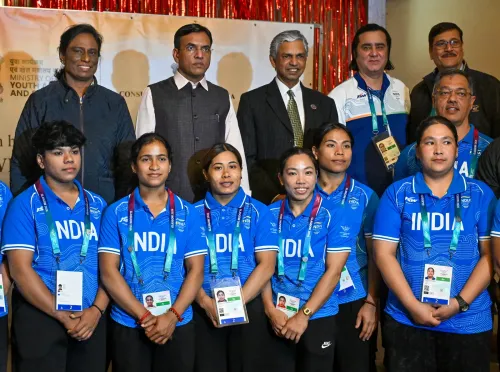
This institutional support is particularly notable in boxing. From RC Sonepat to Guwahati and Aurangabad, NCOE boxers are excelling at both national and international levels. At the 2025 World Boxing Cup Finals, Minakshi clinched gold, Saweety obtained bronze, while Abhinash Jamwal and Naveen both earned silver medals.
Disha Patil from SAI Aurangabad showcased her talent by representing India at the Boxam Tournament in Spain. Mayuresh Jadhav participated in a training and competition program in Ireland, and Lovlina Borgohain, an Olympic medalist training at SAI Guwahati, boosted the team's achievements by winning gold at the Boxam Elite International 2026.
The focus on para sports is also paramount. The SAI NCOE in Gandhinagar has evolved into a leading hub for para sports talent. At the 2025 Brazil Open Championship, para powerlifter Jaspreet Kaur secured a silver medal, and in February 2026, centre participants excelled at the ITTF World Para Future in Australia, where they won two golds, two silvers, and three bronzes. Subham Wadhwa achieved gold in singles and had two more podium finishes, while Prachi Pandey, Savita Ajjanakatti, and Rishit Nathwani contributed to the overall medal tally across various categories.
Momentum has been sustained across multiple events and locations. During the 2025 Para Youth Asian Games held in Gandhinagar, athletes excelled in swimming, powerlifting, table tennis, and athletics, with Nathwani earning a gold, silver, and bronze. The centre's strength was further evident at the Fazza International Para Athletics Grand Prix in February 2026, where its team captured several gold medals in shot put, discus, javelin, and track events.
The SAI NCOEs are not only cultivating domestic champions but are also ensuring global competitiveness. The consistent outcomes underscore the significance of systematic training, international exposure, and an emphasis on sports science support to empower athletes and coaches alike.
The achievers hail from a wide array of sports. In athletics, Abinaya Rajarajan from SAI Trivandrum participated in the 12th Asian Indoor Championships in Tianjin. Even in disciplines like wushu, athletes such as Namrata Batra from SAI Itanagar have ascended in Asian rankings, reflecting the geographical and sporting diversity within the SAI framework.
Muskan from SAI RC Lucknow earned a bronze medal at the Youth Asian Taekwondo Para Games 2025, while Gouri Nanda K from RC Trivandrum claimed gold at the Ballarat International Regatta in Australia. Young cyclists representing SAI RC Trivandrum also achieved remarkable results at the Track Asia Cup 2026, with Keerthi Rangaswami C winning three silver medals, and Niraimathi J, Pooja Swetha, Dhanyadha JP, Srimathi J, Shweta Gunjal, and Kishore N securing multiple podium finishes.
The infrastructure supporting these successes is multi-layered. NCOEs cater to athletes of different ages, preparing them for the Olympics. Meanwhile, STCs and the National Sports Talent Contest (NSTC) identify and cultivate talent starting from the age of eight. The involvement of High Performance Directors, combined with integrated sports science and updated financial regulations, further enriches athlete development to align with international benchmarks.
As these young athletes transition from SAI NCOE setups to global competitions, they continue to demonstrate how India's Olympic dreams are being realized step by step—through individual athletes, medals, and teams. The NCOEs have established tiered talent pipelines, with junior squads advancing into senior national camps and their progress being monitored centrally. This framework is built on three fundamental pillars: early talent identification, continuous high-performance training, and alignment with international standards.
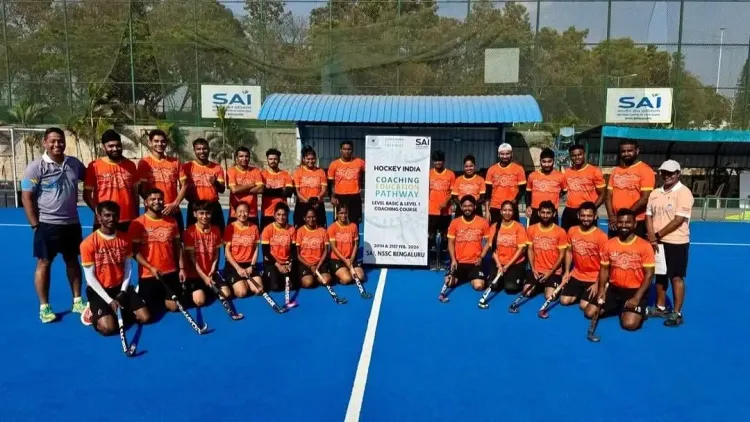
Under this initiative, athletes benefit from residential training, educational assistance, integration with sports science, and competitive opportunities at no cost. Notably, performance tracking is data-driven, ensuring each athlete's advancement aligns with global standards to prevent stagnation. Furthermore, facilities such as synthetic turfs, recovery pools, high-performance gyms, and advanced analytics suites are becoming standard features.
India is broadening its talent pool by decentralizing excellence and establishing centres across various regions. This strategy provides young athletes from rural backgrounds access to facilities previously limited to major urban areas. As India aims to host the 2036 Olympic Games, maintaining robust competitiveness in both individual and team sports will be crucial for performance and fostering a vibrant sporting culture.
For many years, Indian sports relied primarily on individual talent and sporadic state-level victories. The advent of the NCOE era signifies a departure from this approach.
Point of View
It is evident that the SAI's initiatives are reshaping the future of Indian sports. The commitment to developing athletes from diverse backgrounds and ensuring systematic training processes reflects a robust strategy to achieve success on the world stage. The focus on inclusivity and performance enhancement is commendable and crucial for India's Olympic ambitions.
NationPress
7 Oct 2026
Frequently Asked Questions
What are the National Centres of Excellence (NCOEs)?
NCOEs are specialized training facilities established by the Sports Authority of India to support high-performance athletes across various sports.
How many athletes are currently training at NCOEs?
NCOEs accommodate over 4,000 athletes, forming the elite tier of a larger athlete development framework.
What is the significance of para sports in SAI's initiatives?
SAI places a strong emphasis on para sports, with dedicated centres like the one in Gandhinagar, nurturing talent and achieving success in international competitions.
How does SAI support athletes in their training?
SAI provides residential training, educational support, integration with sports science, and competition opportunities, all at no cost to the athletes.
What is the goal of India's athlete development framework?
The goal is to enhance India's medal prospects at international events, particularly as the country prepares to host the 2036 Olympics.