Jaiswal-Rahul 130-run stand lifts India to 159/1 on Day 2 in Wellington Test
Synopsis
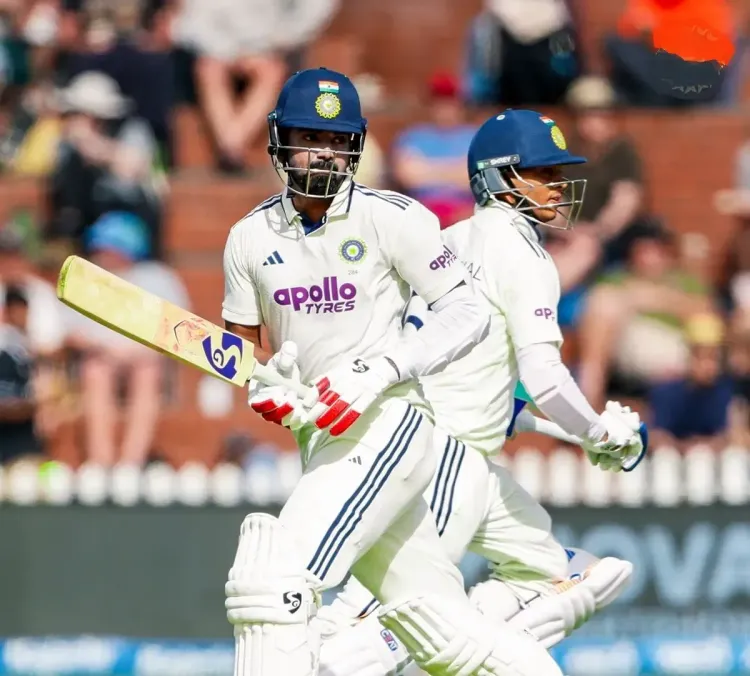
Yashasvi Jaiswal's blistering 85 and KL Rahul's composed unbeaten 52 gave India a 130-run opening stand — the pair's first century partnership in 17 Tests. With nine wickets in hand and the pitch easing, India are firmly in the game despite trailing New Zealand's 368 by 209 runs at stumps on Day Two in Wellington.
Key Takeaways
India ended Day Two at 159/1 in 39 overs , trailing New Zealand 's 368 by 209 runs with nine wickets remaining.
Yashasvi Jaiswal scored a blistering 85 off 89 balls with 16 boundaries before being dismissed by Matt Henry .
KL Rahul remained unbeaten on 52 off 116 balls , bringing up his 22nd Test half-century .
Their 130-run opening partnership was India's first century stand for the opening wicket in 17 Tests , and their second overall, after a 201-run stand in Perth in November 2024 .
Henry Nicholls scored an unbeaten 175 and Glenn Phillips hit 118 for New Zealand, while Jasprit Bumrah took 4-92 and Akash Deep returned 3-53 .
India pacer Akash Deep on Friday praised the aggressive batting approach of openers Yashasvi Jaiswal and KL Rahul, saying their attacking strokeplay in the first innings of the opening Test against New Zealand at the Basin Reserve in Wellington has put the hosts' bowlers firmly under pressure and handed the visitors a commanding platform heading into Day Three.
India's Dominant Reply
Jaiswal blazed 85 off 89 deliveries, striking 16 boundaries, before being dismissed by Matt Henry in the 28th over. Rahul, playing his first Test on New Zealand soil, remained unbeaten on 52 off 116 balls, bringing up his 22nd Test half-century. The duo stitched together a 130-run opening partnership — India's first century stand for the first wicket in 17 Tests — before Devdutt Padikkal joined Rahul and was batting on 16 at the close. India ended the day at 159/1 in 39 overs, still 209 runs behind New Zealand's first-innings total of 368, but with nine wickets remaining.
What Akash Deep Said
Speaking at the post-day press conference, Akash, who claimed 3 wickets for 53 runs in New Zealand's first innings, credited the scoring rate as a tactical statement. 'It is a very positive sign to score runs so quickly. On a wicket like this, if you want a result in a Test match, you have to score quickly, like how we have scored around 150 runs in about 35 to 40 overs (39 overs). This is very positive for our team, and against any opponent, if the batsmen attack like this, the bowlers get pushed onto the back foot,' he said.
The pacer also observed a shift in the surface's character, noting it was becoming increasingly batting-friendly. 'To me, it seems like the wicket is gradually becoming more batting-friendly because fast bowlers are not getting much assistance from it anymore. So it is simple: as we bat, we need to put up a good total, and after that, it becomes a game of patience. Right now, our batting is still underway,' Akash added.
Bowling Comeback After Lunch
Earlier on Day Two, New Zealand had resumed at 243/5, and were powered to 368 largely by an unbeaten 175 from Henry Nicholls. Glenn Phillips contributed a vital 118-run knock before Akash ended his innings. Jasprit Bumrah was India's most potent threat, finishing with figures of 4-92, while Anshul Kamboj took the final wicket.
India's bowlers made a strong post-lunch comeback, dismissing four New Zealand wickets for just 51 runs to restrict the hosts after their strong morning. The discipline in that phase proved critical in keeping the first-innings deficit manageable.
Historical Context and What It Means
The 130-run opening partnership between Jaiswal and Rahul is their second century stand in Tests, with the first being a monumental 201-run effort against Australia in Perth in November 2024. That partnership in Perth helped India win a famous Test, and the pair will be hoping for a similarly decisive outcome in Wellington. Notably, India's ability to score 159 runs in 39 overs at better than four runs per over underscores a conscious shift in approach under the current management — building totals at pace rather than occupying the crease defensively.
With the pitch easing and nine wickets in hand, India are well-placed to push for a first-innings lead or at minimum minimise the deficit before the later stages of the match.
Point of View
So long a question mark, may finally have its answer. The deeper issue is whether India's middle order can convert this platform into a first-innings lead; without it, Bumrah's bowling brilliance could go unrewarded. New Zealand's 368, built substantially on two individual hundreds, suggests India's bowling attack is effective but not yet dominant in these conditions.
NationPress
20 Nov 2026
Frequently Asked Questions
What was India's score at the end of Day Two in the Wellington Test?
India closed Day Two at 159/1 in 39 overs, with KL Rahul unbeaten on 52 and Devdutt Padikkal on 16, trailing New Zealand's first-innings total of 368 by 209 runs with nine wickets in hand.
How did Yashasvi Jaiswal perform in the Wellington Test on Day Two?
Yashasvi Jaiswal scored a quickfire 85 off 89 deliveries, hitting 16 boundaries, before being dismissed by Matt Henry in the 28th over. His knock powered a 130-run opening stand with KL Rahul.
What is the significance of the Jaiswal-Rahul opening partnership?
The 130-run stand between Yashasvi Jaiswal and KL Rahul was India's first century opening partnership in 17 Tests. The same pair had also put on 201 runs together against Australia in Perth in November 2024, another key partnership in a Test India went on to win.
How did India's bowlers perform in New Zealand's first innings?
Jasprit Bumrah was the pick of the bowlers with 4 wickets for 92 runs, while Akash Deep took 3 for 53 and Anshul Kamboj picked up the final wicket. India's post-lunch burst of four wickets for 51 runs helped restrict New Zealand to 368.
What did Akash Deep say about the Wellington pitch and India's batting approach?
Akash Deep said the pitch was gradually becoming more batting-friendly, with fast bowlers getting less assistance. He called India's scoring rate — around 150 runs in 39 overs — a 'very positive sign' and said attacking batting puts opposition bowlers 'on the back foot' in a Test where a result is the goal.