Kishan Reddy slams Congress over Naxal sympathy, cites Chhattisgarh attack
Synopsis
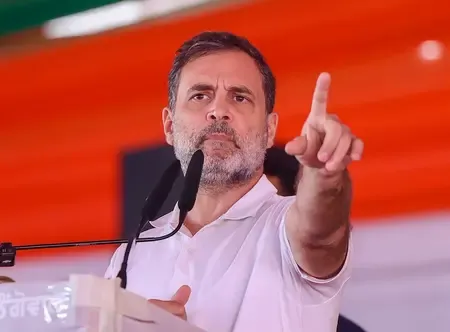
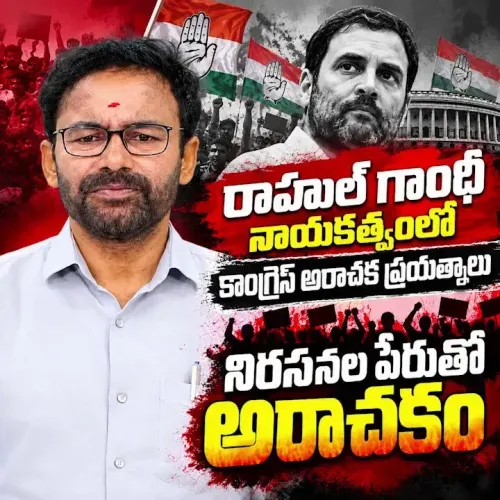
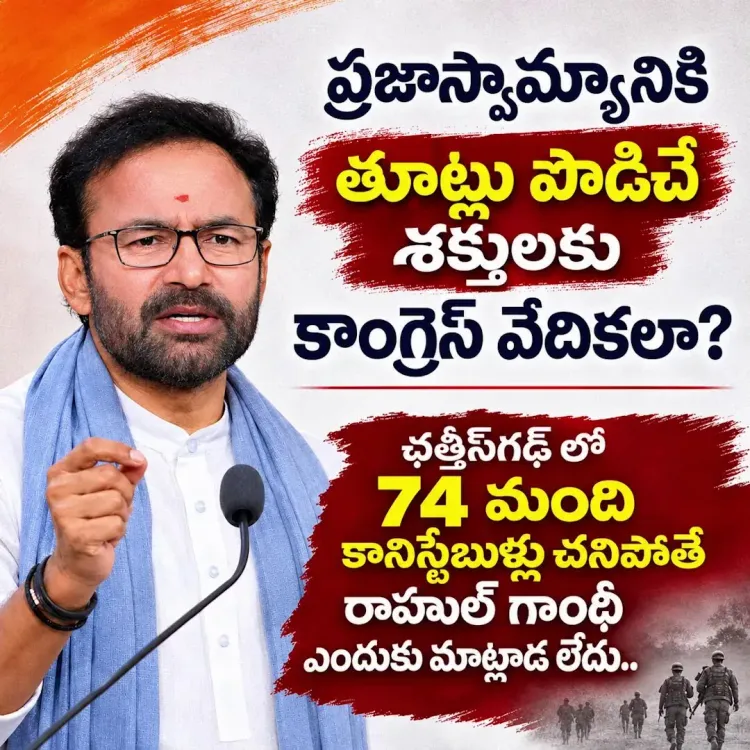
Union Minister G. Kishan Reddy accused Rahul Gandhi of showing 'lip sympathy' to Naxalites and failing to condole 74 constables reportedly killed in Chhattisgarh, calling Congress's stance of providing platforms to anti-national forces 'unfortunate.'
Key Takeaways
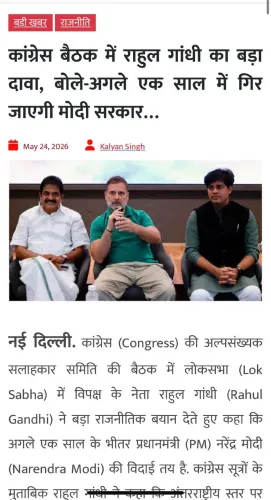
Kishan Reddy posted on X on November 15, 2026 , accusing Rahul Gandhi of not offering condolences after 74 constables were reportedly killed in a Naxalite attack in Chhattisgarh .
Reddy alleged that Congress shows 'lip sympathy' to Naxalites by portraying them as fighters against social injustice.
He accused the party of providing platforms to 'forces that want to fragment the country' and those who seek 'gun-rule.' The BJP has long used the charge of 'soft on Naxalism' against Congress , with the 2010 Dantewada ambush (76 CRPF personnel killed) serving as a historical anchor for this political narrative.
Reddy also serves as BJP's Telangana state president , giving his remarks a regional dimension given Telangana's proximity to Chhattisgarh.
As of publication, Congress had not publicly responded to Reddy's accusations.
When 74 constables are reported killed in a Naxalite attack in Chhattisgarh, the silence from the opposition can itself become a political weapon — and Union Coal and Mines Minister G. Kishan Reddy wielded it sharply on Sunday, November 15, 2026, taking to X to accuse Rahul Gandhi and the Indian National Congress of failing to even offer condolences to the fallen security personnel.
Posting in Telugu, Reddy's charge was direct and layered. He alleged that Gandhi displays 'lip sympathy' — లిప్ సింపతీ — toward Naxalites by framing them as fighters against social injustice, while staying silent when their violence claims lives in uniform. The post stated, in translation: 'When 74 constables were killed at once in a Naxalite attack in Chhattisgarh, Rahul Gandhi could not even offer basic condolences!'
The accusation: platforms for 'forces that want to fragment India'
Reddy did not stop at silence. He accused the Congress party of actively providing platforms to, in his words, 'forces that want to break the country' and 'those who seek gun-rule' — pushing the nation's future into darkness. The language is deliberate and pointed: it conflates political sympathy with structural support for armed insurgency, a framing the BJP has deployed systematically against Congress on internal security for over a decade.
The BJP's broadside against Congress on Naxalism has deep roots. The 2010 Dantewada ambush in Chhattisgarh, in which 76 CRPF personnel were killed in a single strike — one of the deadliest attacks on Indian security forces in the post-Independence era — became the original flashpoint of this political debate. That tragedy, more than a decade and a half old, still anchors BJP rhetoric whenever fresh violence erupts in the Red Corridor.
Congress under fire on the Red Corridor debate
The charge of 'soft on Naxalism' is among the most persistent in BJP's arsenal against Congress. BJP leaders have long argued that the opposition's focus on 'root causes' — poverty, displacement, tribal rights — amounts to providing intellectual cover for Maoist violence rather than demanding accountability for it. Congress, for its part, has historically countered that security-only approaches without addressing socio-economic grievances cannot sustainably pacify the Red Corridor.
Reddy, as BJP's Telangana state president, also carries a regional dimension here — Telangana borders Chhattisgarh and has its own history with Left-wing extremism, giving the attack a geographic resonance beyond national politics.
As of this report, there has been no official response from Congress leadership to Reddy's post. The Ministry of Home Affairs has not issued a statement on the specific incident cited. The deaths of security personnel in anti-Naxal operations remain an ongoing national security concern — and, increasingly, an acute political battleground.
Point of View
The BJP personalises the attack and forces the opposition into a reactive posture. The rhetorical escalation — linking Congress to forces 'seeking gun-rule' and 'fragmenting the nation' — signals that internal security will remain a frontline BJP issue in Telangana and the broader Red Corridor belt heading into any electoral cycle. Congress's credibility on this issue will hinge on how swiftly and substantively its leadership responds.
NationPress
15 Nov 2026
Frequently Asked Questions
What did G. Kishan Reddy say about Rahul Gandhi and the Naxal attack?
Kishan Reddy accused Rahul Gandhi of failing to offer even basic condolences after 74 constables were reportedly killed in a Naxalite attack in Chhattisgarh, and alleged that Congress shows 'lip sympathy' toward Naxalites.
What is the Dantewada ambush that BJP often references in Naxal debates?
The 2010 Dantewada ambush in Chhattisgarh was one of the deadliest attacks on Indian security forces, in which 76 CRPF personnel were killed in a single Naxalite strike. It has since become a recurring reference point in political debates on Naxalism.
What is BJP's long-standing position on Congress and Naxalism?
BJP leaders have long accused Congress of insufficiently robust action against Naxalism and of providing intellectual cover to Maoist violence by focusing on 'root causes' rather than demanding accountability for attacks on security forces.
Who is G. Kishan Reddy?
G. Kishan Reddy is India's Union Minister of Coal and Mines and the BJP's Telangana state president. He is a senior BJP leader known for taking assertive positions on national security and opposition politics.
Has Congress responded to Kishan Reddy's accusation?
As of November 15, 2026, Congress leadership had not publicly responded to Reddy's accusations made on X.