Jammu & Kashmir's Unbelievable Journey to the Ranji Trophy Final
Synopsis
After decades as underdogs, Jammu & Kashmir is set to face Karnataka in the Ranji Trophy final. Their incredible journey, marked by hard work and resilience, has transformed them into serious contenders. This historic moment could redefine their cricketing legacy.
Key Takeaways
Jammu & Kashmir is set to play their first Ranji Trophy final.
They transformed from underdogs to serious contenders through hard work.
Key players include Auqib Nabi and Sunil Kumar .
A victory could inspire future generations in the region.
The match against Karnataka marks a historic moment for J&K cricket.
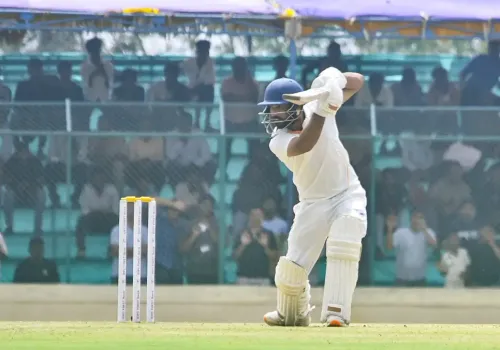
New Delhi, Feb 23 (NationPress) After 67 years since its debut in the Ranji Trophy, Jammu & Kashmir is poised to clinch the title as they face Karnataka in the championship match in Hubbali starting Tuesday. Just a while ago, associating Jammu & Kashmir with a Ranji Trophy final seemed unimaginable.
For years, the J&K team was considered a mere footnote in the realm of Indian domestic cricket — a squad that appeared infrequently, occasionally caused a stir, and then exited. They were often labeled as party poopers, with home matches serving as mere tourism opportunities for visiting teams after securing straightforward victories.
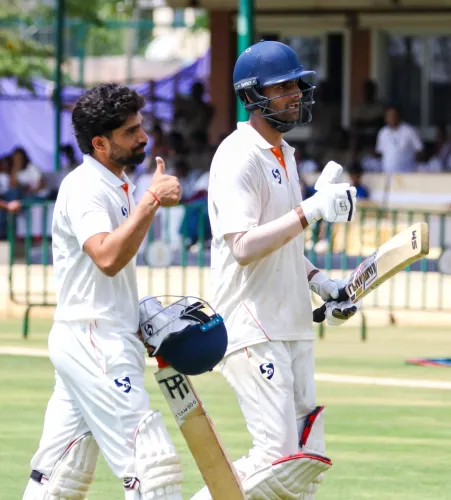
Now, as they gear up for their inaugural Ranji Trophy final, support for J&K's quest for championship success is overwhelming. Their path to this milestone has been arduous; after a painful loss to Mumbai in Srinagar, J&K rebounded by overcoming Rajasthan at home, followed by victories against Delhi in their backyard and Hyderabad.
Draws against Chhattisgarh, Pondicherry, and Himachal Pradesh positioned J&K as the second-best team in Elite Group D with 24 points. When the knockout stage commenced, J&K stepped up their game, defeating Madhya Pradesh in Indore and Bengal in Kalyani. Now, J&K has become a team that plays without fear.
"The atmosphere is extremely confident, and the boys are savoring the moment because it’s monumental for us. In the last two matches, I've observed that even while facing prominent players, they remain unfazed, stating, 'We'll meet them on the field,’" shared bowling coach P. Krishnakumar with IANS from Hubbali.
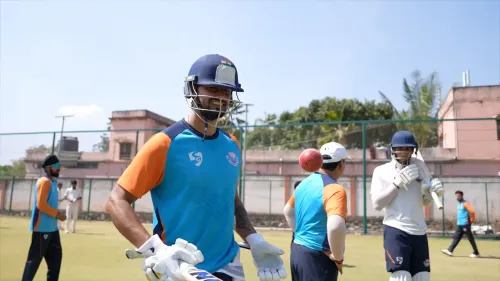
The journey of J&K to the Ranji Trophy final didn't happen overnight. It spanned five years, marked by disappointment from a near miss in the quarter-finals last season, a revamped administration, a meticulously chosen coaching staff, and a group of young athletes from the valleys and plains of J&K determined to excel.
"Achieving this is no small feat for a team that once was invisible in Indian cricket but has now emerged as one of the nation’s formidable teams, particularly in bowling, as we currently boast the top bowling unit in the country. As a bowling coach, I take great pride in how the players have responded. I consider myself a resource for them — they leverage our knowledge and experience to grow and improve," Krishnakumar added.
Upon joining the J&K team, one of Krishnakumar's initial steps involved understanding the people, their culture, history, and temperament. "This insight was crucial for me to grasp the nature of the Jammu and Kashmiri people. It provided me an advantage, knowing that Kashmiris are generally more reserved and prefer to stay in the background due to their hardships, while the people from Jammu are more open-minded and adaptable, having traveled extensively to play across the country. This understanding significantly influenced my training plans," he noted.
"For the Kashmiris, I needed to instill motivation and help them realize their own potential. Consequently, a bond of trust developed between the players and myself, which is a vital aspect of our success," he explained.
The results of this trust-building are evident in the statistics. Since Krishnakumar's arrival, J&K has transformed into an exceptional bowling unit, with pacer Auqib Nabi leading the way with 55 wickets and securing an IPL contract worth Rs 8.4 crore with Delhi Capitals. His partner, left-arm pacer Sunil Kumar, has taken 29 wickets, while left-arm spinner Abid Mushtaq has claimed 20.
A significant factor behind J&K’s resurgence has been the dissolution of the inferiority complex — the debilitating belief that certain opponents were simply too strong. "Cricket is a battle of skills. If you're bowling to Sachin Tendulkar and your skills don't match his, he will undoubtedly prevail.
"As a bowling coach, my focus has been on enhancing their skills to compete against top batters. When facing weaker batsmen, they dominate, indicating that their skill levels have improved immensely.
"Now that their skills align with the country's top players, they are capable of dismissing them and performing well against strong teams. Consequently, their inferiority complex diminishes, and it can only be resolved on the field," Krishnakumar elaborated.
This transformation has instilled immense self-belief within the J&K squad. "This mindset cannot be attained through reading or theory alone. While helpful, real progress comes from practical experiences that help eliminate fear and self-doubt.
"As a result, J&K is now defeating the best teams in the nation, fostering a belief among the players that 'Yes, we can do this.' This is the core of our coaching philosophy — I concentrated on refining the bowlers’ skills, making it easier for them to compete against elite players," Krishnakumar stated.
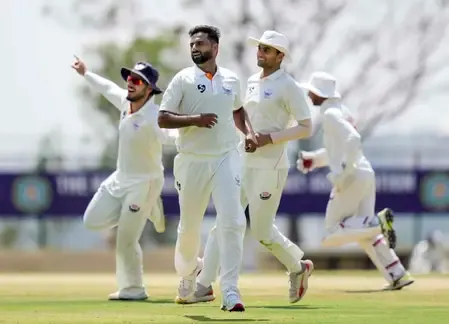
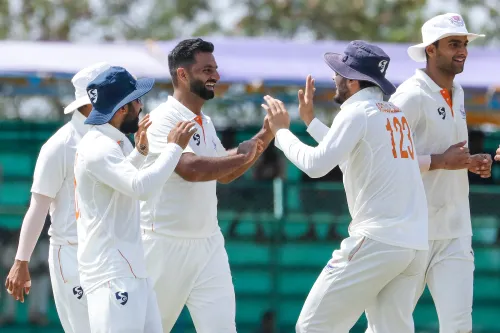
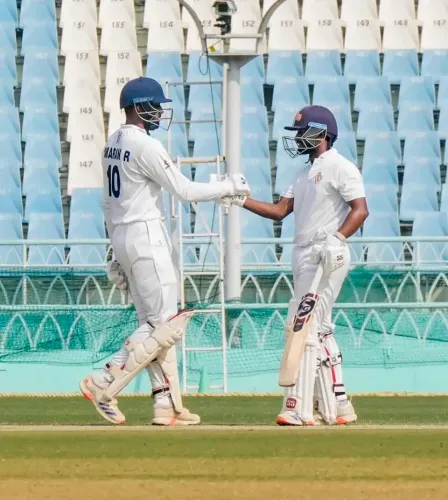
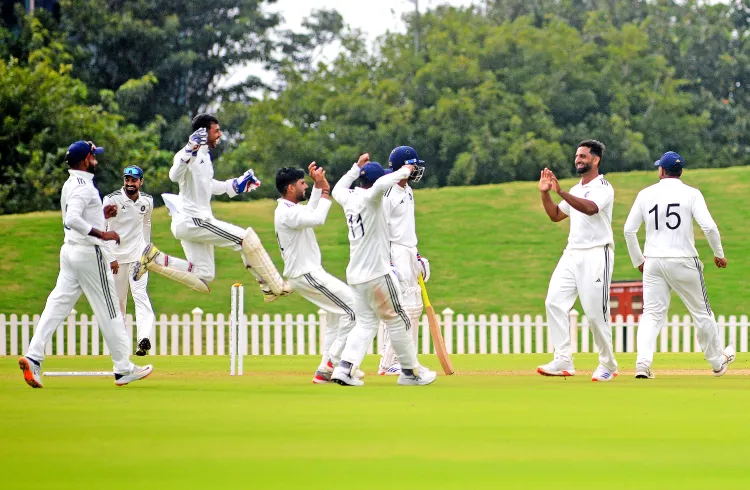
His coaching approach is grounded in simplicity, which was clearly illustrated in the semi-final triumph over Bengal, where Paras Dogra's J&K bowled them out for a mere 99 runs in the second innings — with Auqib and Sunil Kumar claiming four wickets each — leading to a victory that brought immense joy to their supporters.
"When we finished bowling, almost three days remained in the match, a span of nearly 270 overs. We provided them with a straightforward strategy: bowl in the right areas. I was confident that my bowlers, with their skills, would secure wickets if they executed this correctly.
"By divine intervention, we managed to bowl them out for 99, which is a rarity for a team like Bengal. At that moment, luck favored us, and the bowlers excelled in their execution, utilizing their ability to swing the ball effectively. Our directive was simple: just bowl accurately, and that was all," he explained.
Krishnakumar's understanding of the J&K culture has also influenced his communication with the bowlers. "In Jammu and Kashmir, most players are heavily involved in sports rather than academics. Therefore, as a coach, it’s imperative to consider their educational backgrounds, which is crucial.
"That’s why for the past three years, I have provided them with very straightforward plans and instructions. I clearly outline what is expected, which eliminates confusion and ensures that they understand their objectives," he noted.
"The progress they have made over three years is remarkable. Players like Auqib and Yudhvir, and even Sunil, have shown tremendous growth through hard work. I conduct specialized skills sessions with them, which have significantly contributed to their impressive performances. While Nabi is calm, Yudhvir is more aggressive, and Sunil maintains a composed demeanor," he explained.
The groundwork for J&K's rise was laid prior to Krishnakumar's tenure, with special acknowledgment given to Mithun Manhas, the former batter who played for both Delhi and J&K and was part of the state’s sub-committee before assuming the role of BCCI President last year.
"I credit Mithun Manhas first and foremost. He has been pivotal in establishing the entire structure in Jammu & Kashmir cricket, ensuring everything is organized. I also commend Brigadier (Anil Gupta, Retired) for overseeing the administrative aspects, implementing systems like email communication and proper squad formation.
"These may seem like minor details, but they are crucial. I attribute much of our success to both of them. Mithun deserves special mention for his focus on cricket, empowering us to choose the right personnel for each role. He brought in the right coaches, like Ajay Sharma as head coach, myself, and fielding coach Dishant Yagnik," Krishnakumar added.
He also highlighted the contributions of Yagnik and Sharma in fostering a sense of unity within the J&K setup. "I must acknowledge Dishant Yagnik's efforts, as his role may not be very visible from the outside, but it has been instrumental in the team’s development.
"His excellent fielding has elevated our bowling performance because winning matches becomes difficult without effective catching. Ajay bhai has also provided us the freedom to operate in our own way, allowing us to pursue our strategies without hindrance.
"As the head of this family, he has done a commendable job. However, I would certainly attribute a significant part of our success to Mithun Manhas for his vision and the groundwork he laid within the Jammu and Kashmir cricket system," he concluded.
As the season commenced, the coaching staff emphasized one key directive to the players: to focus on one match at a time. Krishnakumar asserts that this has remained a guiding principle throughout their journey.
"The emotions from the semi-final victory are still fresh. At the season's start, we instructed the boys to concentrate on one match at a time. Even if we win the final, the same mindset should persist, as we must start anew next season. The semi-final win was a deeply emotional milestone in our journey, but we have returned to normalcy and are ready to put up a strong fight against Karnataka to bring home the trophy," he stated.
Krishnakumar finds it challenging to articulate the significance of winning the Ranji Trophy for the players, the state, and countless young viewers. However, he made an attempt to convey its potential impact.
"Words fail to capture the magic that a victory would bring to Jammu and Kashmir. This triumph would not only resonate in cricket but across all sports, inspiring millions in India. A win for Jammu and Kashmir would create a wave of enthusiasm throughout the state, motivating many youngsters to aspire to represent Jammu and Kashmir.
"They would dream of joining the team one day, which is vital, as cricket is immensely popular in India. Witnessing such success would bolster their confidence and encourage dreams of playing for the state. I believe this could transform the entire culture of Jammu and Kashmir, and I genuinely hope this happens on February 28. I have a strong feeling that the trophy will be ours this year," he expressed.
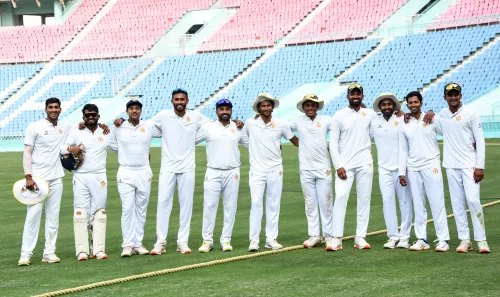
As they prepare for the final in Hubballi, there is a quiet determination within the J&K camp. From being underestimated to overcoming giants, their resurgence is founded on unity, effort, and an unwavering resolve to succeed.
While Karnataka seeks to reclaim their title after a decade, J&K is on the verge of achieving something unprecedented in their 67-year history of first-class cricket. Regardless of the outcome, one thing is clear: J&K has transitioned from hopeful outsiders to rightful contenders among the elite.
Point of View
It's evident that Jammu & Kashmir's rise in cricket symbolizes resilience and determination. Their journey reflects the potential for growth and excellence in sports, showcasing how hard work and strategic planning can turn dreams into reality.
NationPress
23 Sept 2026
Frequently Asked Questions
How did Jammu & Kashmir reach the Ranji Trophy final?
Jammu & Kashmir's remarkable journey to the Ranji Trophy final involved overcoming significant challenges, including a series of victories against strong teams and building a cohesive team dynamic under the guidance of coach P. Krishnakumar.
What impact could winning the Ranji Trophy have on Jammu & Kashmir?
Victory in the Ranji Trophy would inspire a generation in Jammu & Kashmir, fostering dreams of sporting excellence and potentially transforming the region's cricketing culture.
Who are the key players for Jammu & Kashmir in the final?
Key players include Auqib Nabi, the leading wicket-taker, and Sunil Kumar, both pivotal to J&K's success in the tournament.
What challenges did J&K face in their cricketing journey?
J&K faced numerous challenges, including administrative hurdles and overcoming a historical inferiority complex, which they successfully dismantled through hard work and determination.
When is the Ranji Trophy final scheduled?
The Ranji Trophy final is scheduled to start on February 28 in Hubballi.