Lalit Modi backs state T20 leagues but warns of corruption risk
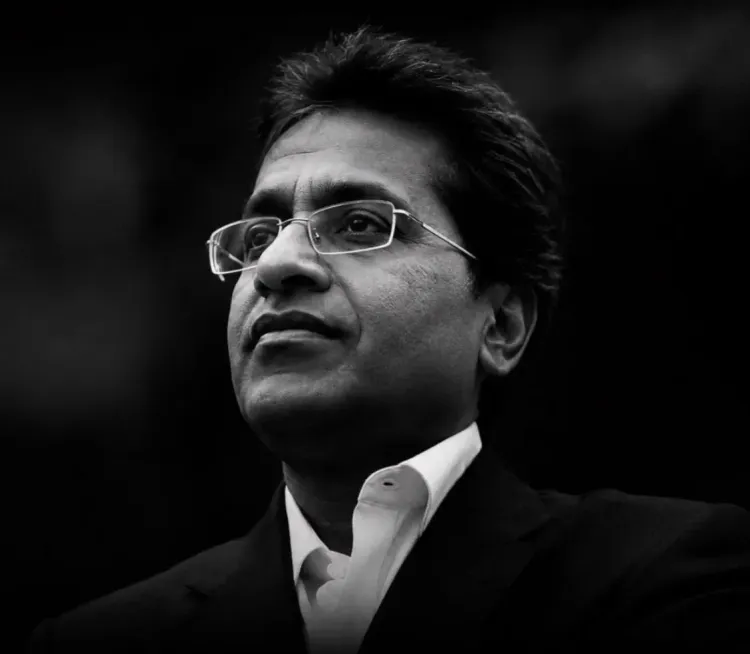
Synopsis
IPL architect Lalit Modi has praised India's state T20 leagues as a genuine talent pipeline — then immediately flagged them as corruption flashpoints. His pointed call-out of UPCA and Rajiv Shukla signals that his concerns go well beyond general advice: this is a direct challenge to cricket's state-level power brokers.
Key Takeaways
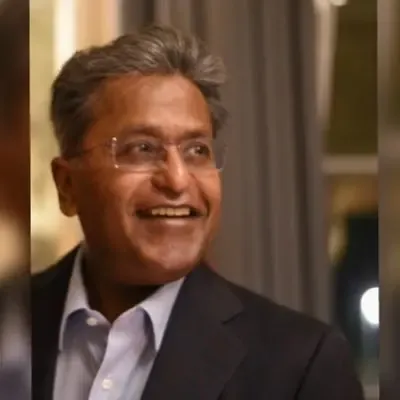
Lalit Modi , founder of the IPL , called state T20 leagues a 'positive development for Indian cricket' on 1 September .
He warned that smaller leagues are vulnerable to bookmakers, match-fixing, spot-fixing , and player manipulation without safeguards from day one.
Modi demanded independent governance , transparent contracts, independent audits, and active monitoring of suspicious betting patterns for every state league.
He specifically cited UPCA and named Rajiv Shukla , calling for allegations about governance and transparency to be 'independently examined and answered transparently.' Modi cautioned that 'expansion without governance can very quickly become a liability' for Indian cricket.
Lalit Modi, founder of the Indian Premier League (IPL), has described the proliferation of state-level T20 leagues across India as a 'positive development for Indian cricket', while stressing that 'very close monitoring' by state cricket associations is essential to shield these competitions from corrupt influences. Modi shared his views on 1 September from New Delhi, as the state T20 circuit continues to expand rapidly in the IPL's wake.
State Leagues as a Talent Pathway
Modi acknowledged that the boom in state T20 competitions has opened new doors for a generation of cricketers who might otherwise have gone unnoticed. 'I think state leagues are a positive development for Indian cricket. This was bound to happen as the IPL ecosystem grew, and if properly structured, these leagues can become an excellent pathway for young and undiscovered talent to perform under pressure, get noticed and potentially graduate to the IPL and higher levels,' he said.
Several players have already leveraged these platforms to attract the attention of state associations and IPL franchises, reinforcing the argument that the domestic T20 ecosystem is functioning as an effective feeder system.
Integrity: Modi's Biggest Concern
Despite his optimism, Modi was candid about the risks that accompany rapid growth. 'However, with the rapid growth of these leagues comes a serious responsibility. They must be professionally executed and very closely monitored by the respective state associations, with strong independent governance. My biggest concern would always be integrity,' he said.
The 62-year-old IPL founder warned that smaller leagues are structurally more exposed to criminal approaches than established competitions. 'Smaller leagues can become particularly vulnerable to approaches from bookmakers, match-fixing, spot-fixing, player manipulation, conflicts of interest, questionable ownership or financial interests and other corrupt practices if adequate safeguards are not established from day one,' he cautioned.
Modi outlined a framework he believes every state league must adopt: robust anti-corruption protocols, player education, strict control over access to players and dressing rooms, proper scrutiny of owners and officials, transparent contracts and payments, independent audits, and active monitoring of suspicious betting patterns.
Governance of State Associations Under Scrutiny
Modi extended his critique beyond the leagues themselves to the state cricket bodies that oversee them, arguing that a league cannot be clean if its governing institution is not. He cited the Uttar Pradesh Cricket Association (UPCA) as a specific example.
'UPCA is an example where, over the years, allegations and controversies concerning governance, transparency, conflicts and the influence exercised by powerful administrators have repeatedly been raised publicly. Rajiv Shukla has been a prominent figure associated with UPCA and Indian cricket administration. Rather than allowing such questions to linger, they should be independently examined and answered transparently,' he said.
Modi called on every state association to resist the concentration of power in a few hands. 'Do not allow cricket administration to become a private club controlled by a handful of individuals,' he said, stressing the need for regulatory oversight, conflict-of-interest disclosures, independent financial audits, and genuine accountability for administrators.
The IPL Blueprint and What Comes Next
Drawing on his own experience building the IPL, Modi argued that commercial success and institutional integrity must scale together. 'The IPL demonstrated the enormous value that can be created when opportunity, talent and commercialisation come together. The next generation of leagues must make sure that integrity grows just as quickly as the money does. Protecting the integrity of the game must come before everything else,' he said.
Modi also shared a post on Instagram reflecting on the IPL's enduring legacy: 'I built the IPL so it would never need me. Nearly two decades later, it keeps breaking records. That's not success. That's institution building,' he wrote. His broader message was clear: expansion without governance, he warned, 'can very quickly become a liability.' Whether state associations heed that warning will determine whether India's domestic T20 boom becomes a lasting structural asset or a corruption risk in waiting.
Point of View
He is applying public pressure on a governance structure that the Board of Control for Cricket in India (BCCI) has historically been reluctant to scrutinise. The irony is not lost: the man who built the IPL — a league that itself faced governance and conflict-of-interest controversies — is now positioning himself as the conscience of domestic cricket. That said, his structural prescriptions are sound. The proliferation of state leagues without a uniform anti-corruption framework is a genuine regulatory gap, and the BCCI's Anti-Corruption Unit cannot realistically police dozens of simultaneous tournaments. If no one acts on Modi's specific concerns, the question is not whether a scandal will emerge from a state league — it is when.
NationPress
16 Oct 2026
Frequently Asked Questions
What did Lalit Modi say about state T20 leagues in India?
Lalit Modi said state T20 leagues are a 'positive development for Indian cricket' that can serve as a talent pathway to the IPL, but stressed that 'very close monitoring' by state associations with independent governance is essential to prevent corruption. He made these remarks on 1 September.
Why is Lalit Modi concerned about corruption in state T20 leagues?
Modi warned that smaller leagues are structurally more vulnerable to bookmakers, match-fixing, spot-fixing, player manipulation, and questionable ownership than established competitions. He argued that adequate safeguards must be established from day one, before corrupt approaches can take hold.
What governance measures did Lalit Modi recommend for state leagues?
Modi called for robust anti-corruption protocols, player education, strict dressing-room access controls, proper scrutiny of owners and officials, transparent contracts and payments, independent financial audits, and active monitoring of suspicious betting patterns across all state leagues.
Why did Lalit Modi mention UPCA and Rajiv Shukla?
Modi cited the Uttar Pradesh Cricket Association (UPCA) as an example of a state body where allegations concerning governance, transparency, conflicts, and administrator influence have repeatedly been raised publicly. He named Rajiv Shukla as a prominent figure linked to UPCA and called for the questions to be independently examined and answered transparently.
What is Lalit Modi's broader message about the IPL and institution building?
Modi argued that the IPL's enduring success — 'nearly two decades later, it keeps breaking records' — is a product of institution building rather than individual control. He urged state leagues to ensure integrity scales as fast as commercial growth, warning that 'expansion without governance can very quickly become a liability.'