Mandaviya pushes integrated sports ecosystem, 13 universities urged to build niche expertise
Synopsis
India's Sports Minister wants the country's 13 Sports Universities to stop working in isolation and start operating as a networked national ecosystem — with each institution owning a distinct niche in coaching, sports science, sports law or sports tourism. It is a structural rethink of how India builds sporting depth, beyond medals alone.
Key Takeaways
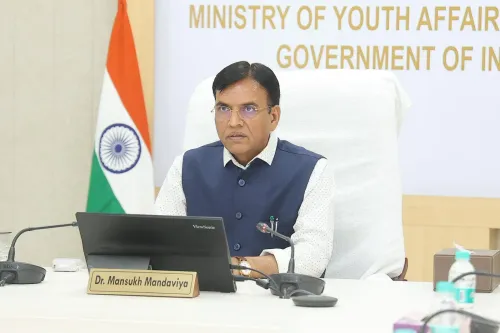
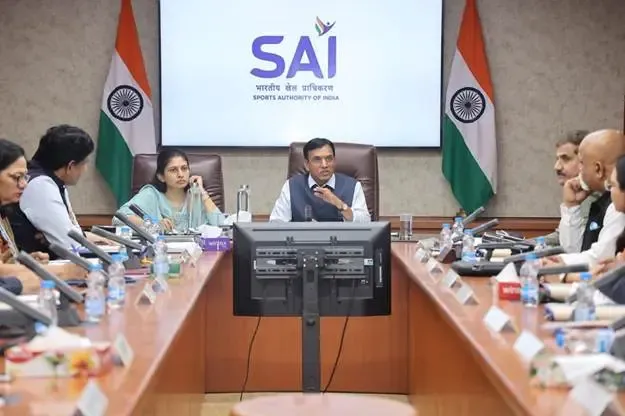
Mansukh Mandaviya chaired a meeting with representatives of 13 Sports Universities in New Delhi on 18 November 2026 .
He called for each university to develop specialised expertise in areas such as a specific sport, coaching , sports science , or research .
Mandaviya urged an end to siloed functioning, pushing for coach exchanges, knowledge sharing, and resource pooling across institutions.
Emerging fields — sports law , sports science , and sports tourism — were highlighted as priority areas for professional development.
Minister of State Raksha Khadse and Sports Secretary Hari Ranjan Rao also attended; working-group consultations are expected to follow.
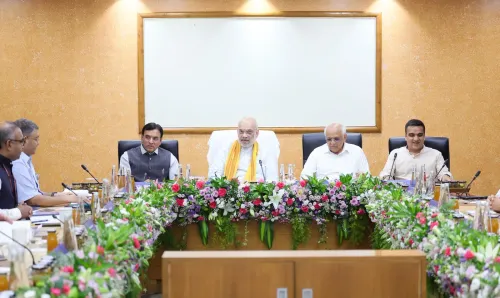
Union Sports Minister Dr. Mansukh Mandaviya on Wednesday, 18 November 2026, convened a meeting with representatives of 13 Sports Universities in New Delhi, calling for structured collaboration to transform these institutions into the backbone of a national sports ecosystem. Mandaviya stressed that the country's sporting ambitions could only be realised if universities moved beyond isolated functioning and pooled their knowledge, infrastructure, and human resources.
Vision for Sports Universities
Chairing the gathering, Mandaviya articulated a wide-ranging vision for what India's Sports Universities should become. 'Our vision is to make Sports Universities the hub of the entire sports ecosystem, where athletes, coaches, training, research, competitions, and world-class infrastructure are all developed together,' he said.
He called on each institution to carve out a distinct identity — building recognised depth in a specific sport, coaching methodology, sports science, or research domain — rather than attempting to cover all areas with equal breadth. 'Every university needs to develop its own specific expertise — whether in a particular sport, coaching, sports science, or research. This will benefit the entire nation,' Mandaviya added.
Collaboration Over Silos
Specialisation, the Minister underlined, was not meant to fragment the system but to strengthen it through deliberate exchange. He encouraged institutions to share their capabilities via coach exchanges, joint knowledge-sharing programmes, and the pooling of physical and academic resources. 'We will no longer work in silos. By integrating our efforts, resources, and expertise, we will build a strong, collaborative national sports ecosystem,' he stated.
This push for collaboration comes against the backdrop of India's growing investment in elite sport, with the government scaling up infrastructure spending ahead of future Olympic cycles. Notably, India's medal count at successive Games has edged upward, yet the country's depth in coaching and sports science remains a widely acknowledged gap.
Emerging Sectors: Sports Law, Science and Tourism
Mandaviya broadened the mandate beyond athlete performance, pressing universities to develop skilled professionals in emerging fields that underpin modern sports industries. He specifically cited sports science, sports law, and sports tourism as priority areas where India needs stronger institutional capacity. 'Universities must focus on developing specialised expertise in emerging sectors such as Sports Science, Sports Law, and Sports Tourism, to develop skilled professionals and strong institutional capabilities in these fields across India,' he said.
He further called on institutions to build competence in sports management and administration, arguing that a robust professional support base is as essential to the sector's growth as the athletes themselves. 'Sports Universities must not limit themselves to just athletes, but also develop sports professionals who can contribute to sports management, administration, and the overall sports ecosystem,' Mandaviya added.
Who Attended the Meeting
Minister of State for Youth Affairs and Sports Raksha Khadse, Sports Secretary Hari Ranjan Rao, and vice-chancellors and representatives of all 13 Sports Universities were present at the New Delhi meeting. The broad representation signals that the government intends the framework discussed to have immediate institutional uptake across all participating bodies.
What Comes Next
Mandaviya said the overarching goal was to position Indian Sports Universities among leading global institutions through stronger academic, research, and training capabilities. While no specific timelines or funding allocations were announced at this stage, the meeting is expected to be followed by working-group consultations to define each university's area of specialisation and lay out a shared resource-sharing protocol.
Point of View
But the proof will be in implementation. The specialisation-plus-collaboration model Mandaviya described is theoretically sound — it mirrors how high-performance nations like Australia and Germany structure their sports education networks. What is missing so far is a binding framework: no timelines, no funding commitments, and no accountability mechanism for which university owns which domain. Without those levers, the meeting risks being remembered as a vision statement rather than a turning point. India's coaching and sports science deficit is well-documented; the question is whether this government is prepared to institutionalise the solution or simply re-articulate the problem.
NationPress
18 Nov 2026
Frequently Asked Questions
What did Sports Minister Mandaviya announce at the 13 Sports Universities meeting?
Dr. Mansukh Mandaviya called for greater collaboration among India's 13 Sports Universities, urging each institution to develop niche expertise in specific sports, coaching, sports science, or research. He also stressed the need to train professionals in emerging areas such as sports law, sports science, and sports tourism rather than limiting focus to athlete performance.
Why does India need an integrated sports university ecosystem?
India's coaching depth, sports science capacity, and sports management infrastructure are widely seen as lagging behind its Olympic ambitions. An integrated network of specialised universities is intended to close that gap by pooling resources and avoiding duplication of effort across institutions.
Which new sectors did Mandaviya highlight for Sports Universities?
Mandaviya specifically named sports science, sports law, and sports tourism as priority areas where universities should build institutional capability and train skilled professionals to support the broader sports industry.
Who attended the Sports Universities meeting in New Delhi?
The meeting was attended by Minister of State for Youth Affairs and Sports Raksha Khadse, Sports Secretary Hari Ranjan Rao, and vice-chancellors and representatives of all 13 Sports Universities. It was chaired by Union Sports Minister Dr. Mansukh Mandaviya.
What are the next steps after the Sports Universities meeting?
No specific funding allocations or timelines were announced at the meeting. However, working-group consultations are expected to follow to define each university's area of specialisation and establish a shared resource-sharing and coach-exchange protocol.