What Did Mansukh Mandaviya Unveil for Indian Sports?
Synopsis
Union Minister Mansukh Mandaviya laid the groundwork for six sports infrastructure projects and inaugurated two new athlete support facilities, aiming to revolutionize India's sports landscape with a ₹120 crore investment. These initiatives reflect a broader commitment to enhance the nation's sporting ecosystem and nurture future talent.
Key Takeaways
The government announced an investment of ₹120 crore for sports infrastructure.
Six projects are under the Khelo India Scheme.
Facilities aim to enhance athlete support and training.
Focus on equitable development across regions.
Long-term vision to position India among top sporting nations.
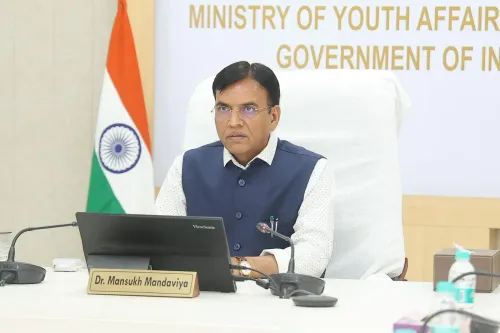
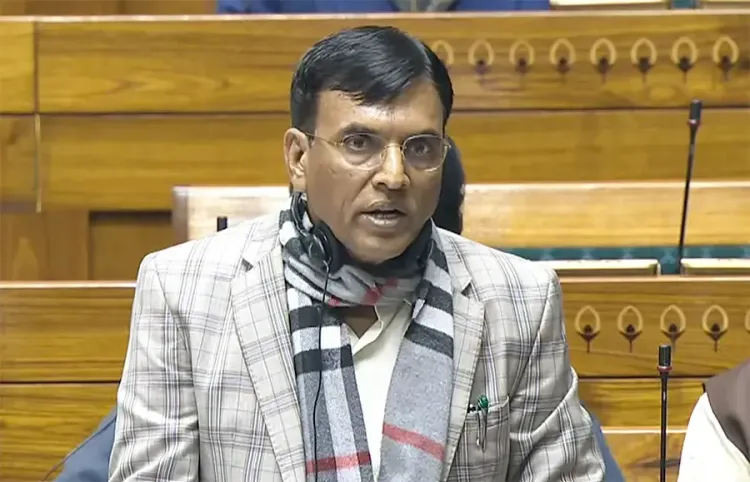
New Delhi, Feb 3 (NationPress) On Tuesday, Union Minister for Youth Affairs and Sports Mansukh Mandaviya conducted a virtual ceremony to lay the foundation stones for six significant sports infrastructure projects and inaugurated two facilities designed to support athletes, with a total investment amounting to ₹120 crore.
The goal of these initiatives is to enhance India’s sports framework and highlight the Union Government’s commitment to developing modern, athlete-focused infrastructure throughout the country.
The six projects, carrying a budget of ₹82 crore, are being executed under the Khelo India Scheme with additional backing from the Sports Authority of India (SAI). Spanning various regions, including eastern and northeastern India, these projects aim to promote equitable and inclusive growth of sports infrastructure.
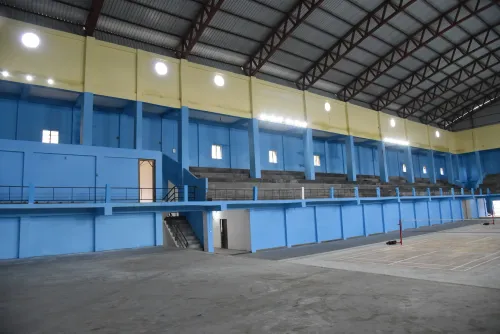
The projects include upgrading a synthetic hockey turf in Bengaluru, constructing a multipurpose hall in Patiala, installing synthetic athletic tracks in Bhopal, Guwahati, and Jalpaiguri, and building a multipurpose judo hall in Bhopal.
In addition to laying the foundation, Mandaviya inaugurated two completed athlete support facilities at the Netaji Subhas National Institute of Sports (NS NIS) in Patiala, which cost ₹38 crore. These facilities include a centralized kitchen and a food court-cum-dining hall aimed at enhancing athlete nutrition services, along with an Integrated Sports Science Centre and Conditioning Hall. This last facility is expected to greatly improve training science, performance analysis, rehabilitation, and recovery support for elite athletes.
Emphasizing the importance of stakeholders and the role of SAI in managing sports assets, the minister remarked, “Numerous sports infrastructure initiatives are being undertaken nationwide, but the facilities managed by SAI are directly our responsibility. These assets need to be properly maintained, utilized to their fullest potential, and, wherever feasible, commercially leveraged to ensure that public investment yields long-term value.”
Mandaviya also highlighted the necessity of accountability and timely execution, indicating that the projects would undergo stringent monitoring. He stated that SAI would carry out monthly evaluations, while he would personally oversee quarterly reviews to guarantee swift implementation and optimal use of the infrastructure.
In the context of the broader sports policy, the minister mentioned the announcement by the Union Finance Minister regarding the Khelo India Mission, which outlines critical measures to enhance the sports ecosystem in the country, including infrastructure development.
“We must collaborate to achieve Hon’ble Prime Minister Narendra Modi’s vision of placing India among the top 10 sporting nations by 2036, and among the top five as we celebrate a century of independence,” Mandaviya expressed.
He further pointed out that ₹500 crore has been allocated for sports goods manufacturing to bolster domestic production and foster the growth of a self-reliant and globally competitive sports ecosystem.
Highlighting the evolving nature of Indian sports, the minister stated, “Today, sports is a profession, and therefore, talent identification and nurturing must be enhanced. The government needs to proactively create opportunities and systems that facilitate young talent’s journey from grassroots to elite levels.”
Mandaviya concluded that sustained investment in sports infrastructure should inspire athletes nationwide, reinforcing India’s high-performance ecosystem and contributing to the country’s long-term sporting aspirations.
Point of View
It's crucial to highlight the government's proactive approach in enhancing sports infrastructure. The initiatives led by Minister Mandaviya are not just about building facilities; they signify a commitment to nurturing talent and making sports a viable career option in India. This aligns with national aspirations to achieve global recognition in sports.
NationPress
22 Sept 2026
Frequently Asked Questions
What is the total investment for these sports projects?
The total investment for the six sports infrastructure projects and two athlete support facilities is ₹120 crore.
How many sports infrastructure projects were launched?
Six major sports infrastructure projects were launched.
Where are the new facilities located?
The facilities are spread across various regions including Bengaluru, Patiala, Bhopal, Guwahati, and Jalpaiguri.
What is the Khelo India Scheme?
The Khelo India Scheme is a government initiative aimed at enhancing sports infrastructure and promoting sports culture in the country.
What are the key features of the newly inaugurated facilities?
The facilities include a centralized kitchen, food court, Integrated Sports Science Centre, and Conditioning Hall to support athletes.