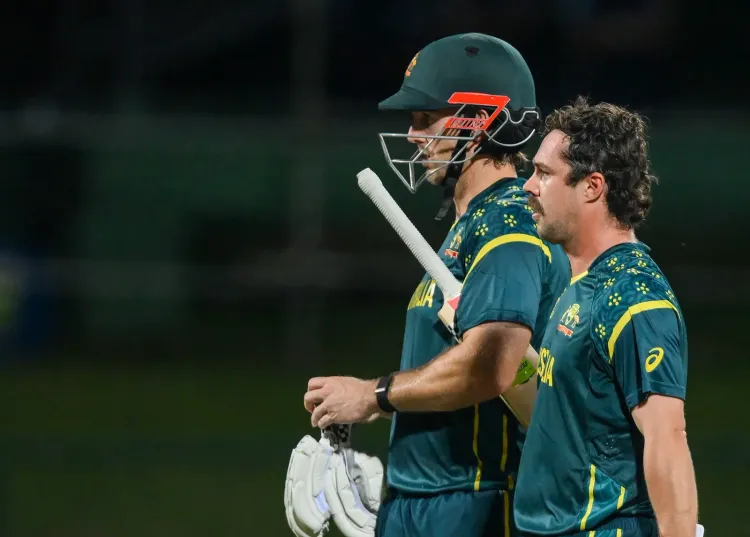
Marsh, Head, Sangha out injured as Australia name squads for Bangladesh tour
Synopsis
Australia arrive in Bangladesh without their ODI captain, first-choice opener, and a key spinner — all sidelined by injury or personal leave. With Inglis stepping up and teenagers like Peake getting a proper run, this tour doubles as a depth audit before a gruelling Test calendar kicks in.
Key Takeaways
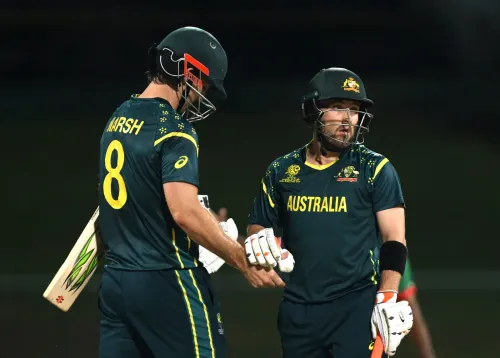
Mitchell Marsh is ruled out of the ODI series due to an ankle injury but will join the squad in Dhaka for the T20Is, where he retains the captaincy.
Travis Head has been granted personal leave and will miss both the ODI and T20I legs of the Bangladesh tour.
Tanveer Sangha is out after sustaining a hamstring injury during Australia’s tour of Pakistan.
Josh Inglis will captain Australia in the three ODIs , all at Sher-e-Bangla National Stadium, Dhaka on 9, 11, and 14 June .
Todd Murphy , Ollie Peake , and Matt Short replace the absentees in the ODI squad; Riley Meredith returns for the T20Is.
The T20I series runs on 17, 19, and 21 June in Chattogram .
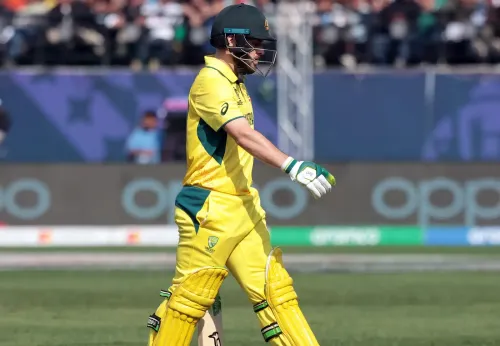
Australia will travel to Bangladesh for a six-match white-ball series without three key players — captain Mitchell Marsh, opener Travis Head, and leg-spinner Tanveer Sangha — after injuries and personal commitments forced late squad changes ahead of the ODI and T20I series. The reigning ODI world champions confirmed the revised squads on 8 June, with Josh Inglis set to lead the side in the 50-over matches.
Why the Big Names Are Missing
Mitchell Marsh has been ruled out of the three-match ODI series as he continues recovering from an ankle injury. He is, however, expected to join the squad in Dhaka ahead of the T20I leg, where he will resume captaincy duties. Travis Head has been granted personal leave and will miss the entire Bangladesh tour — both the ODI and T20I assignments. Tanveer Sangha sustained a hamstring injury during Australia's recent tour of Pakistan and has been ruled out as a result.
National selector Tony Dodemaide confirmed that management had hoped Marsh would recover in time for the ODIs but chose not to rush him back. “We were hopeful Mitch Marsh would be available for the Bangladesh ODI series however he is still returning to full fitness from an ankle injury. Mitch will join the group in Dhaka and begin preparations for the T20I Series,” Dodemaide said. On Head, he added: “Travis was initially selected in the ODI and T20I legs of this Bangladesh tour but has subsequently been granted personal leave for both. We look forward to seeing him again for the top end Test Series against Bangladesh.”
Replacements and New Opportunities
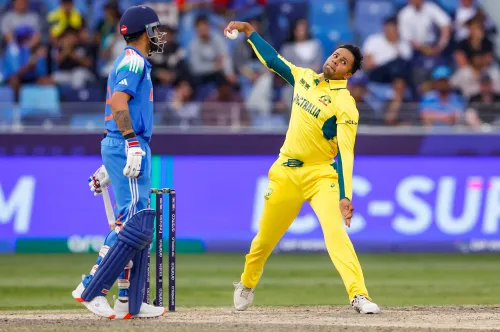
Selectors have drafted off-spinner Todd Murphy into the ODI squad while retaining Ollie Peake and Matt Short — the trio effectively covering the slots vacated by Marsh, Head, and Sangha. Murphy, a Victorian, has previously represented Australia in Test cricket but is yet to feature in ODIs or T20Is, making this a potential white-ball debut opportunity.
Ollie Peake, just 19 years old, made his international debut during the Pakistan tour and is considered one of Australia’s most promising young batting talents. Short also retained his place after a strong all-round showing against Pakistan. On the pace front, Xavier Bartlett and Ben Dwarshuis have been added to the ODI squad, while Riley Meredith is expected to return for the T20I series after missing the 50-over fixtures.
Inglis to Lead in ODIs
Josh Inglis will continue as ODI captain, a role he took on during Australia’s one-day campaign in Pakistan. The wicketkeeper-batter will oversee a squad blending established internationals with emerging talent — a deliberate approach by selectors as Australia look to build depth ahead of a demanding calendar.
Bigger Picture: Squad Depth in Focus
Despite the high-profile absences, Australia are treating the Bangladesh tour as a meaningful squad-building exercise. The side faces major Test assignments against Bangladesh, South Africa, and New Zealand later in the year, and selectors appear keen to blood new options under competitive conditions. This is the second consecutive series in which Marsh has been unavailable due to injury, raising questions about workload management heading into a packed schedule.
Full Schedule and Squads
All three ODIs — on 9 June, 11 June, and 14 June — will be played at the Sher-e-Bangla National Stadium in Dhaka. The T20I leg follows, with matches on 17 June, 19 June, and 21 June at the Bir Sreshtho Flight Lieutenant Matiur Rahman Stadium in Chattogram.
ODI squad: Josh Inglis (c), Xavier Bartlett, Alex Carey, Cooper Connolly, Ben Dwarshuis, Nathan Ellis, Cameron Green, Matthew Kuhnemann, Marnus Labuschagne, Todd Murphy, Oliver Peake, Matthew Renshaw, Liam Scott, Matt Short, Adam Zampa.
T20I squad: Mitchell Marsh (c), Xavier Bartlett, Cooper Connolly, Tim David, Joel Davies, Nathan Ellis, Cameron Green, Aaron Hardie, Josh Inglis, Spencer Johnson, Matthew Kuhnemann, Riley Meredith, Josh Philippe, Matthew Renshaw, Adam Zampa.
How Australia’s fringe players perform across both formats could shape selection decisions for the high-stakes Test series that follows later in the year.
Point of View
First-choice opener, and a specialist spinner in one announcement is more than a selection inconvenience — it is a stress test of Australia’s much-touted depth. The Marsh ankle injury is particularly worth watching: this is at least the second consecutive series he has missed, and with a Test-heavy second half of the year approaching, Cricket Australia’s workload management will face scrutiny. The Head personal-leave grant is notable too — elite white-ball players rarely sit out bilateral series voluntarily, and the timing invites questions about scheduling fatigue. On the upside, handing Murphy a white-ball debut and giving Peake back-to-back series exposure is exactly the kind of squad investment that pays dividends at World Cups.
NationPress
28 Sept 2026
Frequently Asked Questions
Why is Mitchell Marsh missing the Australia ODI series in Bangladesh?
Marsh has been ruled out of the three-match ODI series due to an ankle injury sustained previously. He is expected to join the squad in Dhaka and will captain Australia in the T20I series once he returns to full fitness.
Why is Travis Head not touring Bangladesh with Australia?
Head has been granted personal leave and will miss both the ODI and T20I legs of the Bangladesh tour. National selector Tony Dodemaide confirmed he is expected to return for Australia’s subsequent Test series against Bangladesh.
Who will captain Australia in the Bangladesh ODIs?
Josh Inglis will captain Australia in all three ODIs, continuing in the role he took on during the Pakistan tour. The wicketkeeper-batter leads a squad that mixes established players with emerging talent.
Who has replaced Marsh, Head, and Sangha in the ODI squad?
Off-spinner Todd Murphy, batting prospect Ollie Peake, and all-rounder Matt Short have been retained or drafted in to fill the vacated slots. Xavier Bartlett and Ben Dwarshuis have also been added to bolster the pace attack.
Where and when are the Australia vs Bangladesh ODIs and T20Is being played?
The three ODIs are scheduled for 9, 11, and 14 June at Sher-e-Bangla National Stadium in Dhaka. The three T20Is follow on 17, 19, and 21 June at Bir Sreshtho Flight Lieutenant Matiur Rahman Stadium in Chattogram.