Messi scores in 7 consecutive World Cup games, sets all-time record
Synopsis
Lionel Messi is rewriting the World Cup record books one game at a time. A single free-kick against Jordan in Dallas made him the first player ever to score in seven consecutive World Cup matches — and pushed his all-time finals tally to 19, two clear of the next best. At 39 and in his sixth World Cup, he is not slowing down.
Key Takeaways
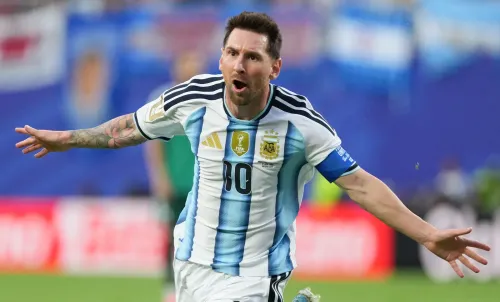
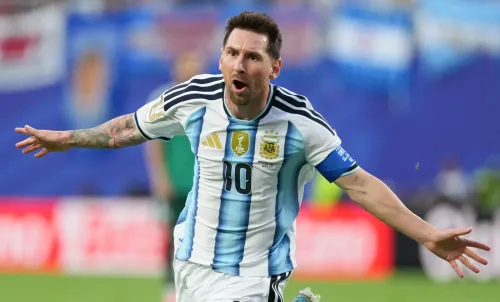
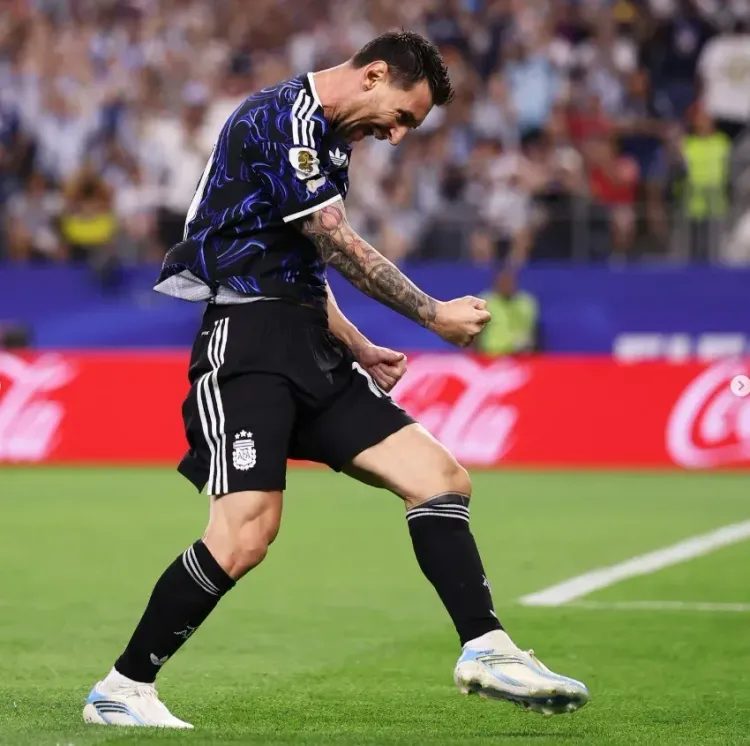
Lionel Messi became the first player to score in seven consecutive FIFA World Cup matches, netting a free-kick against Jordan on 28 June 2026 in Dallas .
His all-time FIFA World Cup goals tally now stands at 19 , surpassing Miroslav Klose's previous record.
Messi leads the Golden Boot race by two goals ahead of Mbappe , Dembele , Vinicius Junior , and Haaland .
The consecutive-scoring streak began at the 2022 World Cup in Qatar and has carried through three games at the 2026 edition .
At 39 , Messi is competing in his sixth World Cup — the first men's player ever to do so across 2006, 2010, 2014, 2018, 2022, and 2026 .
Argentina secured a third successive group-stage win, advancing to the knockout rounds.
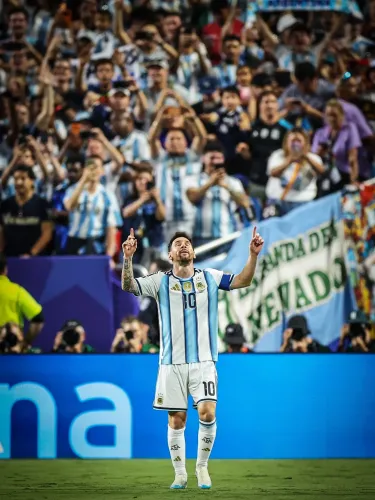
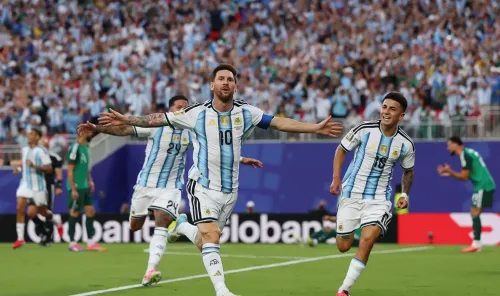
Lionel Messi etched his name deeper into football history on Sunday, 28 June 2026, becoming the first player ever to score in seven consecutive FIFA World Cup matches — a feat achieved during Argentina's final group-stage clash against Jordan at Dallas Stadium. The milestone is the latest in a string of records the Argentine icon has broken at this edition of the tournament.
How the Record Unfolded
Messi entered the match as a substitute, coming off the bench in the 60th minute with Argentina already in control. He wasted little time making his mark, curling a stunning free-kick past the wall in the 80th minute to seal a third successive group-stage victory for La Albiceleste. The goal also pushed his all-time FIFA World Cup finals tally to 19 goals — a record that now stands two clear of Kylian Mbappe, Ousmane Dembele, Vinicius Junior, and Erling Haaland in the Golden Boot standings.
The Streak That Spans Two Tournaments
The seven-game scoring run began in the Round of 16 at the 2022 FIFA World Cup in Qatar, where Messi found the net in the 35th minute. He then converted penalties in the quarter-final against Netherlands and the semi-final against Croatia, before scoring twice from the spot — once in regulation and once in extra time — in the final against France. At the current 2026 edition, he opened with a hat-trick against Algeria, followed that with a brace against Austria, and now added the free-kick against Jordan to keep the streak alive across two World Cups.
Breaking Klose's All-Time Scoring Mark
The brace against Austria earlier in the group stage was particularly significant: it saw Messi surpass former Germany forward Miroslav Klose as the all-time leading men's goalscorer in FIFA World Cup history. With 19 goals now to his name, Messi has moved beyond a benchmark that many once considered unassailable. Notably, Argentina also made history by fielding a World Cup starting XI without Messi for the first time since June 2006, when Germany eliminated them in the quarter-finals on home soil.
A Sixth World Cup — Another First
The 39-year-old is competing in his sixth FIFA World Cup campaign — spanning 2006, 2010, 2014, 2018, 2022, and 2026 — making him the first men's player in history to appear in six editions of the tournament. Each appearance has added a new chapter to what is already the most decorated individual career in the sport's modern era.
What Comes Next
With Argentina advancing to the knockout rounds, Messi will have further opportunities to extend his consecutive-scoring streak and his overall tally. Whether he can push the record to eight straight games — and beyond — will be one of the defining storylines of the 2026 FIFA World Cup as the tournament enters its decisive phase.
Point of View
But the context makes it even more so: this streak spans two tournaments, two continents, and four years — and he is doing it at 39. The deeper story is that the 2026 World Cup is increasingly looking like a coronation lap rather than a competitive campaign. Yet the real question mainstream coverage glosses over is whether Argentina's squad depth — demonstrated by their ability to start without Messi against Jordan — can sustain a deep knockout run, or whether this remains a one-man tournament for La Albiceleste. Records are Messi's alone; the trophy requires a team.
NationPress
28 Jun 2026
Frequently Asked Questions
What record did Messi set against Jordan at the 2026 World Cup?
Lionel Messi became the first player in history to score in seven consecutive FIFA World Cup matches, netting a free-kick in the 80th minute against Jordan at Dallas Stadium on 28 June 2026. The goal also extended his all-time World Cup finals tally to 19 goals.
When did Messi's consecutive World Cup scoring streak begin?
The streak started at the 2022 FIFA World Cup in Qatar, with a goal in the Round of 16. Messi then scored in the quarter-final, semi-final, and final of that tournament before continuing the run with a hat-trick against Algeria and a brace against Austria at the 2026 edition.
How many World Cup goals does Messi have in total?
Messi now has 19 FIFA World Cup goals, making him the all-time leading men's scorer in the tournament's history, ahead of Germany's Miroslav Klose whose record he surpassed earlier in the 2026 group stage.
How many FIFA World Cups has Messi appeared in?
Messi is competing in his sixth FIFA World Cup in 2026, having also appeared in 2006, 2010, 2014, 2018, and 2022. He is the first men's player ever to feature in six editions of the tournament.
Where does Messi stand in the 2026 World Cup Golden Boot race?
Messi leads the Golden Boot standings with his 19-goal all-time tally contributing to his current tournament count, sitting two goals clear of Kylian Mbappe, Ousmane Dembele, Vinicius Junior, and Erling Haaland as of 28 June 2026.