Messi's 17th World Cup goal breaks all-time record at FIFA WC 2026
Synopsis
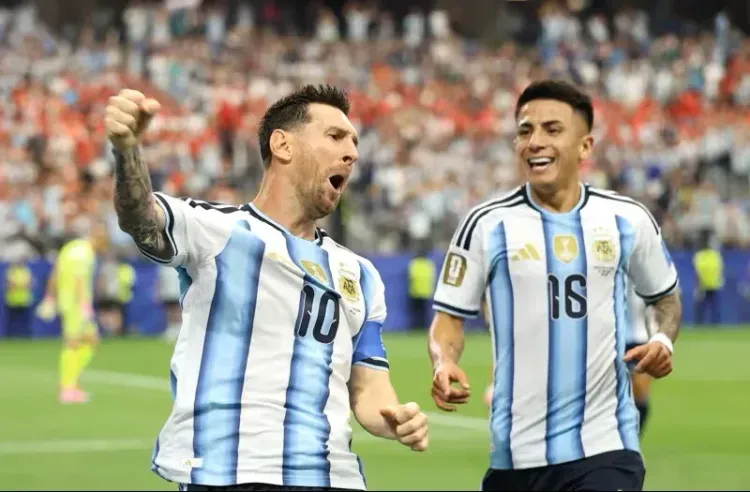
Two days before his 39th birthday, Lionel Messi surpassed Miroslav Klose's 12-year-old record to become the highest individual scorer in World Cup history. His 17th goal — a composed finish after a one-two with Thiago Almada — arrived despite a missed penalty in the same match, underlining that even in record-breaking mode, Messi operates on the edge of sporting drama.
Key Takeaways
Lionel Messi scored his 17th FIFA World Cup goal on 22 June 2026 , breaking the all-time record previously held by Miroslav Klose (16 goals) .
The goal came in the 38th minute of Argentina's Group J match against Austria at AT&T Stadium, Dallas .
It was Messi's fourth goal of the 2026 World Cup , two days before his 39th birthday .
Messi became only the third player to score in six successive World Cups , alongside Just Fontaine and Jairzinho .
The all-time top scorers list: Messi 17 , Klose 16 , Ronaldo (Brazil) 15 , Mbappé and Müller 14 each.
Argentina led Austria 1–0 at half-time, with Messi having also missed a penalty in the same match.
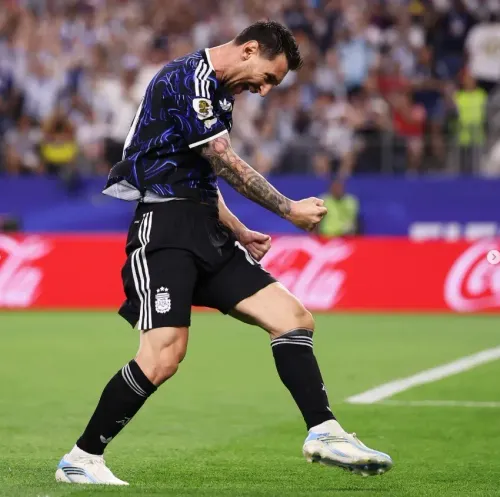
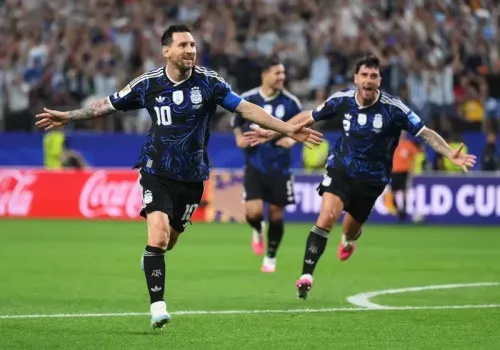
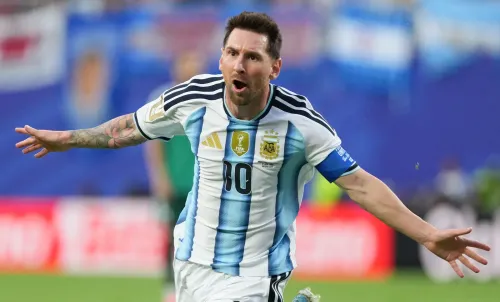
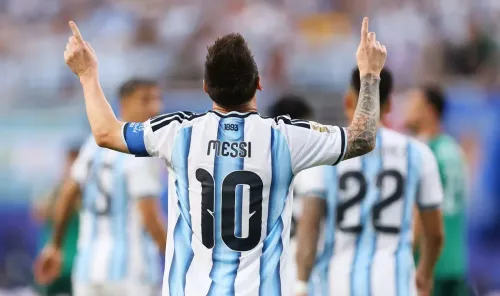
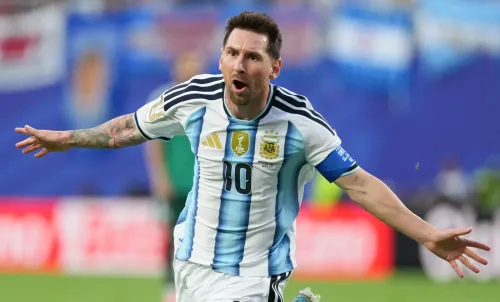
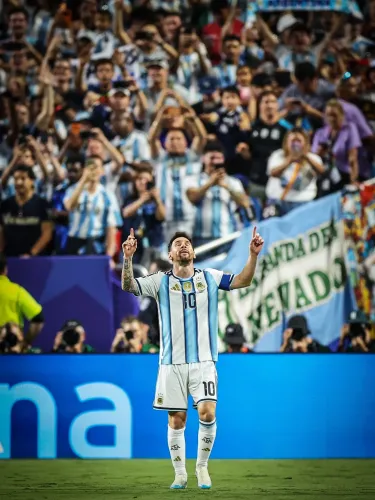
Lionel Messi etched his name deeper into football history on Monday, 22 June 2026, scoring his 17th FIFA World Cup goal in the 38th minute of Argentina's Group J clash against Austria at AT&T Stadium, Dallas. The strike — his fourth goal of the 2026 edition — surpassed the previous all-time record of 16 goals held by Germany's Miroslav Klose, making Messi the most prolific individual scorer in World Cup history.
The Record-Breaking Moment
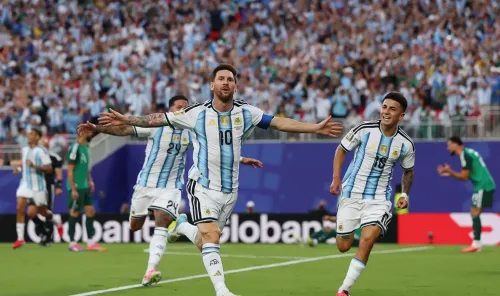
Messi collected possession in midfield and played a sharp exchange with Thiago Almada. Almada's return pass was perfectly weighted, and Messi drove a composed finish past Austria goalkeeper Alexander Schlager to put Argentina ahead 1-0. The goal came just two days before Messi's 39th birthday, adding a remarkable personal dimension to an already historic moment.
The record could have fallen earlier: Messi had missed a penalty in the same match, momentarily handing Austria a foothold in the contest. Austria pressed high and controlled passages of play for roughly 15 minutes after the missed spot-kick, but were unable to convert their dominance into a goal.
Historic Company Messi Now Keeps
The goal also made Messi only the third player in World Cup history to score in six successive tournaments, joining Just Fontaine of France and Jairzinho of Brazil in an elite bracket. The all-time World Cup scoring chart now reads: Messi (Argentina) — 17, Miroslav Klose (Germany) — 16, Ronaldo (Brazil) — 15, with Kylian Mbappé (France) and Gerd Müller (Germany) next at 14 goals each.
Match Context: Argentina vs Austria
As reigning World Cup champions, Argentina entered the Group J fixture as favourites, but Austria pushed back with an organised, high-pressing game plan that kept the match level for extended spells. Argentina dominated early possession but were unable to capitalise, with Messi's missed penalty proving costly in terms of momentum. Austria seized on the lapse, pressing aggressively and cutting off Argentina's build-up play. However, they could not translate territorial advantage into a goal.
Argentina then reasserted control through Messi's midfield creativity. At half-time, the scoreline stood at Argentina 1–0 Austria.
What This Means for Football History
Messi's record arrives at what is widely expected to be his final World Cup. The milestone consolidates his statistical claim at the pinnacle of the sport — he already holds the record for most Ballon d'Or awards and led Argentina to the 2022 World Cup title in Qatar. Notably, Klose's record of 16 goals had stood since 2014, when the German striker surpassed Ronaldo of Brazil during the Brazil World Cup. Messi has now rewritten that chapter with a goal that carries the weight of an entire career.
With the group stage still ongoing, Argentina's campaign — and Messi's tally — will be closely watched as the tournament progresses toward the knockout rounds.
Point of View
When a No. 9's primary currency was goals. Messi has spent most of his World Cup career as an architect first and finisher second, which makes the volume of his tally all the more striking. The missed penalty in the same match is almost fitting: the record arrived not through clinical efficiency but through the kind of improvisational combination play that has defined him. The harder question, rarely asked, is what the record means for the players chasing it — Mbappé is the likeliest heir, but he needs three more goals in this tournament just to reach 17, with Messi still active.
NationPress
21 Sept 2026
Frequently Asked Questions
What record did Lionel Messi break at the FIFA World Cup 2026?
Messi became the all-time leading scorer in FIFA World Cup history with his 17th goal, surpassing the previous record of 16 goals held by Germany's Miroslav Klose. He achieved the feat during Argentina's Group J match against Austria at AT&T Stadium, Dallas, on 22 June 2026.
How did Messi score the record-breaking goal?
Messi combined with Thiago Almada in a one-two exchange in midfield before receiving a return pass and driving a finish past Austria goalkeeper Alexander Schlager in the 38th minute. The goal gave Argentina a 1-0 lead at half-time.
What other historic milestone did Messi reach with this goal?
Messi became only the third player in World Cup history to score in six successive tournaments, joining Just Fontaine of France and Jairzinho of Brazil. The goal arrived two days before his 39th birthday.
Who are the top scorers in FIFA World Cup history after Messi's record?
The all-time list is now led by Messi with 17 goals, followed by Miroslav Klose (Germany) at 16, Ronaldo of Brazil at 15, and Kylian Mbappé (France) and Gerd Müller (Germany) at 14 goals each.
How did Argentina perform against Austria in the Group J match?
Argentina led Austria 1-0 at half-time, though the match was competitive. Austria pressed high and controlled play for stretches after Messi missed a penalty, but could not convert their dominance into a goal before Messi's record-breaking strike restored Argentina's momentum.